
You pick up a box of crayons and turn it over. There's a little seal, a string of letters and numbers, and some small print about "conforming to" something.
What does any of it mean? And is it enough to know the crayon your child is definitely going to chew is safe?
Here's a plain-English guide to art supply safety labels, what to look for, and a few easy habits for the coloring table.
The labels, decoded
The AP (Approved Product) seal
The Art & Creative Materials Institute (ACMI) runs a certification program for art materials. Products with the AP seal have been evaluated by a toxicologist and found to contain no materials in sufficient quantities to be toxic or injurious to humans, including children, or to cause acute or chronic health problems.
For children's crayons, markers, paints and pencils, the AP seal is the label to look for. Most major children's art brands carry it.
The CL (Cautionary Label) seal
Products with the ACMI CL seal contain materials that need specific safe-use instructions. They're typically adult art materials and generally aren't suitable for young children.
"Conforms to ASTM D-4236"
This line means the product's labeling was reviewed for chronic health hazards under U.S. rules for art materials. It's a labeling standard. It shows up on both AP and CL products, so it doesn't tell you on its own whether something is non-toxic. Look for the AP seal as well.
"Non-toxic"
The word on its own is a claim by the manufacturer. It's most meaningful when it comes with a recognized certification like the AP seal.
Age labels
"Ages 3+" warnings often relate to small parts (like marker caps) that could be a choking hazard, not to toxicity. Follow them, especially with younger siblings around.
What to look for when buying kids' art supplies
- The AP seal on the box.
- Products designed for children, not adult artist supplies.
- A sensible age range for your child.
- A reputable seller. Very cheap unbranded supplies from unknown sources are harder to check.
- Vented marker caps for younger kids. Many children's marker brands use them as a safety feature.
The major children's brands we recommend carry non-toxic labeling and the AP seal. Always check the current packaging, as products can change.
Everyday kid-safe basics we recommend
-
1
Crayons, labeled non-toxic Crayola Crayons, 24 Count (Pack of 2) The best everyday crayons for most kids aged 3 to 10: bright, sturdy, great value, and two boxes so there's a spare.
-
2
Washable markers, labeled non-toxic Crayola Ultra Clean Washable Markers, Broad Line, 40 Count The best all-round washable markers for kids: bright broad-line color that fills big shapes fast and cleans up easily.
-
3
Colored pencils for detail Crayola Colored Pencils, 36 Count The best-value everyday colored pencils for kids: 36 soft, pre-sharpened colors that blend and shade well.

Amazon shows the current price and delivery. Each item also has its own page on Meowelo with what it’s not good for.
Supplies to be careful with
- Permanent markers: strong fumes and very hard to remove. Grown-ups only.
- Adult art paints and pastels: some artist-grade pigments aren't intended for children.
- Spray products: fixatives, spray paints and adhesives. Adults only, outdoors.
- Anything unlabeled, especially very cheap sets with no safety information.
Simple safety habits at the coloring table
What about "natural" and beeswax supplies?
Beeswax crayons, soy crayons and plant-based paints are lovely, and many families prefer them. "Natural" doesn't automatically mean safer, though; it's still worth checking for safety certification and age guidance. For most children, well-certified mainstream supplies are perfectly suitable.
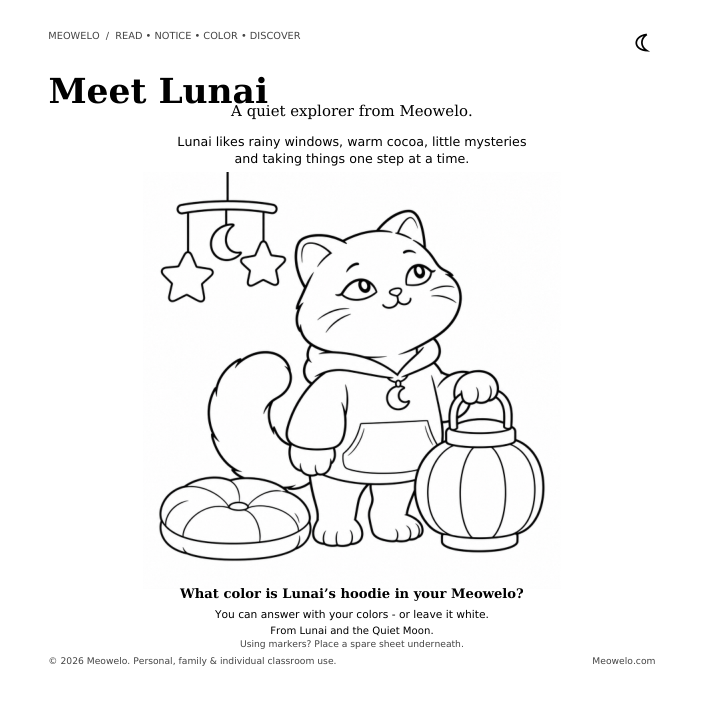
Meet Lunai
Once the supplies are sorted: a free Lunai coloring page, drawn with bold lines for crayons and pencils.
Print it freeQuestions parents ask
What does the AP seal on crayons mean?
Does ASTM D-4236 mean a product is non-toxic?
What should I do if my child eats a crayon?
Are washable markers non-toxic?
Safe, simple, and ready to color
You don't need to become a chemist to buy safe art supplies. Look for the AP seal, choose products made for children, follow the age guidance, and keep a few simple habits at the table. Then relax and enjoy the coloring.
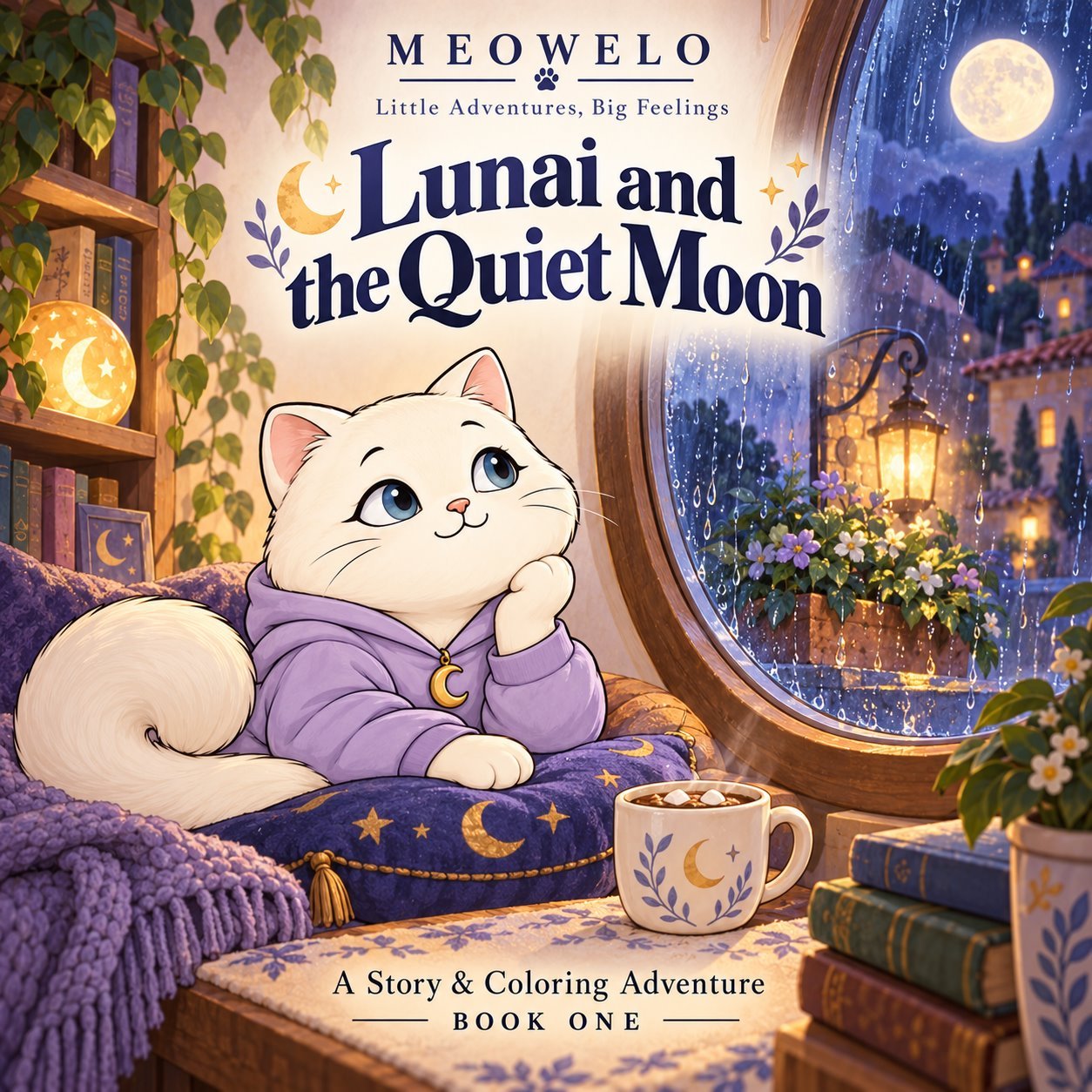
Lunai and the Quiet Moon
A little light. A very big what-if.
“Rain taps on Lunai's window. Outside, a small light flickers, and his mind begins filling in the mystery.”
With Lunai & Pico · Ages 6–10 · Story + coloring