
Some children sit down to color and don't move for forty minutes.
Others color one ear of one cat, stand up, lie under the table, ask about sharks, sharpen a pencil that didn't need sharpening, and then color the other ear. Upside down.
If you live with the second kind, this post is for you. There's nothing wrong with a busy, wiggly mind. It just needs coloring to be set up a little differently.
Why some kids struggle to sit and color
Coloring asks for a few things at once: sitting still, fine hand control, patience with a slow result, and staying with one task. For some children, every one of those is hard work. It isn't laziness or defiance. It's just a lot to ask of a body that wants to move.
So instead of asking the child to fit the activity, we change the activity to fit the child.
Eight things that genuinely help
1. Make sessions tiny
Set a timer for five minutes. When it rings, stop, even if they're enjoying it. Ending on a high note is how you get a "can we do more tomorrow?" instead of a battle.
2. Let them stand, kneel or lie down
Tape a page to the wall or fridge and color standing up. Lie on the floor with a clipboard. Kneel at the coffee table. Many active children focus better when their body isn't pinned in a chair.
3. Pick pages that can be finished
Big shapes, bold lines, not too many sections. A page that takes eight minutes to finish feels much better than a masterpiece abandoned at 10%.
4. Give it a story
"Color the cat" is dull. "Myro's picnic just got rained on. What color is his umbrella?" is interesting. A story gives the page a point, and children stay with things that have a point. That's the thinking behind Read, Notice, Color.
5. Offer fewer supplies
Sixty-four crayons is sixty-four decisions. Try a small tin of eight to twelve colors. Fewer choices, faster start, less fidgeting.
6. Use tools that don't need fussing
Crayons that snap, pencils that need sharpening and marker caps that roll away are all invitations to wander off. Twist-up crayons and pencils remove a lot of those breaks.
Low-fuss supplies for busy hands
-
1
No sharpening, no snapping Crayola Twistables Crayons for Kids, 24 Count The best crayons for kids who press hard or snap everything, and a brilliant travel crayon.
-
2
Twist-up pencils for details Crayola Twistables Colored Pencils, 24 Count The best no-sharpen colored pencils: twist-up color with no shavings, great for travel and bedtime.
-
3
Washes off walls (just in case) Crayola Ultra-Clean Washable Crayons, 16 Colors The best crayons for young wall artists: normal crayon color that cleans up far more easily.

Amazon shows the current price and delivery. Each item also has its own page on Meowelo with what it’s not good for.
7. Build in movement breaks
Color one section, then do five star jumps. Color another, then fetch a snack. Breaks aren't a failure of focus; they're part of the plan.
8. Color together, briefly
Sit beside them and color your own page for a few minutes. Your calm pace is catching, and company makes the task feel lighter.
What to say when they wander off
Instead of
Sit down and finish it!
Try
Want to do five more strokes, or save it for later?
Instead of
Why can't you focus like your sister?
Try
Your body wants to move. Let's color standing up for a bit.
Instead of
You never finish anything.
Try
You did the whole tree! Want to leave the sky for tomorrow?
Meet Myro: a busy mind in the Meowelo world
Myro is our fastest, most enthusiastic friend. He plans enormous days, rushes ahead, and sometimes misses things. The stories never tell him to "calm down". Instead, other characters invite him to notice what's around him, and he usually discovers that a pause makes the adventure better, not smaller.
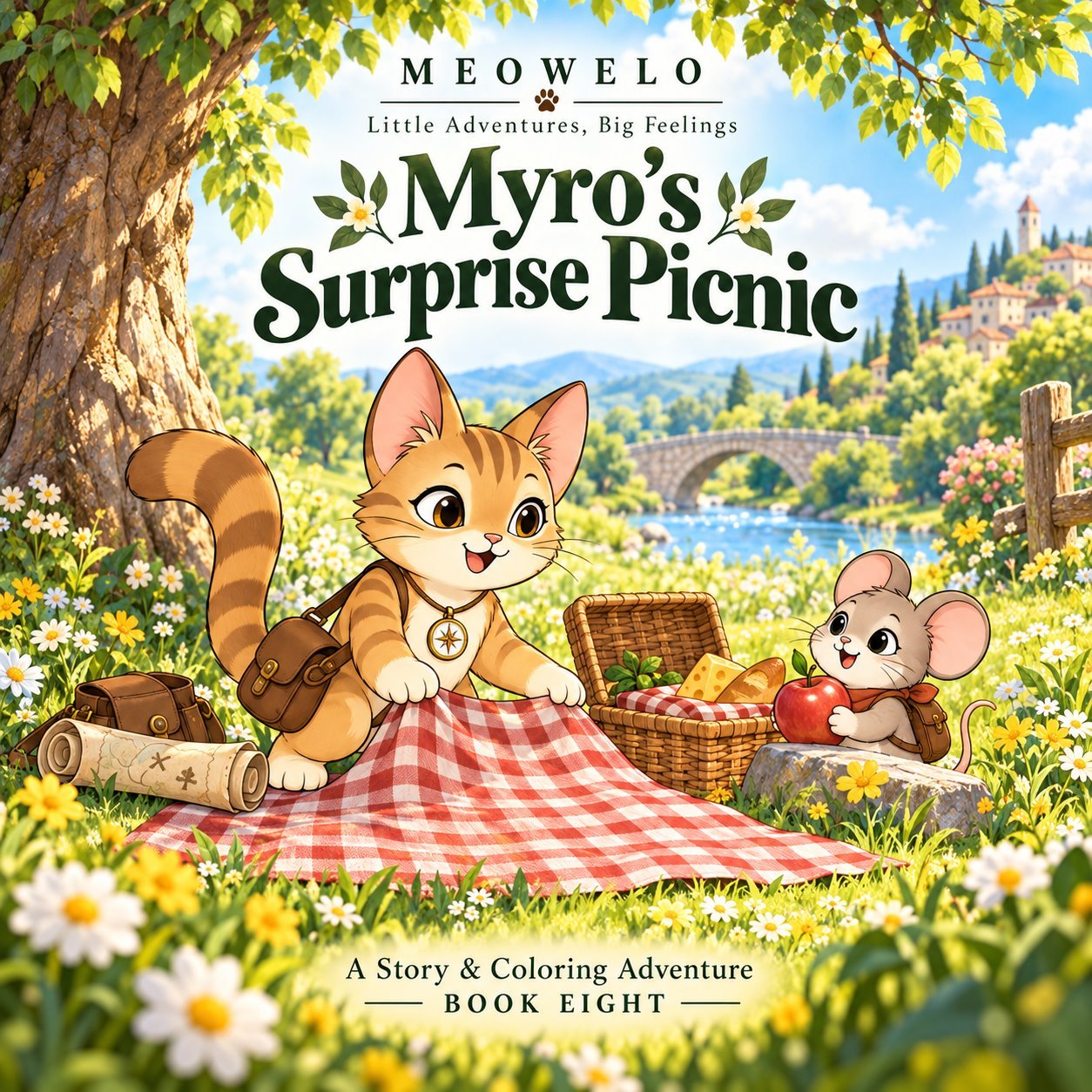
In Myro's Surprise Picnic, a closed bridge changes his whole plan. It's Pico who notices something nearby, and the day turns out to have more than one way to be good. High-energy children tend to love Myro, because he's so clearly one of them.
Myro's Surprise Picnic
With Myro & Pico · Ages 6–10 · Story + coloring
This stop wasn't on the map.
Questions parents ask
Can coloring help a child with ADHD focus?
How long should a young child be able to color?
What coloring supplies are best for easily distracted kids?
Five minutes counts
Your child doesn't need to become a sit-still colorer. They just need coloring to be the kind of thing they can dip into, enjoy and leave on a good note. Short, moving, story-shaped and low-fuss: that's the recipe.
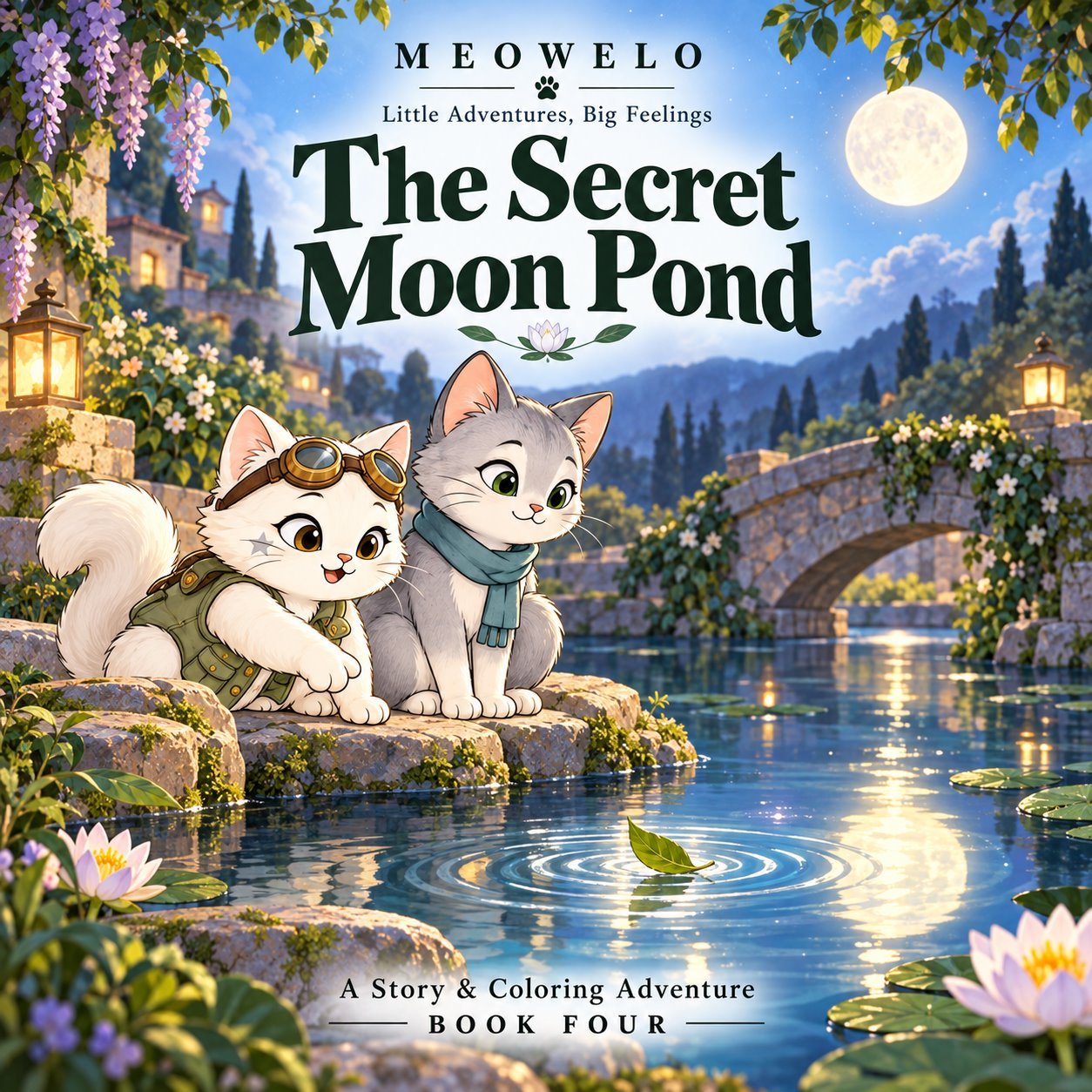
The Secret Moon Pond
Where did the moon go?
“Then a leaf falls, ripples spread, and the round reflection disappears.”
With Riyu & Rinwa · Ages 6–10 · Story + coloring