
Children grieve in puddles, not oceans.
One minute they're sobbing about the goldfish. The next they're asking what's for dinner. Then, three days later, in the bath, out of nowhere: "Is Grandpa cold where he is?"
If you're here because your child is sad about a loss, first: you don't need the perfect words. You're already doing the most important thing, which is paying attention. This post offers a few gentle ideas for the days ahead.
What children understand about loss
How a child understands loss depends a lot on age. Very roughly:
- Under six, children may not yet understand that death is permanent, and may ask the same questions many times.
- Between six and ten, most children are starting to understand that it's forever, and may have lots of practical, very direct questions.
- Every child is different. Some want to talk constantly. Some don't mention it for weeks.
Repeated questions aren't a sign you explained it badly. They're how children process. Answer again, simply, as many times as they need.
What to say (and what to gently avoid)
Honest, simple language is kinder than it sounds. Soft phrases can accidentally confuse or scare a child ("If Grandpa went to sleep, will I?").
Instead of
He went to sleep and didn't wake up.
Try
His body stopped working, and he died. It's not like sleeping.
Instead of
Don't cry, she wouldn't want you to be sad.
Try
You miss her so much. Crying is one of the ways we show that.
Instead of
Be strong for your little sister.
Try
You can be sad too. We can all be sad together.
Instead of
Everything will be okay.
Try
This is really hard right now. I'm here, and we'll get through the hard days together.
It's also okay to say "I don't know." Children often find it comforting that grown-ups don't have every answer either.
It's okay to feel more than one thing
Children may feel sad, angry, scared, guilty, confused, or even a little relieved if someone had been ill for a long time. Sometimes they feel nothing much at all, and then feel bad about that.
Let all of it be allowed. You might say: "There's no wrong way to feel about this. Whatever you feel is okay to tell me."
Quiet ways to be together
When words run out, doing something side by side can be a comfort. It gives hands something to hold and makes silence feel less heavy.
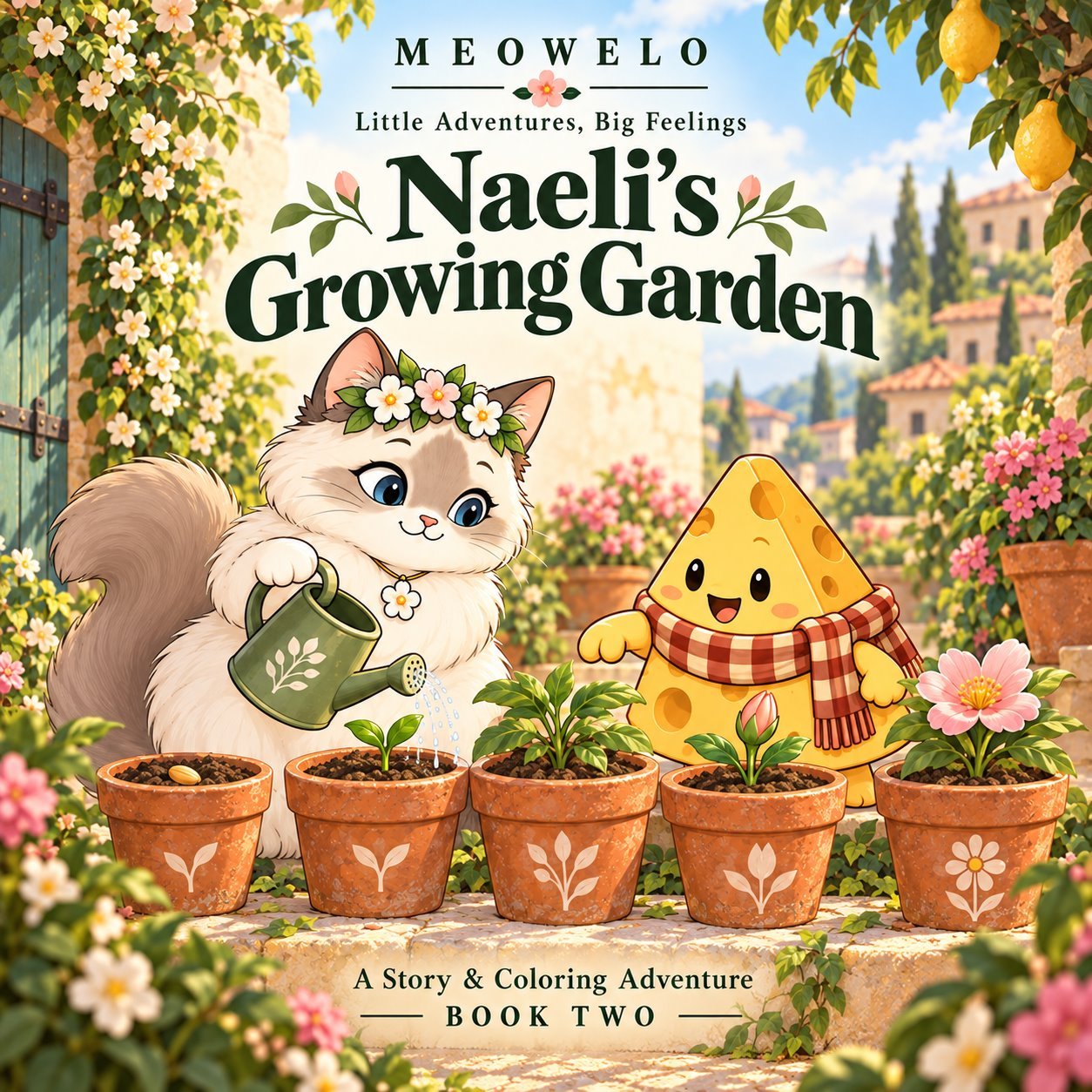
That last idea is why Naeli's garden is often a comfort book. In Naeli's Growing Garden, one pot has a flower, one has a sprout, and one seems to have only soil. The story doesn't rush any of them. It lets things grow at their own speed, which is a gentle picture of how feelings heal too.
Naeli's Growing Garden
With Naeli & Cheddo · Ages 6–10 · Story + coloring
Something is growing. Just not all at once.
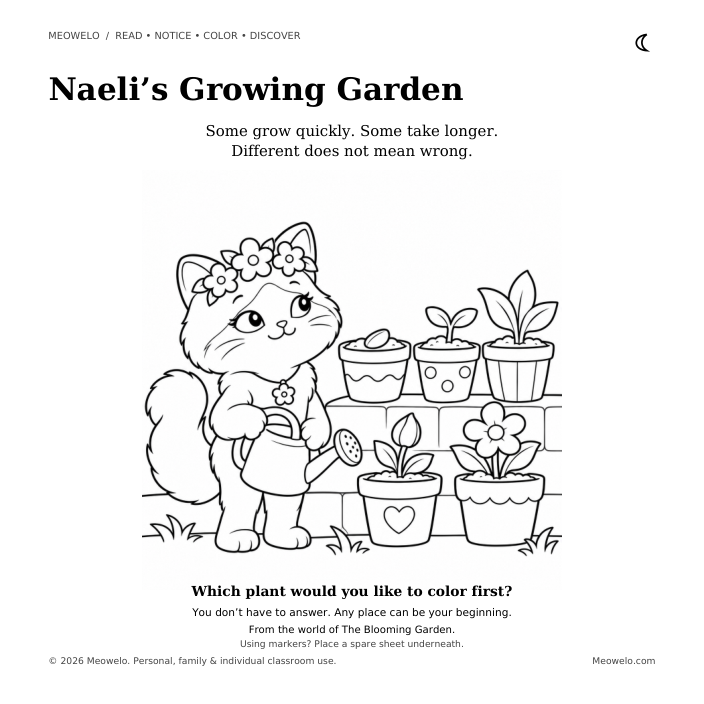
Naeli’s Growing Garden
Five pots, five small surprises. A free page to color slowly, together, with no questions required.
Print it freeLooking after yourself too
If the loss is yours as well, you're grieving while caring for a grieving child. That's a lot. It's okay for your child to see you sad. It shows them that sadness is survivable and that it's safe to show. You might say: "I'm sad today because I miss Grandpa. I'll be okay, and I'm still here for you."
When to ask for more support
Most children gradually find their way back to their usual selves, with sad days mixed in. It's a good idea to reach out to your pediatrician, school counselor or a qualified grief professional if your child:
- seems stuck in intense sadness for a long time,
- stops enjoying things they used to love,
- has big changes in sleep, eating or school that don't ease,
- talks about wanting to be with the person who died, or about not wanting to be here.
If you're ever worried about your child's safety, contact your doctor or local emergency services straight away.
Questions parents ask
Should I let my child see me cry?
My child doesn't seem sad at all. Is that normal?
Can coloring help a grieving child?
Small and steady
There's no fixing a loss, and nobody expects you to. What children remember is who stayed close. Sit with them. Answer their questions. Let them be sad, and let them be silly. That's the work, and you're doing it.
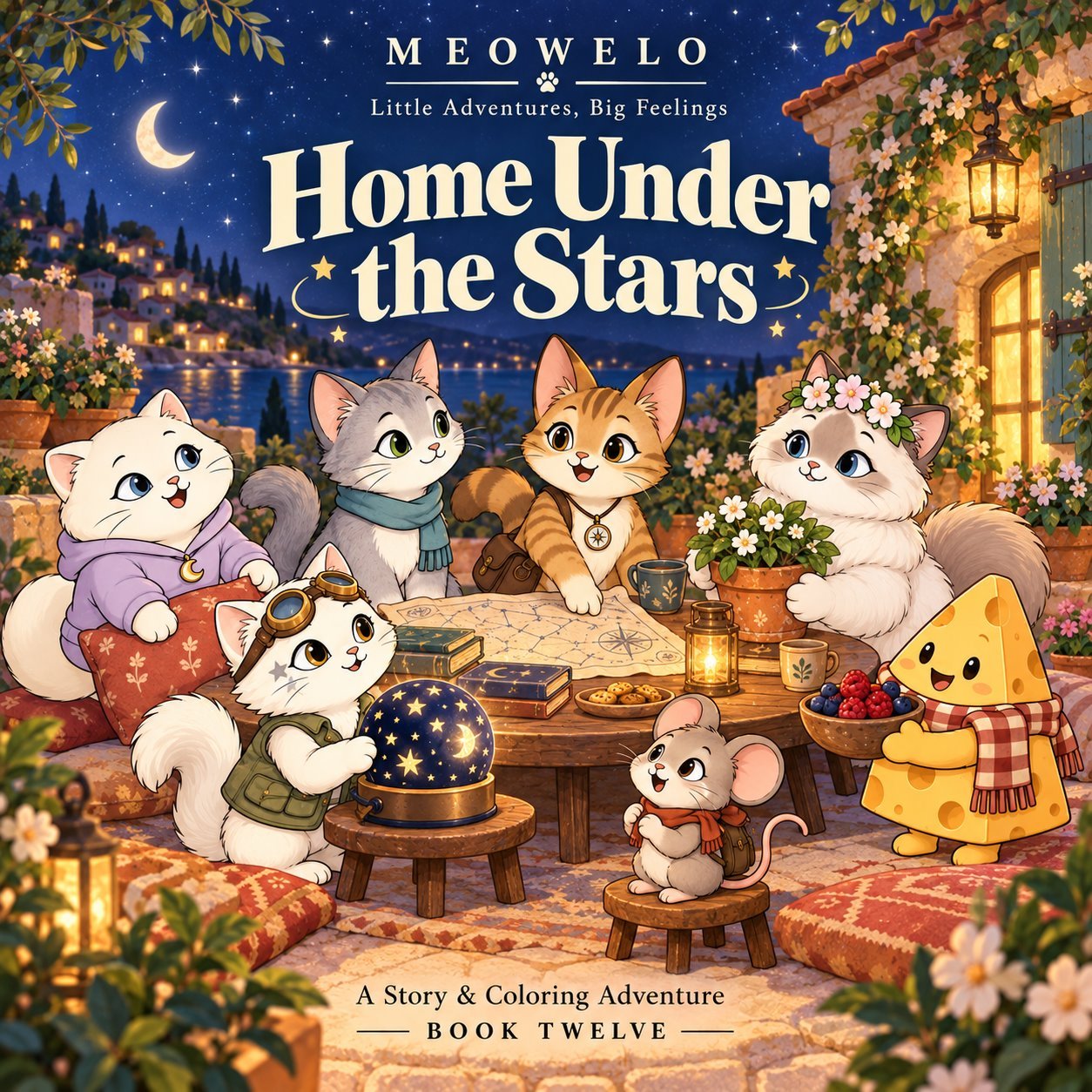
Home Under the Stars
There is room for you here.
“As they make room around the table, they discover the little things that help a place feel like home.”
With Lunai, Riyu, Myro, Naeli, Rinwa, Pico & Cheddo · Ages 6–10 · Story + coloring