
Your child hands you a drawing. The sky is black. The sun is black. The house, the dog and the smiling family are all very, very black.
Before you start googling, take a breath. There's a very good chance the black crayon was simply the sharpest one in the box.
Color choices are one of the most talked-about (and most over-interpreted) parts of children's art. Here's what they can and can't tell you.
Why children pick the colors they pick
Ask a room full of children why they picked their colors and the reasons are usually wonderfully ordinary:
- It's the closest crayon. Honestly, this explains a lot.
- It's their favorite this week. Children go through color phases just like they go through dinosaur phases.
- It shows up well. Dark colors are bold and satisfying on white paper, especially for younger kids.
- They're experimenting. "What if the grass was purple?" is a great question for a six-year-old to ask.
- It matches the story in their head. Maybe it's nighttime. Maybe it's a volcano planet.
Do dark colors mean my child is sad?
Usually, no. There's no reliable evidence that a single picture in dark colors means a child is unhappy. Lots of perfectly content children love black, brown and deep purple. They look dramatic!
What's worth paying attention to is the child, not the crayon. If you notice changes in their mood, sleep, appetite or play over time, that's worth a conversation, and possibly a chat with your pediatrician. The picture on its own isn't the signal.
What about "color psychology"?
You've probably seen charts that say red means anger, blue means calm, yellow means happiness. They're fun to read, but children's color choices are far too personal (and too practical) to decode that way. A child who colors their brother red might be angry at him. They might also just know he likes red.
So we'd gently suggest: enjoy the colors, and skip the decoding.
How to talk about their color choices
The most useful thing you can do is get curious, and let them be the expert on their own picture.
Instead of
Why is the sun black? Suns are yellow!
Try
Ooh, a black sun. Tell me about it.
Instead of
Are you feeling sad? This is very dark.
Try
I love how bold these colors are. What's happening in this picture?
Instead of
Grass is green, silly.
Try
Purple grass! What kind of place is this?
You'll often get a story far more interesting than any chart could offer. ("It's an eclipse, and the dog is the only one who isn't scared.")
Why we never tell children what color to use
You won't find "color the sky blue" anywhere in a Meowelo book. That's deliberate. The coloring is the child's part of the story, their answer to what they just read. If Lunai's hoodie is orange in one book and green in the next, wonderful.
Sometimes a page will offer a gentle prompt, like "Choose the colors that fit this moment for you." There's no correct answer. A child coloring a moonlit scene in bright pink is making a choice, and choices are how creative confidence grows.
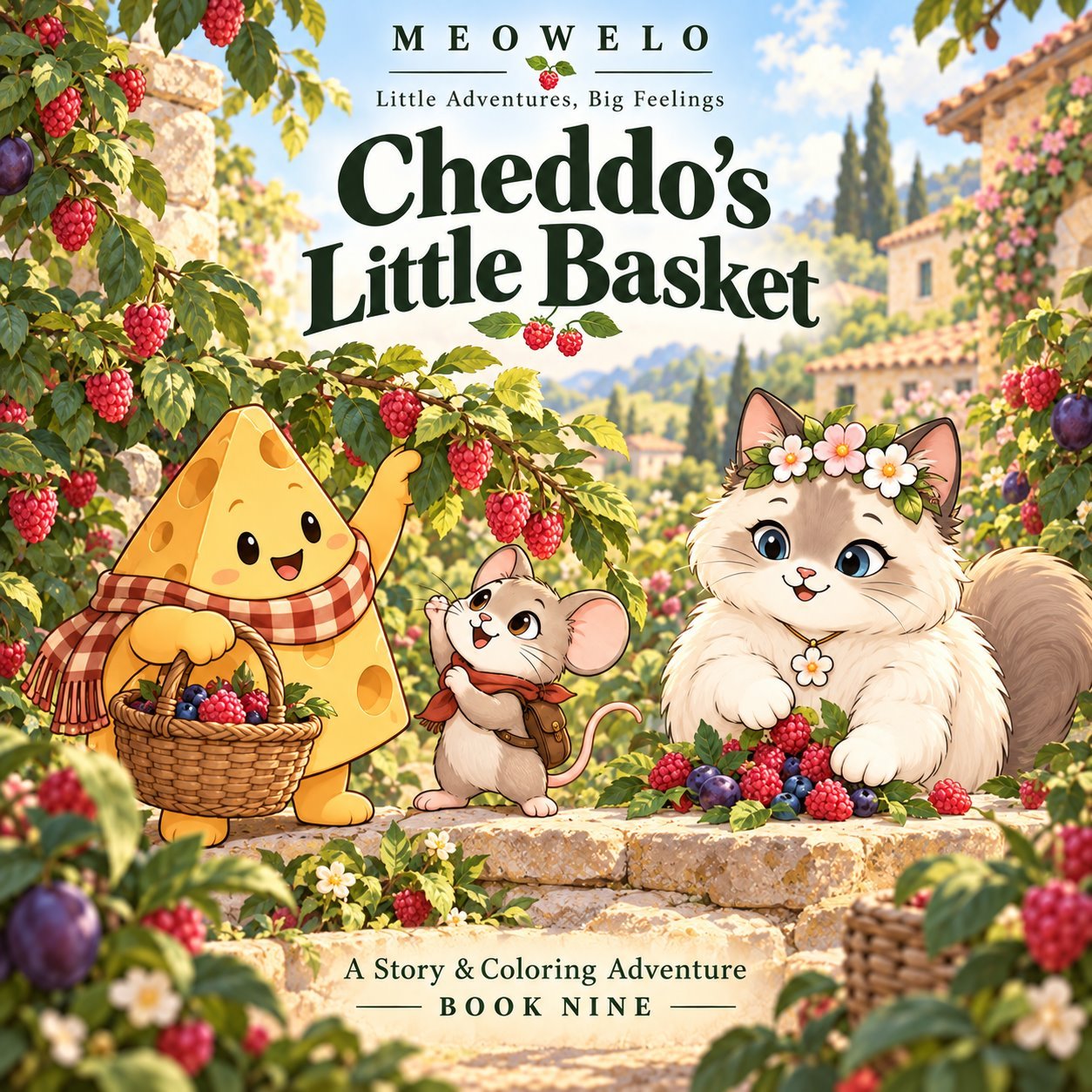
Cheddo's Little Basket
With Cheddo, Pico & Naeli · Ages 6–10 · Story + coloring
Can a little basket hold a big contribution?
A colorful activity for today
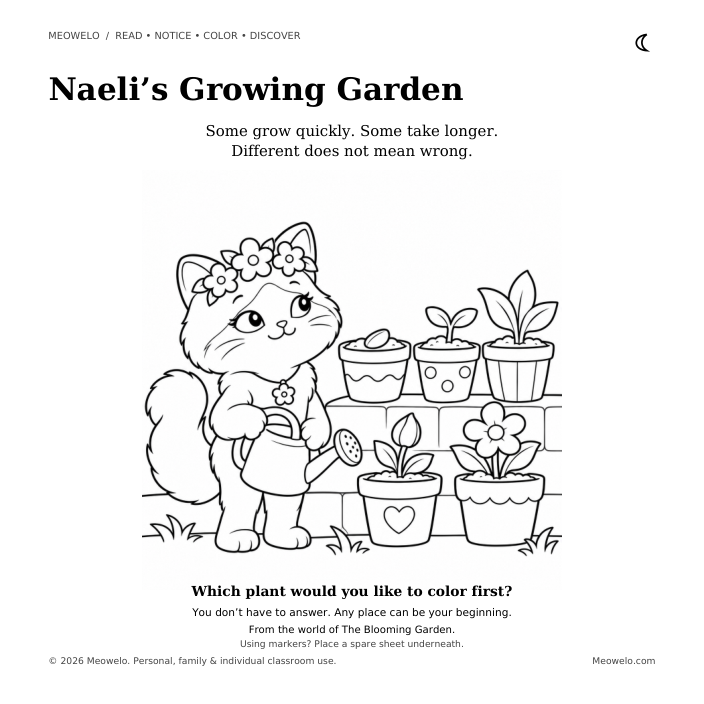
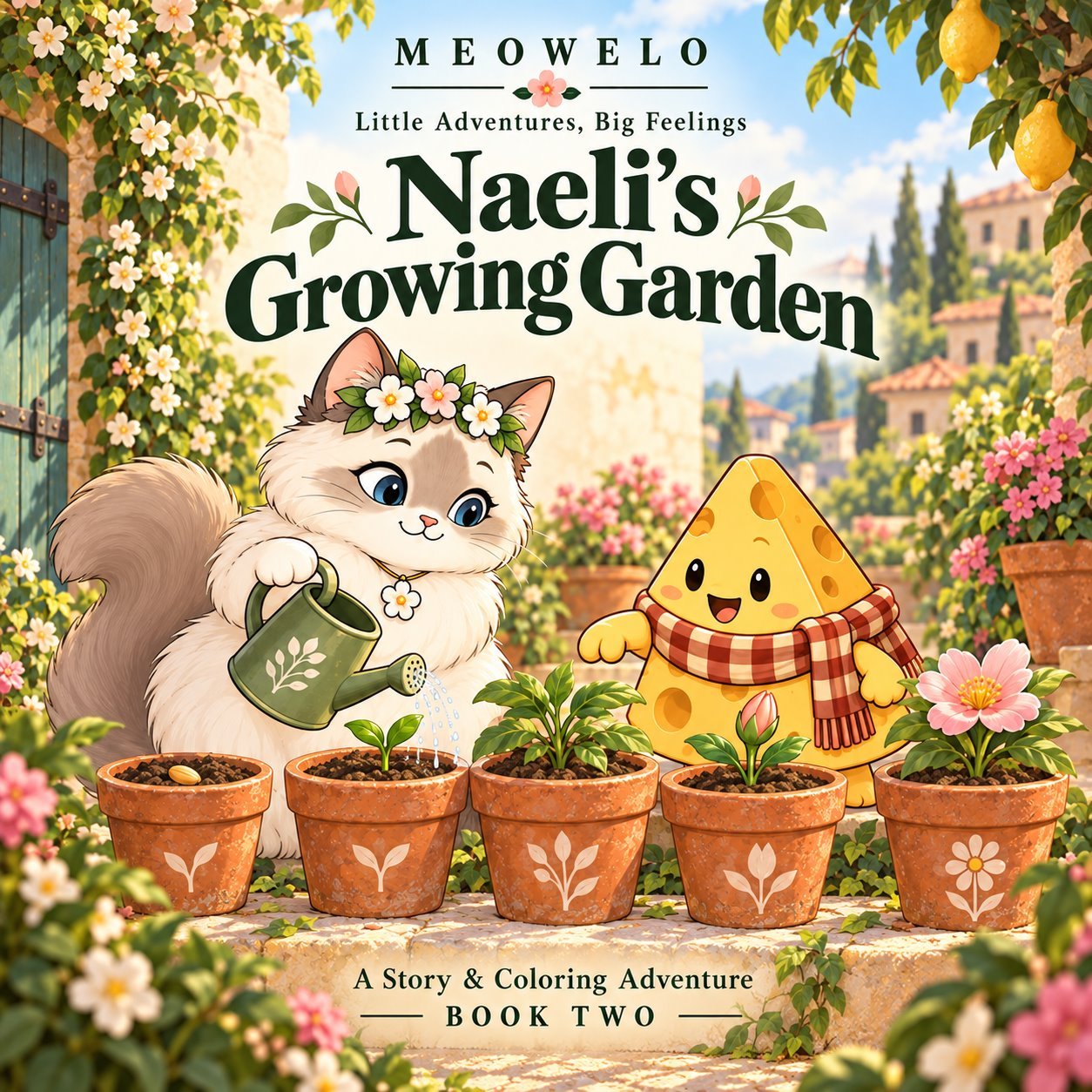
Naeli’s Growing Garden
Five pots, five small surprises. A perfect free page for the three-ways game.
Print it freeIf your child loves big color experiments, a larger palette is a treat. Metallic crayons are especially fun for moons, lanterns and stars.
For children who love color
-
1
The everyday box Crayola Crayons, 24 Count (Pack of 2) The best everyday crayons for most kids aged 3 to 10: bright, sturdy, great value, and two boxes so there's a spare.
-
2
A little shimmer for night scenes Crayola Metallic Crayons, 16 Count A treat set for special pages: metallic shades that make night scenes, lanterns and stars glow.
-
3
Every color, kid-sized Crayola Pip-Squeaks Washable Markers, 65 Count A generous gift set: 65 short, washable, kid-sized markers in one storage case.



Amazon shows the current price and delivery. Each item also has its own page on Meowelo with what it’s not good for.
Questions parents ask
Should I be worried if my child only uses black?
Can color choices show how a child feels?
Should I correct unrealistic colors?
Let them surprise you
Purple grass, striped moons and black suns are all signs of a child making their own decisions. Ask about the story behind the colors. You'll learn more from their answer than any chart could tell you.
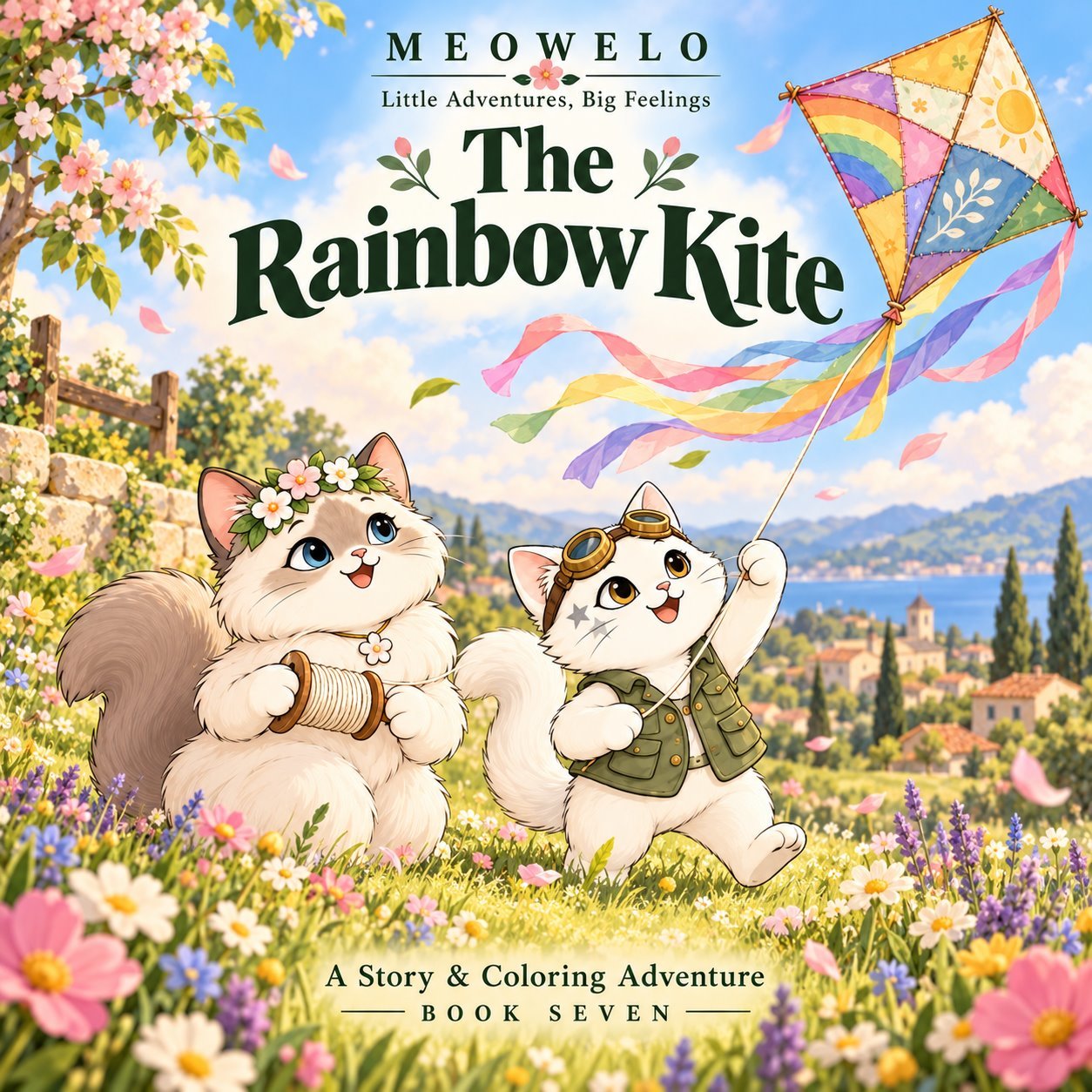
The Rainbow Kite
Their kite has a few surprises in store.
“Naeli brings ribbons, Rinwa brings a plan. Together, they set out to make a kite for the meadow.”
With Naeli & Rinwa · Ages 6–10 · Story + coloring