
A simple after-school reset is snack first, then about 20 minutes of quiet, then talking. Many children have held it together all day and need a little time with no questions before they're ready to share. Coloring works well for the quiet part because it's easy to start, needs no decisions and asks nothing of them. Some children reset better by moving, and that's fine too.
Below: the three steps, what quiet can look like, ideas for children who'd rather move, and when to talk about the day.
Step 1: snack
A drink and something to eat as soon as they're home. It sounds obvious, but a lot of after-school grumpiness is simply hunger and thirst.
Step 2: quiet, about 20 minutes
No questions about the day yet. Set out a few easy options and let your child choose:
| Quiet option | Why it works |
|---|---|
| A coloring page | Easy to start; hands busy, mind free |
| A book or comic | Gets them somewhere else for a while |
| Building blocks or a puzzle | Absorbing, no talking needed |
| Lying down with music | For days that were a lot |
A ready-to-go spot helps: see a quiet corner at home.
For children who'd rather move
Some children reset through their bodies. A walk around the block, a few minutes in the garden, jumping on a cushion or a dance to one song can do what quiet does for others. Then offer a calm activity afterwards. Our guide to busy, wiggly minds has more.
Step 3: talk, when they're ready
Children often share more side by side than face to face: coloring at the same table, in the car, washing up. Swap "How was your day?" for something specific and light.
Instead of
How was school? What did you do today?
Try
What was the funniest thing that happened today? Mine was the dog stealing a sock.
Keep it simple
This doesn't need a chart. The same order most days (snack, quiet, talk) is enough for children to know what's coming. If homework needs doing, it usually goes better after the reset than before it.
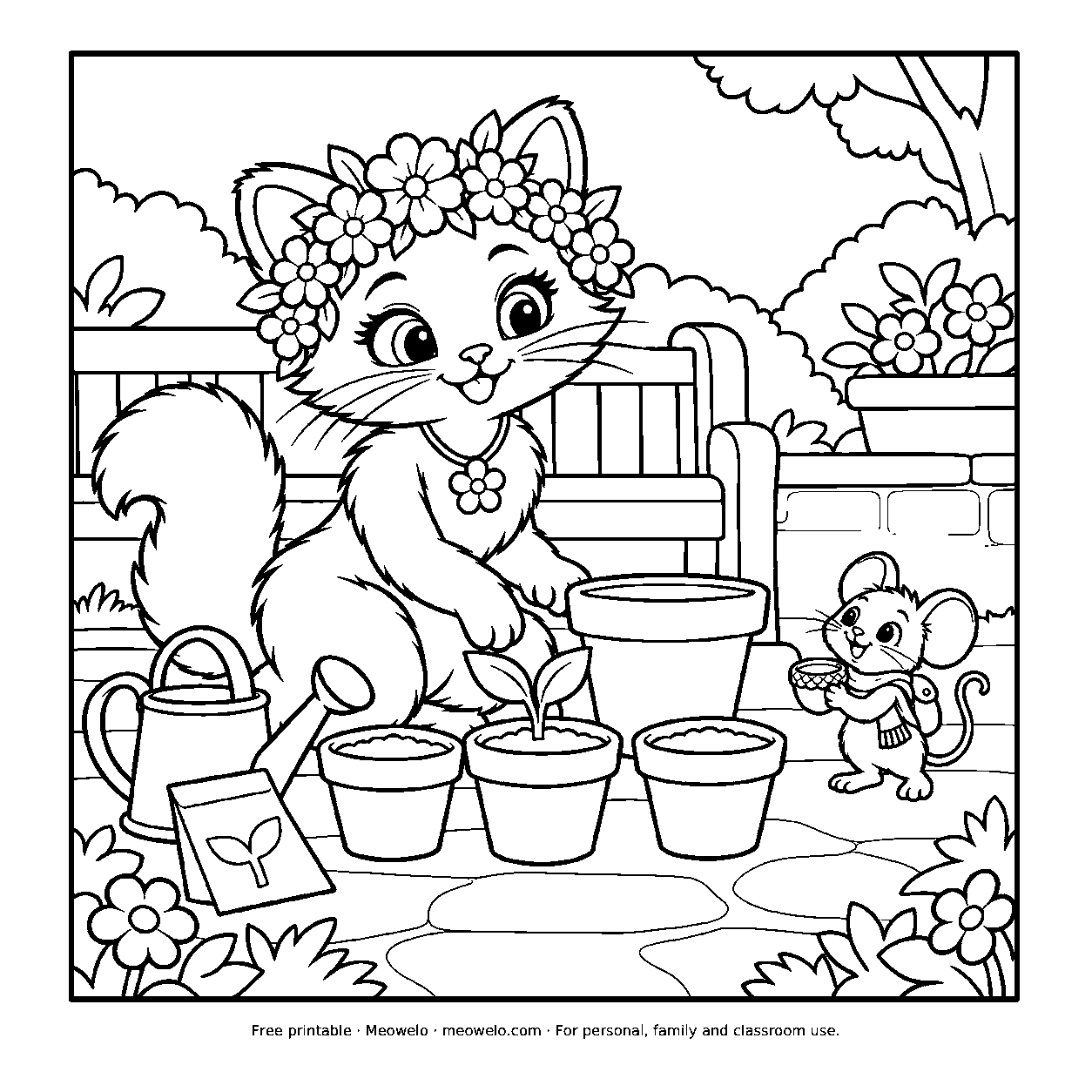
Naeli's Growing Garden
A new shoot sends Naeli and Pico searching for a pot with more room.
Print it freeIf your child wants to talk straight away
Some children burst through the door with a story. Follow their lead: listen first, snack while they talk, and save the quiet time for afterwards. The routine is there to help, not to stop a child who's ready to share.
A quiet-time basket
Keep a small basket by the door or table with a few things ready: two or three printed coloring pages, a pencil case, a short book or comic and a small puzzle. Swap the contents every week or two so there's always something new. It also helps on rainy days and sick days at home.
What quiet time can look like by age
| Age | Often enjoys | Grown-up's role |
|---|---|---|
| 6–7 | Coloring, picture books, building | Nearby, available |
| 8–9 | Comics, longer coloring, puzzles | In the same room, busy with something else |
| 10–12 | Music, reading in their room, drawing | Respect the door; check in later |
Older children often need quiet time just as much, but want more privacy for it. Agreeing a time ("twenty minutes, then we'll chat over dinner") gives them space without disappearing for the evening.
Making it a habit
- Explain it once, on a calm weekend: "After school we'll have a snack and some quiet time, then we'll catch up."
- Keep it the same for two weeks: same order, same basket, same spot.
- Let them choose what quiet looks like, within a few options.
- Join in sometimes: coloring next to them for ten minutes says "this is normal" better than any rule.
After a couple of weeks, many children start asking for it themselves.
Screens and quiet time
Many children ask for a screen straight after school. Screens aren't the enemy, but they can make the switch to dinner and homework harder. If you'd like screen time later in the afternoon, keep the first twenty minutes screen-free and see our guide to ending screen time without a meltdown.
When the day was hard
Some days children come home upset: a falling-out with a friend, a hard test. On those days, quiet time matters even more, and so does patience afterwards. Stay close, keep it easy, and let them choose whether to talk. A calm, predictable evening is often what helps most.
Quiet time also helps the grown-up. Twenty minutes while your child colors or reads is a chance to unpack bags, start dinner or simply sit down. Many parents find the evening goes more smoothly for everyone once the reset is a habit, and the conversations that come later, once your child has had time to settle, are often longer and more open than the ones at the door.
Questions parents ask
Why are kids grumpy after school?
How long should after-school quiet time be?
What are good quiet-time activities?
Should homework come before or after the reset?
The one thing to remember
Snack, quiet, then talk. Give the day a little time to settle, and the stories usually come on their own.



Conversation
Join the conversation
Tips, questions and stories from other grown-ups. A person reads every comment before it goes live.
No comments yet. What has worked at your house? Your story might be exactly what another parent needs tonight.