
Let's be clear from the start: coloring doesn't teach a child to read. Phonics, practice and lots of reading together do that.
But reading doesn't grow in isolation. It grows from a whole set of skills: listening to stories, understanding what happens, knowing lots of words, noticing details, and, most importantly, wanting to read. Story-based coloring quietly supports every one of those.
What reading is built on
Before children decode words on a page, they need a foundation:
- Oral language: hearing and using lots of words.
- Listening comprehension: following a story, remembering what happened.
- Print awareness: knowing that text carries meaning and flows left to right.
- Visual attention: noticing details and differences.
- Motivation: enjoying books and wanting more.
Reading aloud together is one of the best-supported ways to build these. Story-based coloring adds a hands-on layer that keeps children engaged longer.
How story coloring supports reading skills
Listening and comprehension
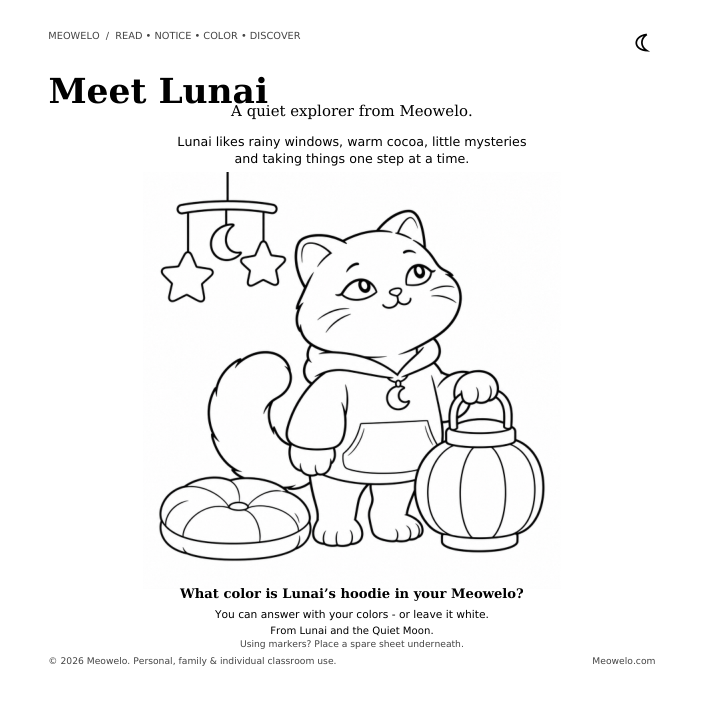
When a child hears a page of story and then colors that exact moment, they're holding the story in their mind while they work. Ask "What just happened to Lunai?" and they have to recall and summarize, which is a core comprehension skill.
Vocabulary
Picture books use richer words than everyday conversation: flickered, drizzle, lantern, ripples, reflection. Talking about the picture while coloring gives those words a second, concrete moment to stick.
Prediction and inference
"Why do you think Pico stopped here?" "What do you think is behind the door?" These questions practice reading between the lines, exactly what children will need for comprehension later.
Left-to-right, page-by-page
In a Meowelo book, the story sits on the left and the picture on the right. Children naturally follow the order: read, then look, then color. That reinforces how books work.
Hands ready for writing
Coloring builds hand strength, control and coordination, including using both hands together. These support handwriting, which in turn supports spelling and reading. For more, see coloring and fine motor skills.
A simple read-and-color routine for early readers
That's the Read, Notice, Color rhythm, and it slots easily into bedtime or after school.
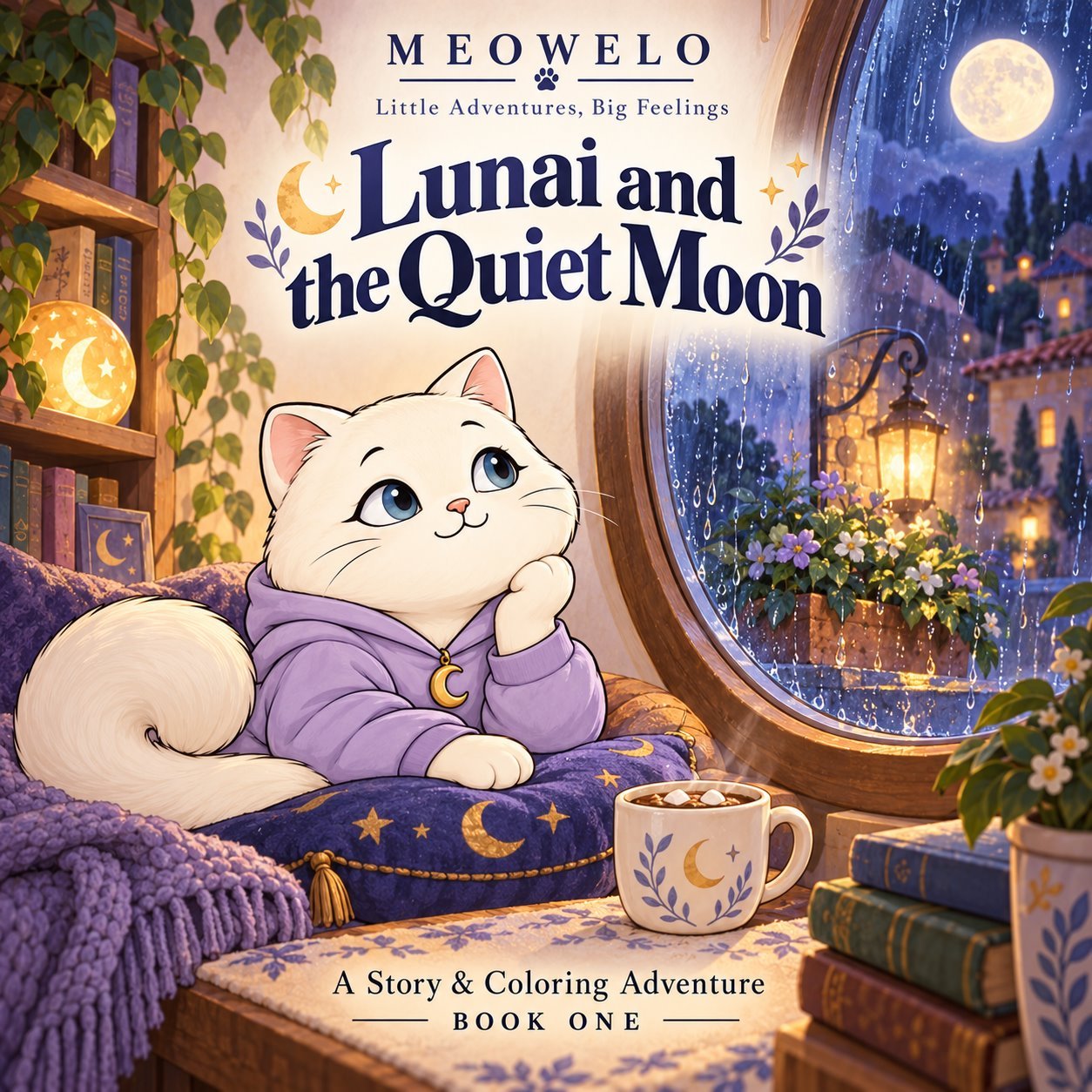
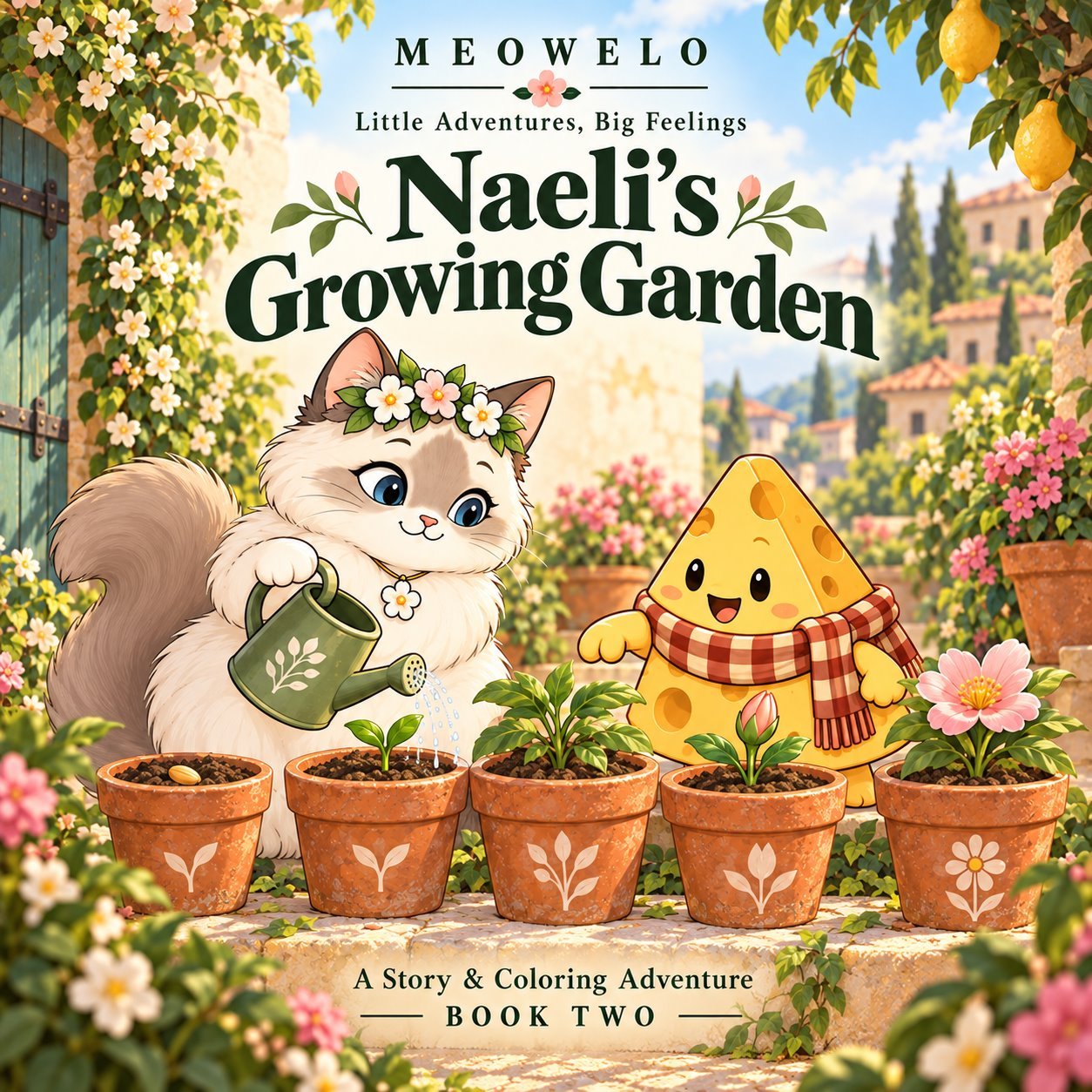
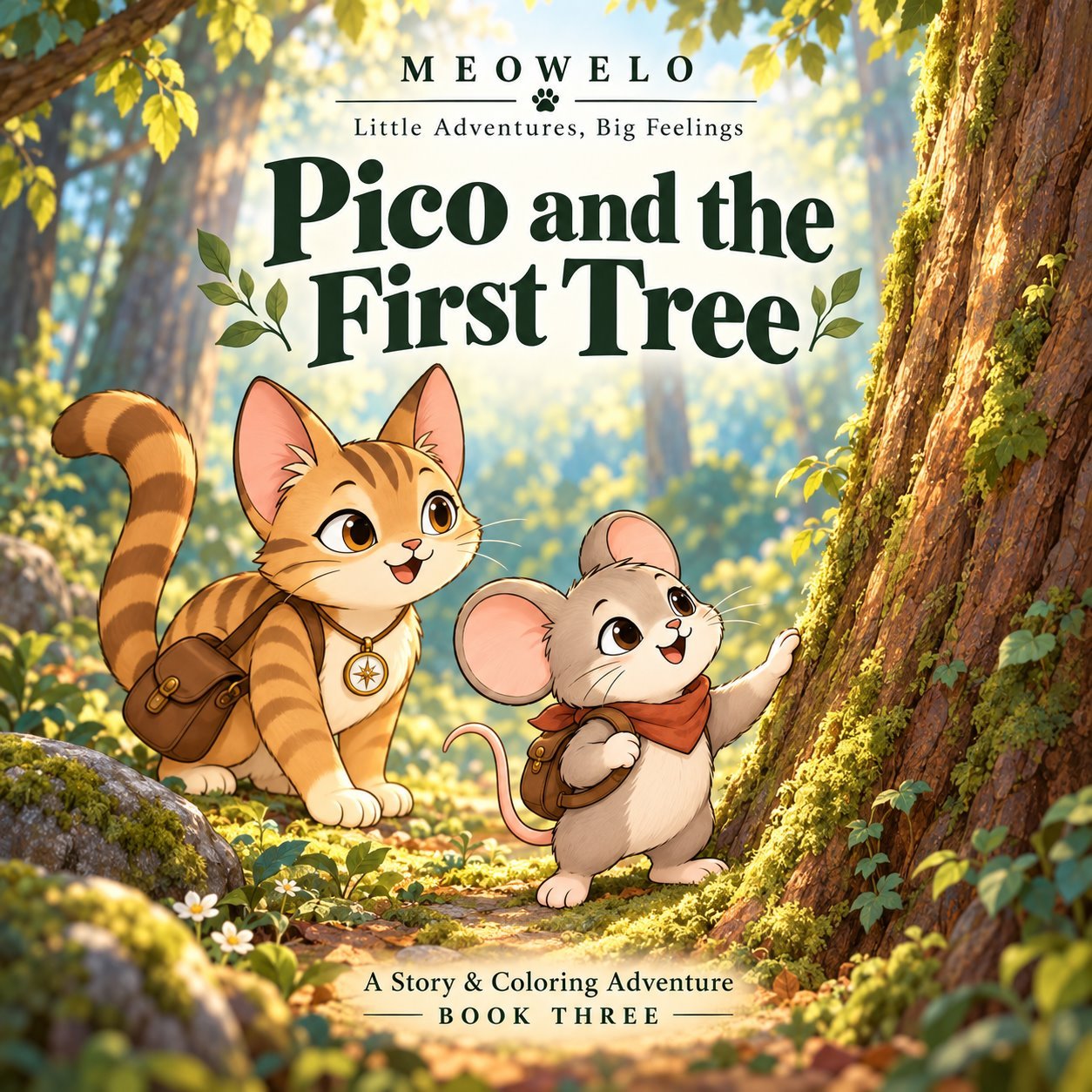
For children just starting to read alone
Meowelo stories are short per page (roughly 40 to 100 words) with clear, rhythmic sentences. That's a friendly size for emerging readers: read together from six, read alone from about eight, and keep coloring much longer.
- Take turns: you read a sentence, they read a sentence.
- Let them "read" the picture by telling you what's happening before you read the text.
- Celebrate rereading. Reading the same story many times builds fluency and confidence.
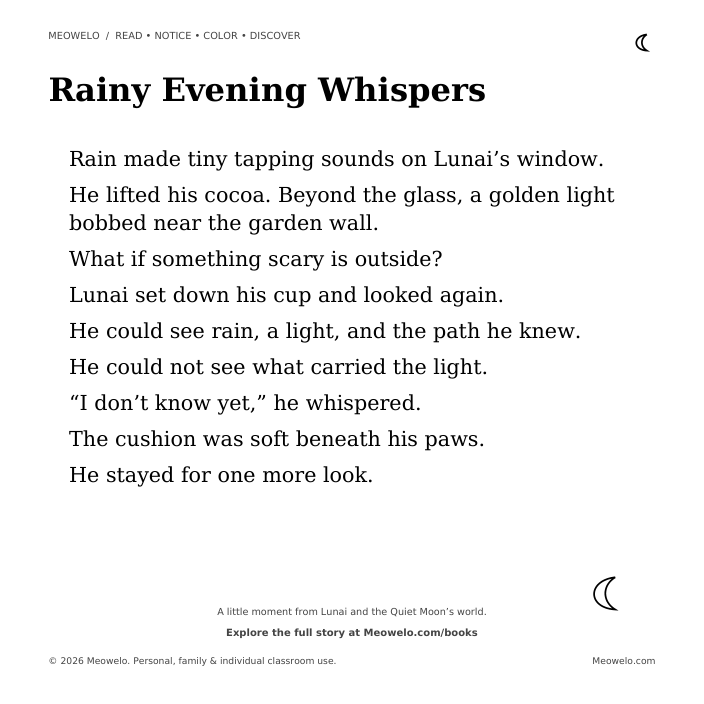
Rainy Evening Whispers
A free two-page story and coloring scene: short enough for a new reader to try aloud, cozy enough to reread.
Print it freeQuestions parents ask
Does coloring help children learn to read?
What age can children read Meowelo books alone?
How can I help my child with reading comprehension at home?
A love of stories comes first
Children who enjoy stories want to read them. Story coloring makes time with books slow, cozy and hands-on, the kind of reading time children ask for again. Pick a story, read a page, talk about the picture, and hand over the crayons.
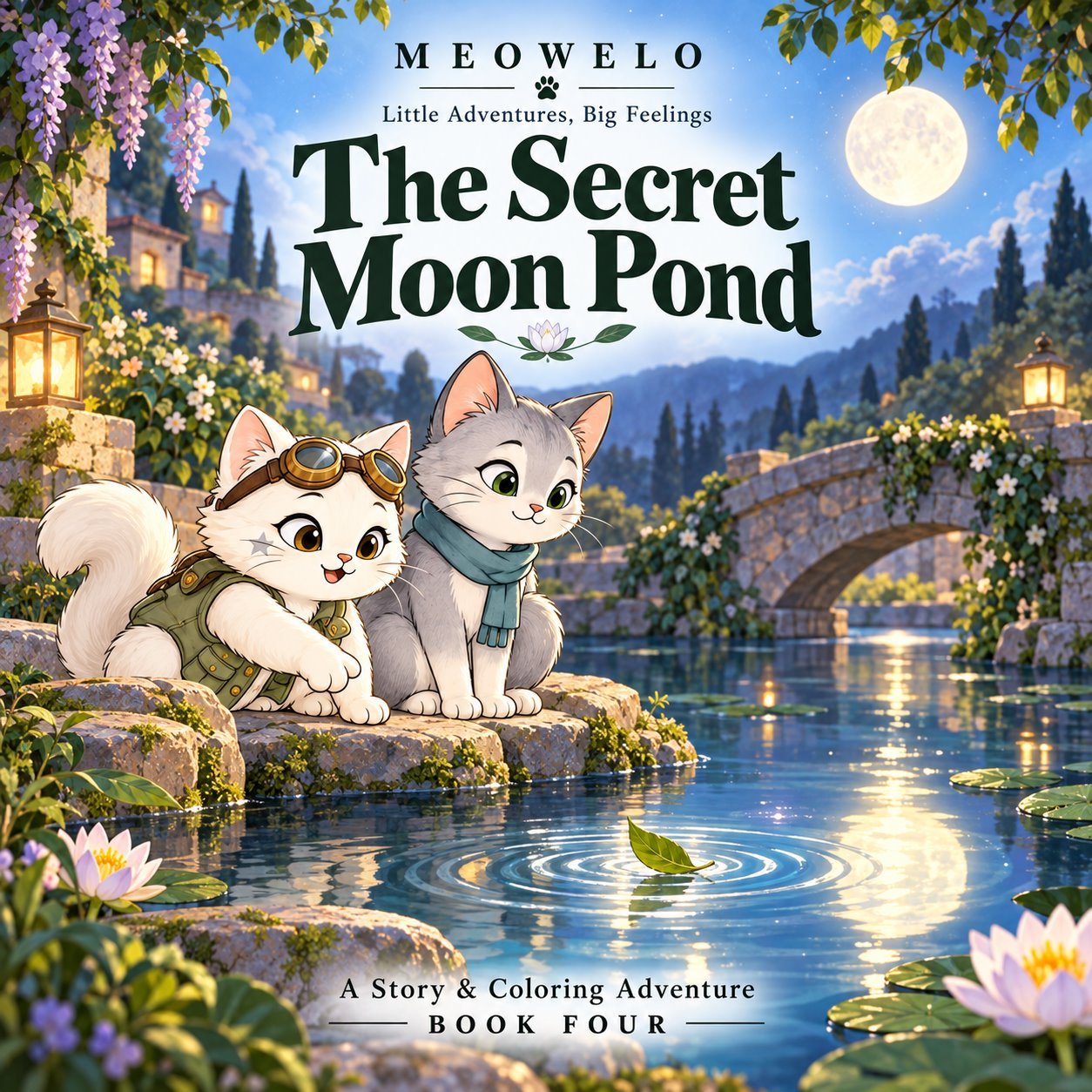
The Secret Moon Pond
Where did the moon go?
“Riyu and Rinwa find the moon shining on a secret pond. Then a leaf falls, ripples spread, and the reflection disappears.”
With Riyu & Rinwa · Ages 6–10 · Story + coloring