
Watch a two-year-old color and you'll see pure joy: a crayon clutched in a fist, big swooping scribbles, and at least one mark on the table.
Watch a seven-year-old and you'll see something quite different: a careful finger grip, small controlled strokes, maybe even a tongue poking out in concentration.
What happens in between is one of childhood's quiet marvels: the development of fine motor skills. And coloring is one of the friendliest ways to practice them.
What are fine motor skills?
Fine motor skills are the small, precise movements of the hands and fingers: picking up a raisin, buttoning a coat, turning a page, holding a pencil. They rely on strength in the small muscles of the hand, coordination between both hands, and the eyes guiding the hands.
Coloring touches all of these at once. A child has to grip, press, steer, stop at a line, and hold the paper steady with the other hand. That's a lot of learning hidden in one purple horse.
The grip stages, explained
These age ranges are approximate. Children develop at different speeds, and that's normal.
1. The fist grip (palmar grasp), around 1 to 2 years
The crayon is held in the whole fist, usually with the thumb up, and movement comes from the shoulder and arm. Big, joyful scribbles. This stage is all about exploring and making marks.
2. Finger grips (digital pronate), around 2 to 3 years
The hand turns over, fingers point down toward the paper, and the crayon is held with the fingers. Movement starts coming more from the elbow. Marks become a little more controlled.
3. Early pinch grips, around 3 to 4 years
The thumb and fingers begin to work together to pinch the crayon. You'll see lots of variations here, and many are perfectly functional. Children start copying simple lines and circles.
4. The tripod grip, around 4 to 6 years
The crayon or pencil rests between the thumb, index finger and middle finger, and movement comes mainly from the fingers and wrist. This is the grip most children use for writing at school. Some children use a slightly different but comfortable grip, and that's often fine too.
How the palmar and pincer grasp fit in
You may hear two other terms: the palmar grasp (a baby's reflex to grip whatever touches their palm, which fades in the first months) and the pincer grasp (picking up small objects between thumb and index finger, usually developing around 9 to 12 months). Both are building blocks. The pincer grasp, in particular, is an early sign that the fingers are starting to work independently, which later helps with holding a crayon.
How coloring helps fine motor development
- Hand strength: pressing a crayon builds the small muscles of the hand.
- Control: steering color into a shape trains precise movements.
- Hand-eye coordination: eyes watch the line while the hand adjusts.
- Using both hands: one hand colors while the other holds the paper steady, an important skill for writing, cutting and dressing.
- Pressure control: learning to press lightly or firmly.
Simple ways to support fine motor skills (without making it homework)
The right tools for each stage
- Ages 1 to 3: jumbo crayons that are easy to grip and hard to snap.
- Ages 3 to 5: regular crayons (or halves), triangular pencils, short markers.
- Ages 5+: colored pencils with a comfortable grip for detail and shading.
Tools that suit each stage
-
1
Ages 1-3: chunky, hard to snap Crayola Large Crayons, 8 Count The best first crayons for toddlers and preschoolers: thick, easy to grip and very hard to snap.
-
2
Ages 3-5: short markers for small fingers Crayola Pip-Squeaks Skinnies Washable Markers, 16 Count The best markers for small hands and travel: short, slim, washable and easy to control.
-
3
Ages 5+: grip-dot pencils Faber-Castell Grip Colored EcoPencils, 12 Count A first set of comfortable grip pencils: 12 colors in the same triangular, grip-dot design.
-
4
Any age: soft slide-on grips The Pencil Grip Original Pencil Grippers, 6 Pack Soft, molded grips that slide onto standard pencils and help small fingers find a comfortable hold.



Amazon shows the current price and delivery. Each item also has its own page on Meowelo with what it’s not good for.
From scribbles to real coloring
Toddlers don't color "inside the lines", and they don't need to. Scribbling is the skill at that age. Around three or four, many children start aiming for shapes; by five or six, many enjoy filling spaces carefully.
You can help the transition by offering pages with very big, simple shapes and thick outlines, and by coloring next to them so they see what's possible, without pressure to copy.
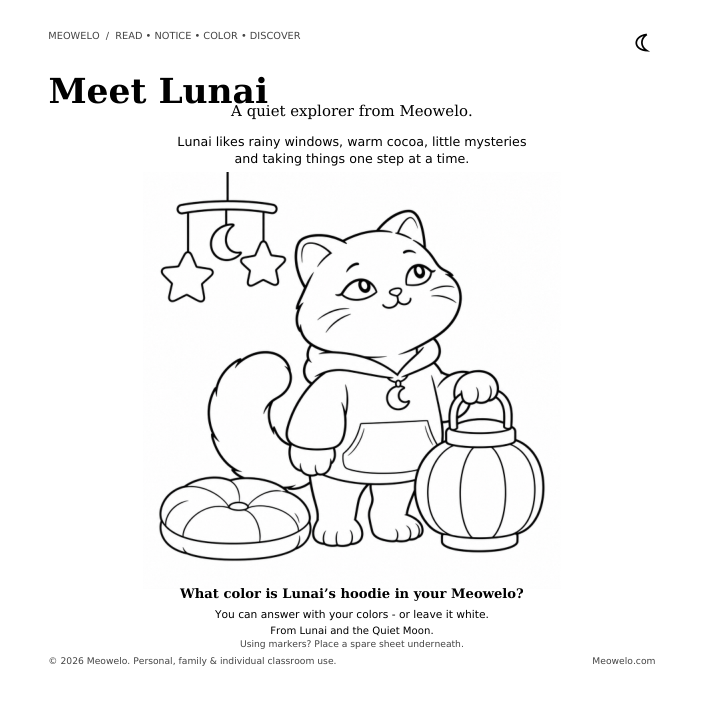
Meet Lunai
A free Lunai page with big, friendly shapes: ideal for children moving from scribbles to careful coloring.
Print it freeWhen to ask for advice
Children develop at very different rates. It's worth talking to your pediatrician or your child's teacher (who may suggest an occupational therapist) if your child:
- seems to find hand activities very tiring or painful,
- avoids all drawing, cutting or buttoning tasks,
- has trouble using both hands together as they get older,
- or if you simply have a nagging worry. You know your child best.
Is my child ready for kindergarten?
Schools don't expect perfect handwriting on day one. Helpful skills include holding a crayon with the fingers, making simple lines and circles, and using both hands together. Lots of relaxed coloring, drawing, play dough and building will cover most of it naturally.
Questions parents ask
At what age should a child have a tripod grip?
Does coloring help with handwriting?
Should toddlers use jumbo crayons?
Is it bad if my child can't color inside the lines?
One scribble at a time
Fine motor skills grow quietly, one crayon, one page, one wobbly line at a time. Keep it playful, choose tools that fit your child's hands, and trust the process. That tongue-out, concentrating seven-year-old is on their way.
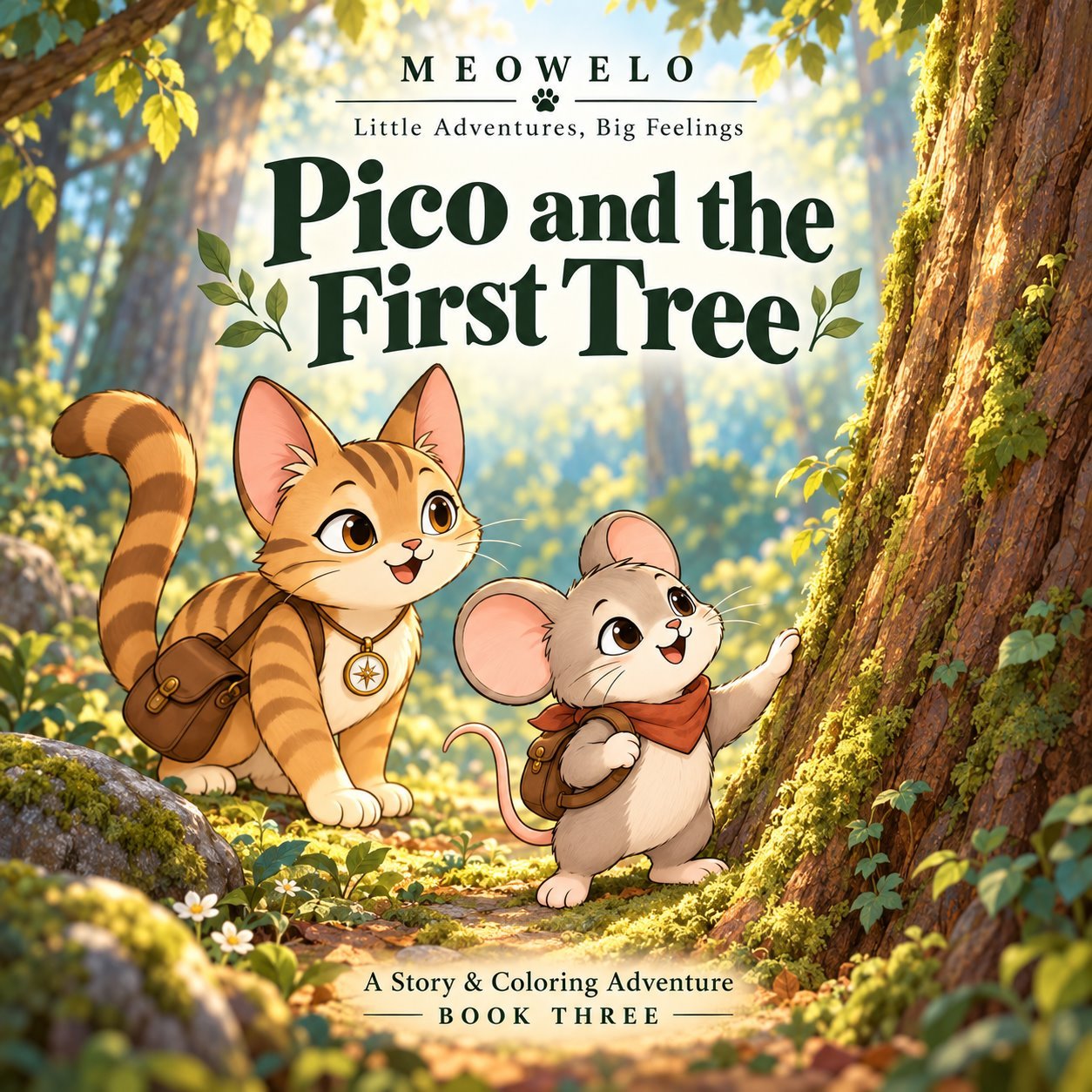
Pico and the First Tree
How do you begin a very big adventure?
“The forest looks enormous from Pico's paws. With Myro nearby, Pico chooses one place to begin: the first tree.”
With Pico & Myro · Ages 6–10 · Story + coloring