
Family story night is one evening a week set aside for stories: reading one together, coloring a scene from it, and making one up. The fixed day is what makes it work. Children look forward to it, it costs nothing, and it gives the whole family the same thing to talk about. About 45 minutes is plenty.
Below: how to set it up, a simple running order, ideas for mixed ages, and how to keep it special.
A simple running order
| Part | Time | What happens |
|---|---|---|
| Gather | 5 min | Snack, cushions, lights low |
| Read one | 15 min | One story or a chapter, read aloud |
| Color one | 15 min | Everyone colors a scene from the story |
| Tell one | 10 min | Make up "what happens next" together |
Read one
Take turns choosing: one week a parent's pick, the next a child's. Reading aloud stays valuable long after children can read alone; see reading aloud to older kids.
Color one
Everyone colors the same scene, or each person draws their favorite moment. Comparing at the end is half the fun. Our coloring and reading guide explains why picture and story go so well together.
Tell one
Go round the table, each person adding one sentence to "what happened next". Silly is good. Our story prompts for kids have plenty of starting points.
Mixed ages
- Younger children can choose colors for a page an older sibling outlines.
- Older children can read a page aloud, or write down the made-up story.
- Grown-ups join in the coloring, not just supervise.
Keep it special, not a chore
- Skip a week without guilt if life gets busy.
- Keep the colored pages in a "story night" folder (see how to keep kids' artwork).
- Invite a grandparent by video call now and then.
Ideas to keep it fresh
| Idea | How |
|---|---|
| Theme nights | Stories about the sea, the night sky, or animals |
| Guest reader | A grandparent reads by video call |
| Picnic night | Stories on a blanket on the floor |
| Lantern night | A small lamp and stories about light and dark |
| Child's choice | The youngest picks the story and the snack |
When it doesn't go to plan
Someone's tired, someone's grumpy, someone wants a different story. Shorten it: read one page, color for five minutes, done. A short story night still counts, and keeping the habit matters more than any single evening.
What to read, by age
| Ages | Good choices | Why |
|---|---|---|
| 6–7 | Picture books, short illustrated stories | One sitting, lots to look at and color |
| 8–9 | Early chapter books, one chapter a week | A cliffhanger to look forward to |
| 10–12 | Longer novels, myths, funny short stories | Stories they wouldn't pick alone yet |
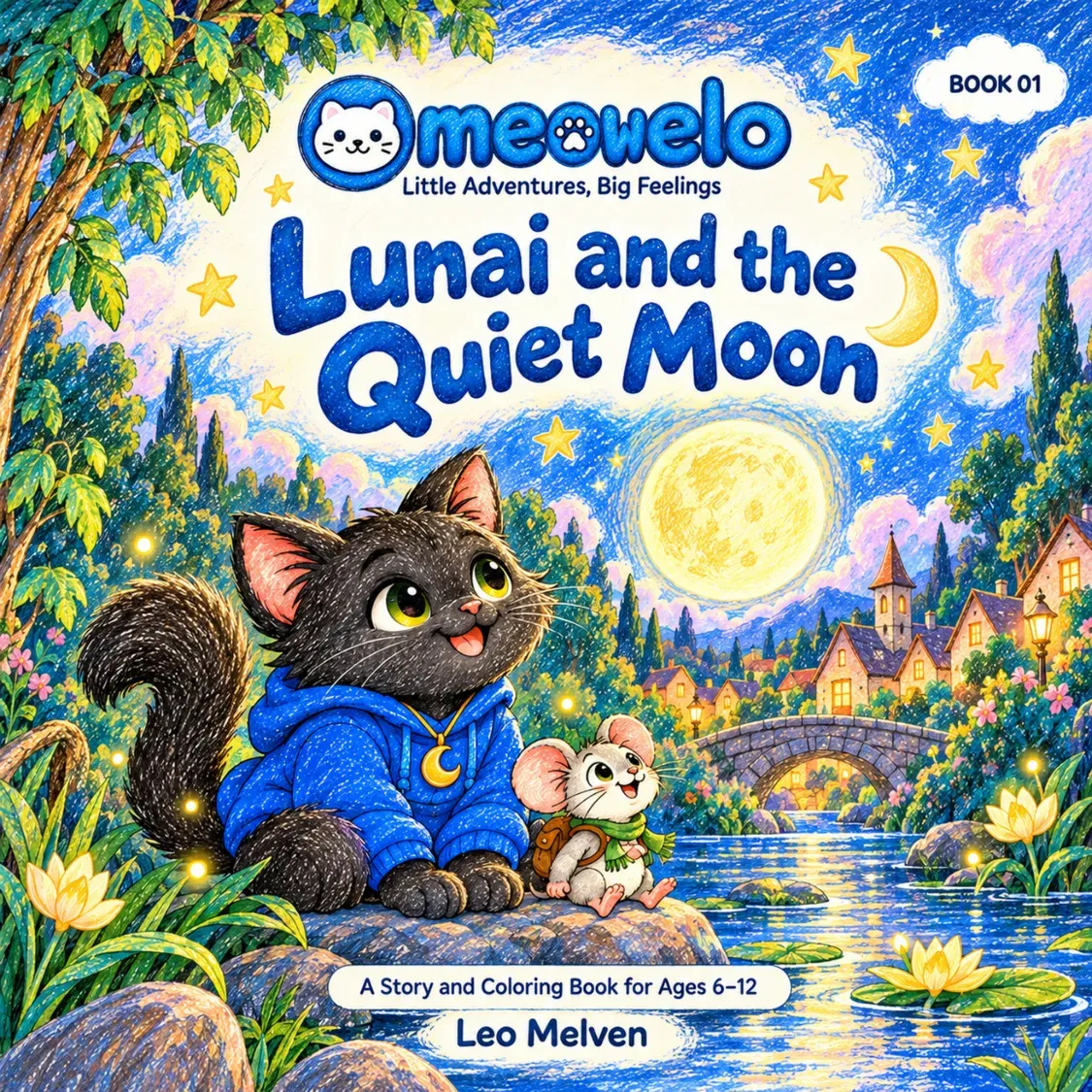
| Mixed ages | Short story collections, fables, story-and-coloring books | Each story stands alone; everyone keeps up |
A mixed-age family often does best with short, complete stories: no one has to remember last week's chapter, and the youngest isn't lost.
A sample evening
Here's what one story night can look like with a 7-year-old and a 10-year-old. At 6:30 the lamp goes on and the snack comes out. The 10-year-old reads the first page of tonight's story aloud; a grown-up reads the rest. Everyone gets the same printed scene to color, and the youngest decides what time of day it is in the picture. While coloring, a grown-up asks one question: "What do you think happens next?" At 7:10 the pages go in the folder, and the 7-year-old chooses next week's story.
Notice how little equipment it takes: one story, one page each, one question. The ritual is what children remember.
Questions that make stories stick
- "Which part would you put on the cover?"
- "Who would you want as a friend from this story, and why?"
- "What would you have done instead?"
- "What did the picture show that the words didn't?"
One question is enough; story night isn't a comprehension test. More ideas in stories, coloring and reading.
Story night on the go
Traveling or staying with family? Story night travels well. Pack one short book or a few printed story pages, a pencil case and a clipboard each. At a grandparent's house, ask them to choose and read the story, a lovely way to include them (see coloring with grandparents). On a long journey, an audiobook can stand in for the reading and the coloring can happen at the next stop.
The details can change; what matters is that story night still happens. Children often remember the unusual ones best: the story read by torchlight in a tent, or by a cousin in a holiday house.
If a week is missed, simply pick it up again the next week without fuss. The value of story night builds over months and years, not single evenings, and children remember the warmth of the habit far more than any individual story or picture.
Questions parents ask
What is a family story night?
How long should family story night be?
What books are good for family story night?
How do you include different ages?
The one thing to remember
Read one, color one, tell one, on the same night each week. That rhythm is the whole tradition.

Conversation
Join the conversation
Tips, questions and stories from other grown-ups. A person reads every comment before it goes live.
No comments yet. What has worked at your house? Your story might be exactly what another parent needs tonight.