The easiest way to make holiday cards with children is to fold heavier paper in half, let them decorate the front with one simple design, and write the message inside together. A batch of eight to twelve is plenty for one afternoon. Heavier paper keeps cards standing, washable markers give bold color, and a grown-up can trim edges neatly afterwards.
Below: what you need, five easy designs, and a plan for making a batch without anyone losing interest.
Affiliate disclosure. Some links below go to Amazon, and Meowelo may earn a commission if you buy through them, at no extra cost to you. As an Amazon Associate I earn from qualifying purchases. Amazon does not sponsor or endorse Meowelo. We list supplies that suit these books, and say what each one is not good for too. Full disclosure.
What you need
| Item | Why |
|---|---|
| Heavier paper | Cards stand up and markers don't show through |
| Washable markers (broad and fine) | Bold fronts, neat messages |
| A paper trimmer (for grown-ups) | Straight, neat edges |
| Optional sparkle | Metallic crayons for stars and baubles |
For a batch of cards
| Pick | Best for | Good to know | Buy |
|---|---|---|---|
 Heavier paper that stands upHP Premium32 Printer Paper, 32 lb, Letter |
Noticeably sturdier pages | Costs more than everyday paper | $22.99 on Amazon.com Price as of DetailsProduct prices and availability are accurate as of the date/time indicated and are subject to change. Any price and availability information displayed on Amazon.com at the time of purchase will apply to the purchase of this product. |
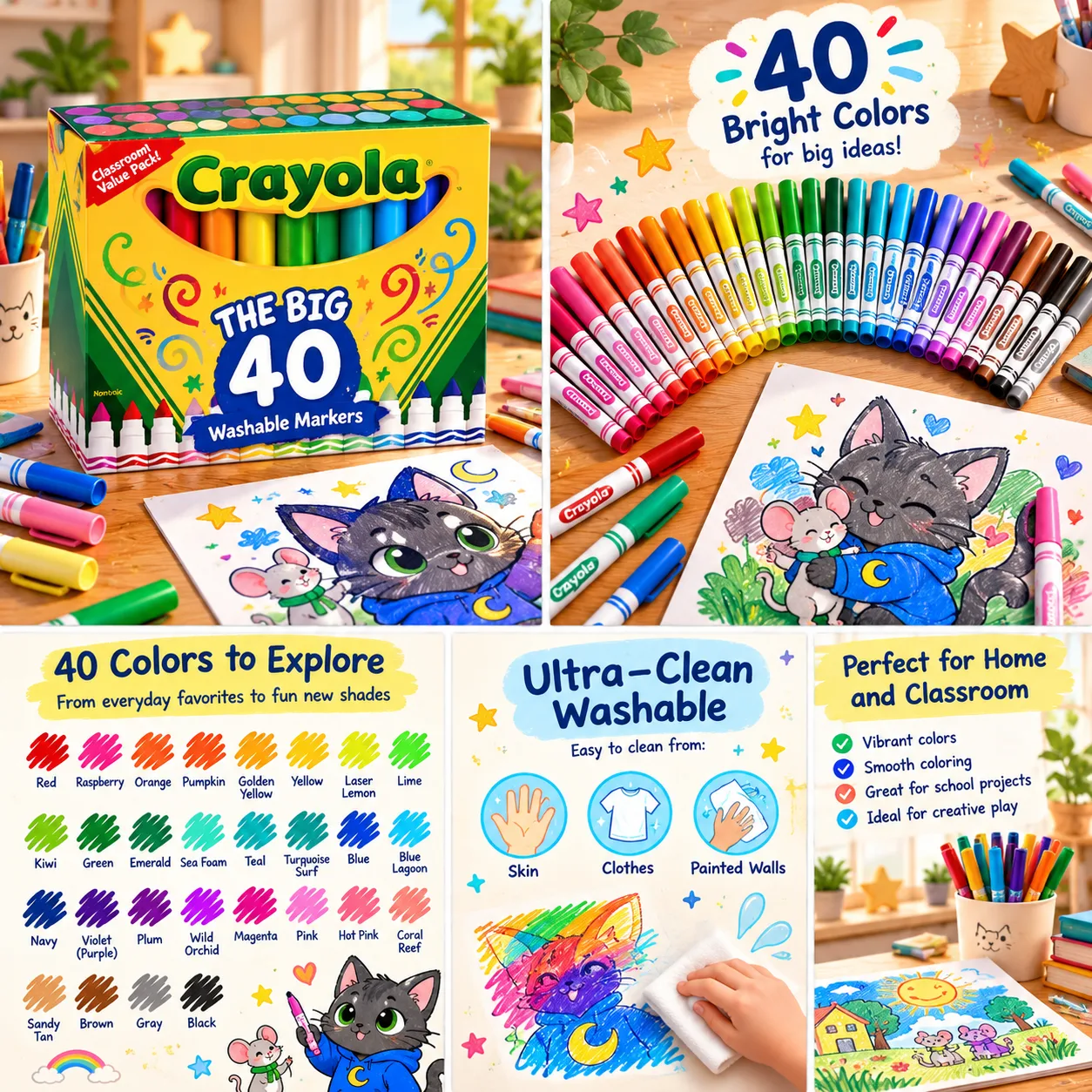 Bold washable colorCrayola Ultra Clean Washable Markers, Broad Line, 40 Count |
Among the most washable kids' markers from skin and most fabrics | Broad tips aren't for tiny details | $18.99 on Amazon.com Price as of DetailsProduct prices and availability are accurate as of the date/time indicated and are subject to change. Any price and availability information displayed on Amazon.com at the time of purchase will apply to the purchase of this product. |
 Straight edges (grown-ups only)Fiskars SureCut Deluxe Paper Trimmer, 12 in |
Perfectly straight edges | For grown-ups: it is a blade | $28.00 on Amazon.com Price as of DetailsProduct prices and availability are accurate as of the date/time indicated and are subject to change. Any price and availability information displayed on Amazon.com at the time of purchase will apply to the purchase of this product. |
Amazon shows the current price and delivery. Tap any name for our full write-up, including what it’s not good for.
Five easy designs
- Fingerprint baubles: a drawn string with colorful circles hanging from it.
- A row of lanterns: simple shapes with a gold glow (see metallic crayons and markers).
- A starry night: a deep blue sky with one big star (see how to color a night sky).
- Pattern tree: a triangle tree filled with pattern doodles.
- A snowy window: a square window with white snow left uncolored.
A simple plan for a batch
- Grown-up prep: cut and fold the paper before the children sit down.
- Choose one design together and make a sample.
- Make four cards, then take a break.
- Write messages together; younger children can sign their name or draw a small heart.
- Trim edges (grown-up job) and leave them to dry flat.
Cards for grandparents are especially loved (see coloring with grandparents).
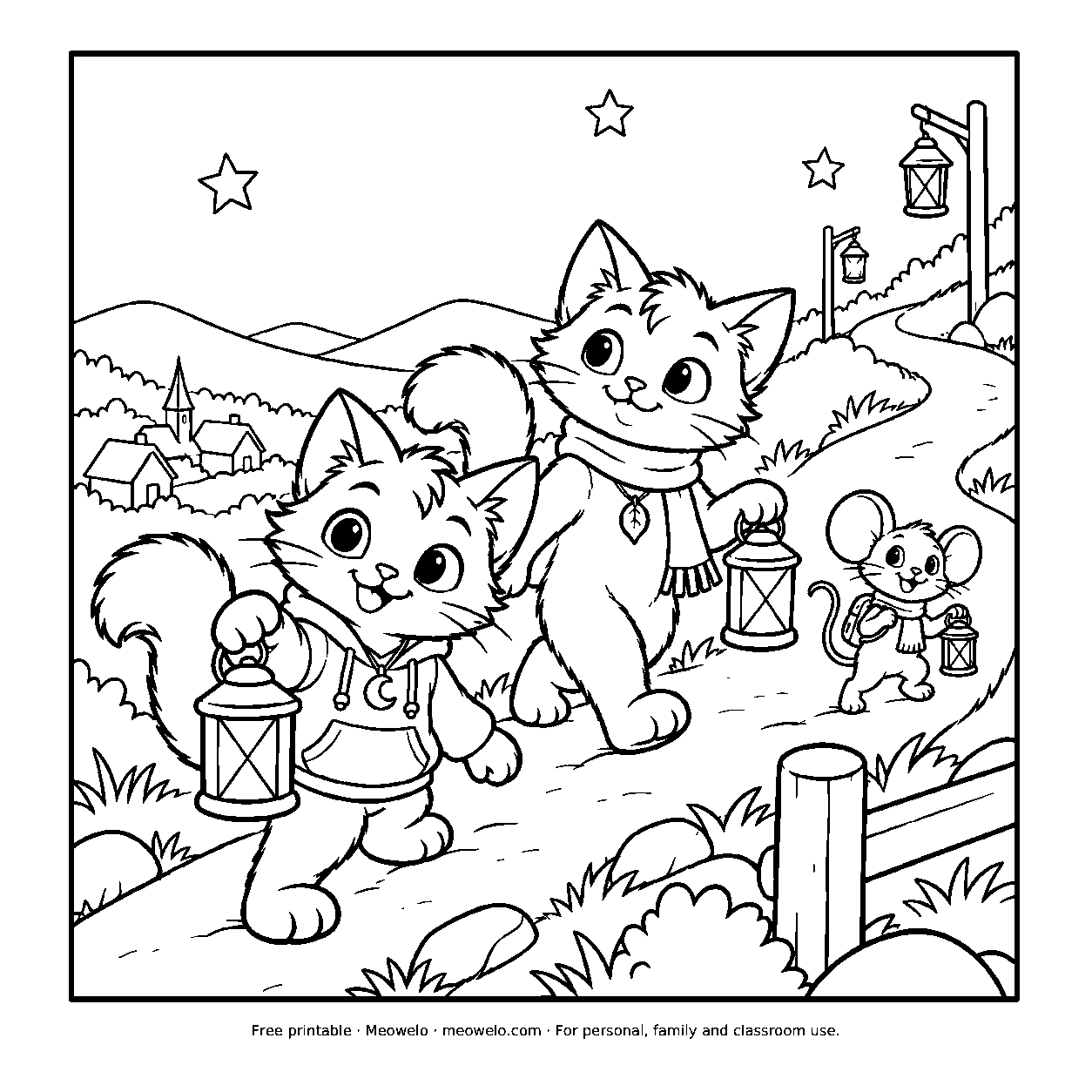
One Lantern at a Time
A lantern walk turns a hill into a trail of warm little lights.
Print it freeWriting the message
- Ages 6–7: a grown-up writes the message lightly in pencil, the child goes over it, then signs.
- Ages 8–9: pick one sentence starter: "I hope…", "Thank you for…", "I remember when…".
- Ages 10–12: a short personal note, plus a tiny drawing inside.
Short and personal beats long and copied. One true sentence ("Thank you for the walk to the pond") is what people keep.
Posting and giving
- Let cards dry fully before putting them in envelopes, especially metallic or marker fronts.
- Check the size fits the envelopes you have before cutting.
- Hand-delivered cards to neighbors are a lovely way for children to see the card being opened.
A card for every kind of child
| Your child… | Try |
|---|---|
| Loves detail | A single ornament filled with pattern doodles, colored with fine tips |
| Gets bored fast | Fingerprint or dot designs: five cards in ten minutes |
| Likes to write | A tiny comic inside: three boxes, "what happened this year" |
| Says "I can't draw" | A colored free page, trimmed and glued to the front |
| Loves sparkle | A deep blue night with one metallic star |
A card-making station that runs itself
Set out one tray per step and let children move along it, like a little workshop: blank cards (already folded), decorating (markers, crayons, a pencil for sketching), messages (a list of sentence starters on a sticky note), and drying (a flat spot or a clothes line with pegs). Everyone works at their own speed, nobody waits for a shared marker, and finished cards go straight to the drying line instead of getting smudged on the table.
Write a short list of who the cards are for before you start: grandparents, a teacher, the neighbor who waves every morning, a friend who moved away. Children work better toward real people than toward "some cards", and the list stops the batch from growing to forty.
Plan it across a week
| Day | Job | Time |
|---|---|---|
| Monday | Make the list and pick one design | 10 min |
| Tuesday | Fronts for half the cards | 20 min |
| Wednesday | Fronts for the rest | 20 min |
| Thursday | Messages and signatures | 15 min |
| Friday | Envelopes, stamps, posting or delivering | 15 min |
Short daily sessions keep the cards fresh and the children cheerful. If a sibling or a grandparent joins, see coloring with siblings for keeping a mixed-age table happy.
Thank-you notes, the same way
The same workshop works brilliantly after birthdays and holidays for thank-you notes. Children dread writing them when it means a long letter, but enjoy it when it's a small card with a drawing of the present and one sentence: "Thank you for the kite, I flew it on Sunday!" Short, specific and in their own words is exactly what the person reading it hopes for.
Keep a few blank folded cards in the art box all year round. Then a thank-you, a get-well card or a "welcome to the street" note can be made the same afternoon, while it still means the most.
Whatever the occasion, the same simple setup works: folded cards ready, one design chosen together, short sessions and a drying spot. Children who make cards a few times a year get quicker and more confident, and many start making them on their own for friends' birthdays without being asked. That habit of making something for someone else is worth more than any perfect card.
Questions parents ask
What paper is best for homemade cards?
What are easy holiday cards for kids to make?
Should kids use a paper trimmer?
How many cards can kids make in one afternoon?
The one thing to remember
One design, heavier paper and short sessions. The wobbly ones are the ones people keep.


Conversation
Join the conversation
Tips, questions and stories from other grown-ups. A person reads every comment before it goes live.
No comments yet. What has worked at your house? Your story might be exactly what another parent needs tonight.