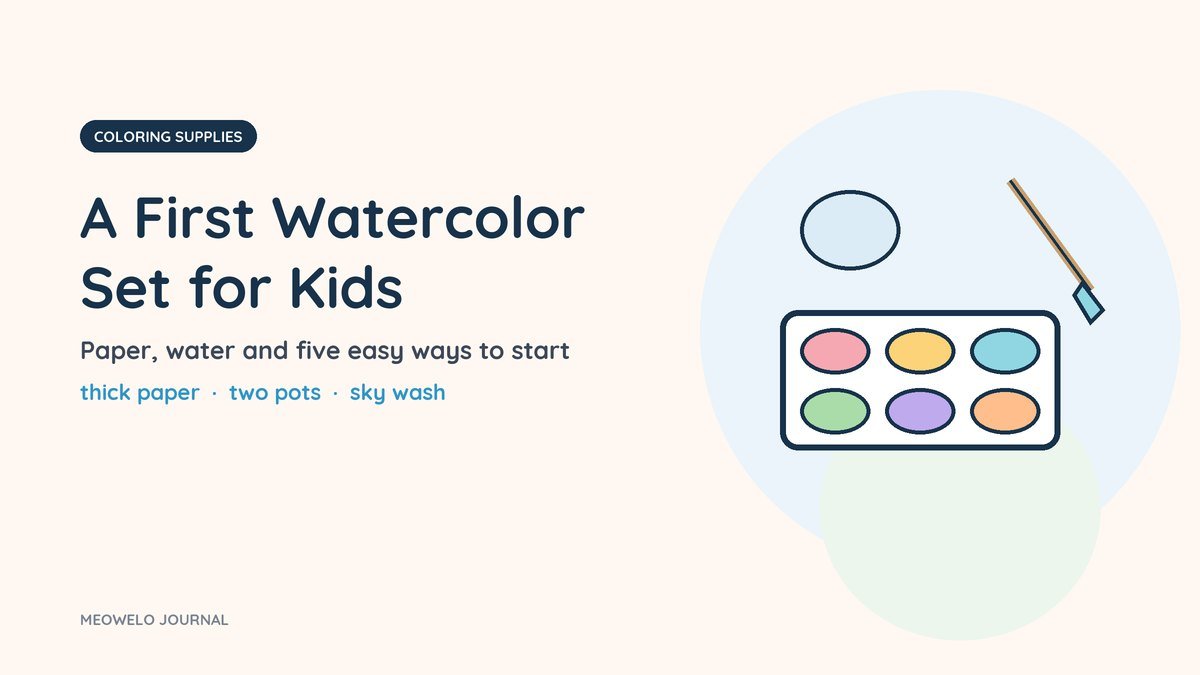

A first watercolor set needs three things: a simple washable pan set with a brush, two pots of water, and thick paper. The paper matters most. Thin printer paper wrinkles and tears when wet, which frustrates children fast. With heavier paper and two water pots (one to rinse, one clean), even a 6-year-old can paint a sky, a rainy day or a crayon-resist picture.
Below: what to set out, how to keep colors bright, and five easy first projects.
Affiliate disclosure. Some links below go to Amazon, and Meowelo may earn a commission if you buy through them, at no extra cost to you. As an Amazon Associate I earn from qualifying purchases. Amazon does not sponsor or endorse Meowelo. We list supplies that suit these books, and say what each one is not good for too. Full disclosure.
The setup
| You need | Why |
|---|---|
| A washable pan set with a brush | Easier clean-up for a first try |
| Heavier paper | Holds water without tearing |
| Two pots of water | Keeps colors clean |
| A cloth or paper towel | To dab the brush |
| A wipeable cover | For the table (and sleeves) |
Our guide to messy play without stress has more set-up and tidy-up tips.
Keep colors bright, not brown
- Wet the brush, then touch it to one color.
- Rinse in pot one and dab on the cloth before the next color.
- Wet the paint again from pot two (the clean one).
- Let one area dry before painting right next to it, unless you want colors to mix.
Five easy first projects
- A sky wash: wet the top of the page with clean water, then touch in blue and watch it spread.
- Crayon resist: draw with a white crayon, paint over it, and watch the drawing appear (more in how to color a night sky).
- Rainbow stripes: paint stripes that just touch, and see where they mix.
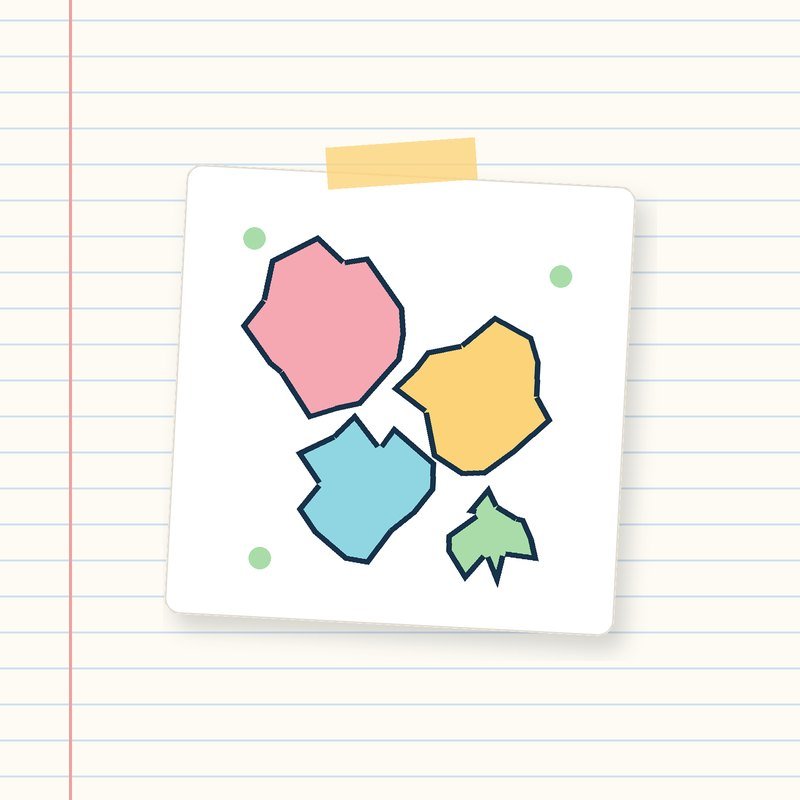
- Blob creatures: drop a blob of color, let it dry, then turn it into a creature with a pen.
- Rainy day: gray-blue wash, then dots of clean water for raindrops.
Watercolor on coloring pages
Watercolor is too wet for thin coloring-book pages. For printed pages, print on heavier paper first. Our guide to printing coloring pages covers paper choices.
Common first-time problems
| Problem | Likely cause | Try |
|---|---|---|
| The paper curls and tears | Too much water on thin paper | Heavier paper; dab the brush first |
| Colors look pale | Too much water in the brush | Wet the paint more and the brush less |
| Everything turns brown | Dirty rinse water | Rinse, dab, then use the clean pot |
| Puddles and blooms | Painting into a wet area | Wait for it to dry, or enjoy the effect |
Tidy-up in five minutes
- Rinse brushes and lay them flat to dry.
- Leave the paint pans open to dry before closing the lid.
- Pour away the water and wipe the table.
- Lay paintings flat somewhere safe to dry.
Making tidy-up part of the activity, not a punishment after it, is one of the easiest ways to keep painting a regular treat. If paint does land somewhere it shouldn't, see our calm guide to art-supply marks.
Watercolor words, explained simply
| Word | Means | Try |
|---|---|---|
| Wash | A thin, even layer of watery color | A pale blue sky |
| Wet on wet | Paint onto paper that's already damp | Soft, fuzzy clouds |
| Wet on dry | Paint onto dry paper | Crisp edges and details |
| Lifting | Dabbing wet paint off with a tissue | Clouds in a blue sky |
| Resist | Wax or crayon that paint can't cover | Hidden stars |
A first lesson, step by step
- Tape the paper to the table on all four sides; it dries flatter.
- Paint the top half with clean water.
- Touch blue onto the wet area and watch it spread.
- While it's still wet, dab a crumpled tissue in two places: clouds appear.
- Let it dry, then paint a dark green hill along the bottom with a slightly drier brush.
- Peel off the tape for a clean white border.
Twenty minutes, three techniques, and a picture worth keeping (see how to keep kids' artwork).
Brushes and care
The brush in a starter set is fine to begin with. If your child keeps painting, one medium round brush with a good point is the most useful upgrade. Rinse brushes after use, shape the bristles to a point and dry them lying flat, never standing on their bristles.
When to move on from a starter set
If your child paints every week, asks for more colors or complains that the colors look pale, they've outgrown the starter set. A small set of student-quality pans and heavier paper is a natural next step.
Until then, a starter set is a perfectly good way to learn: the techniques (washes, wet on wet, lifting and resist) work the same with any paints. What makes the biggest difference at every stage is paper, so whatever set your child uses, heavier paper is the upgrade worth making first. Keep the starter set for travel and messy experiments once the better paints arrive.
Questions parents ask
What age can kids start watercolor?
What paper is best for kids' watercolor?
Why do kids' watercolors turn brown?
Can you use watercolor on coloring pages?
The one thing to remember
Thick paper and clean water make watercolor easy. Start with a sky, and let the paint do the magic.


Conversation
Join the conversation
Tips, questions and stories from other grown-ups. A person reads every comment before it goes live.
No comments yet. What has worked at your house? Your story might be exactly what another parent needs tonight.