To color snow or anything white, leave most of the paper white and color only the shadows, in pale blue, lilac or light gray, then color the background a little darker so the white stands out. The paper is the brightest white you have; a white crayon or pencil barely shows on it. White crayon earns its place in other ways: as a hidden "resist" under paint for snowflakes, and on colored paper. Any colors work, because the child chooses every color; these steps simply make white look bright instead of unfinished.
Below: why white is tricky, snowy ground, falling snowflakes, snowmen, white animals, snow in different light, and the mistakes that turn snow gray.
Affiliate disclosure. Some links below go to Amazon, and Meowelo may earn a commission if you buy through them, at no extra cost to you. As an Amazon Associate I earn from qualifying purchases. Amazon does not sponsor or endorse Meowelo. We list supplies that suit these books, and say what each one is not good for too. Full disclosure.
Why white is the hardest color
Ask a child to color a snowman and one of two things usually happens. Either they leave him completely blank, and the page looks unfinished, or they press hard with a white crayon, see almost nothing, and decide white "doesn't work." Both make sense. On white paper, white is already there, so the trick isn't adding white: it's adding everything around it.
Artists have a simple way to think about it: something looks white when it's the lightest thing in the picture. So a snowy page is mostly about two choices: where the shadows go on the white, and how much contrast the background gives it. Get those two right and plain paper suddenly looks like fresh snow.
The three rules for anything white
| Rule | What to do | Why it works |
|---|---|---|
| 1. Keep the paper | Decide before coloring which parts stay white, and color around them | Paper white is brighter than any crayon or pencil |
| 2. Cool shadows | Pale blue, lilac or light gray on the side away from the light | Shadows on snow look bluish, which reads as cold and clean |
| 3. A darker neighbor | Color the sky, a tree or a wall a few shades darker | White only looks white next to something that isn't |
Why blue and not gray? Blue and lilac are "cool" colors, and they make snow feel cold and fresh; a heavy gray can make it look dirty. Children who enjoy the idea of warm and cool colors will find more in color theory for kids.
Snowy ground, step by step
- Pick the light. Choose a side for the sun or the moon. Everything that faces it stays white.
- Shadows first, lightly. With a pale blue pencil or crayon, add soft shadows on the far side of each bump of snow, under a tree, beside a house or a footprint. Press gently; you can always go darker.
- Curved strokes. Follow the shape of the snow: gentle curves over hills and drifts, not straight lines across the page.
- A deeper touch. In the very darkest spots (right under a roof, inside a footprint), add a second, slightly darker blue or lilac.
- Color the background. A blue sky, dark green pine trees, a brown fence: now the white ground glows.
Snow-covered branches work the same way: leave a white strip on top of each branch and color the wood underneath. The winter tree in how to color trees and leaves uses exactly this.
Falling snowflakes: three ways
- Color around them. Draw tiny circles lightly in pencil, then color the sky around them. Slow, but the snowflakes stay perfectly white. A good challenge for 9 to 12.
- White crayon resist. Press firmly with a white crayon to draw snowflakes and dots, then brush a thin wash of watercolor over the sky. The wax pushes the paint away and the flakes appear like magic. It works best on thicker paper; see a first watercolor set for kids for paper and paint tips.
- Dots on top. On a dark sky colored with crayon or marker, a white gel pen or opaque paint pen adds snowflakes at the end. Ordinary white crayon won't cover dark colors well.
White crayon resist is also the secret behind starry skies; the steps are in how to color a night sky.
Snowmen, snowballs and round white shapes
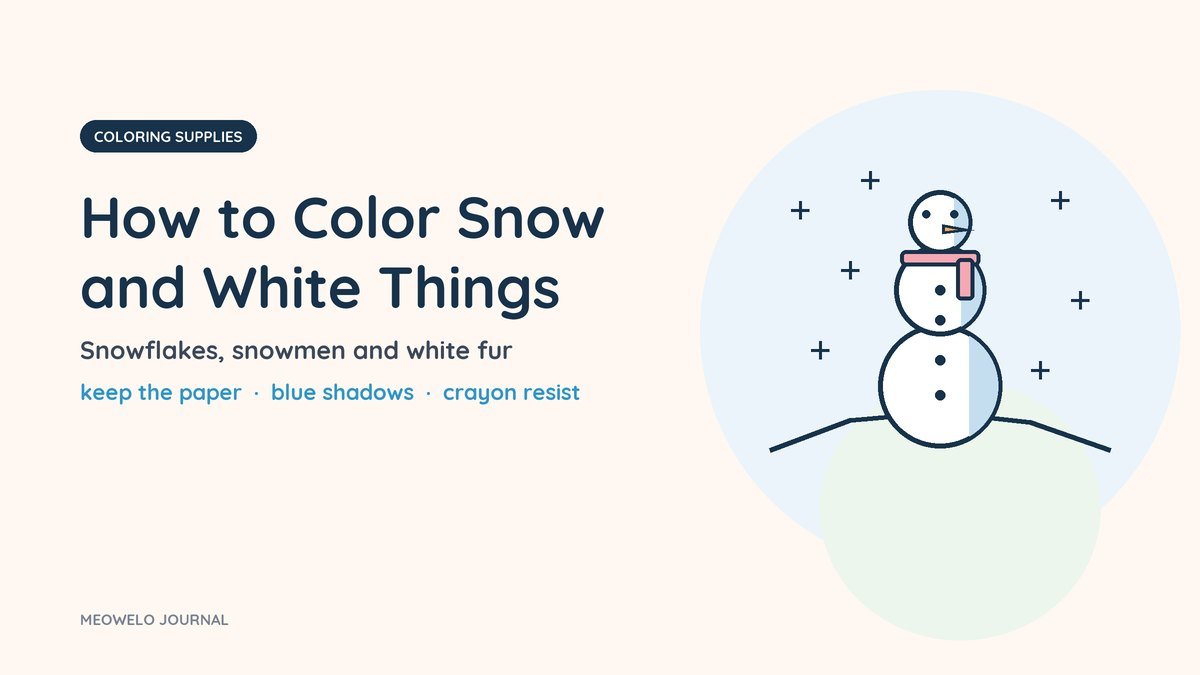
A snowman is three circles, and circles look round when they have a shadow along one side. On each ball, color a pale blue crescent on the side away from the light, a little wider at the bottom. Leave the middle and the lit side white. Add a soft shadow on the ground beside him, on the same side. Then the fun part: a bright scarf, a carrot nose, a hat, buttons. Those strong colors make the white body look even whiter.
The same crescent works for snowballs, clouds, eggs, a white plate or a moon. For shiny white things (ice, a glass, a frozen pond), the small white highlight and dark edge in how to color shiny things add sparkle.
White animals and white fur
Polar bears, sheep, white rabbits, a white cat: most of the animal should stay white, with fur suggested rather than colored.
- Short flicks, not an outline. Add a few short, light strokes in pale gray or blue along the shadow side, under the chin, the belly and the legs, following the direction the fur grows.
- Warm or cool. A polar bear in sunshine can take a pale cream or yellow on the lit side; a white cat indoors might suit a warm gray. Children can choose.
- Color the details strongly. Eyes, nose, a collar or a scarf in bright color make the fur read as white instead of empty.
Rinwa, the inventor in the Meowelo books, is a white cat with turquoise eyes, bronze goggles and one gold star around her eye: a perfect page to practice white fur against bright details. The flick strokes for fur are explained in how to color fur, wood, water and stone.
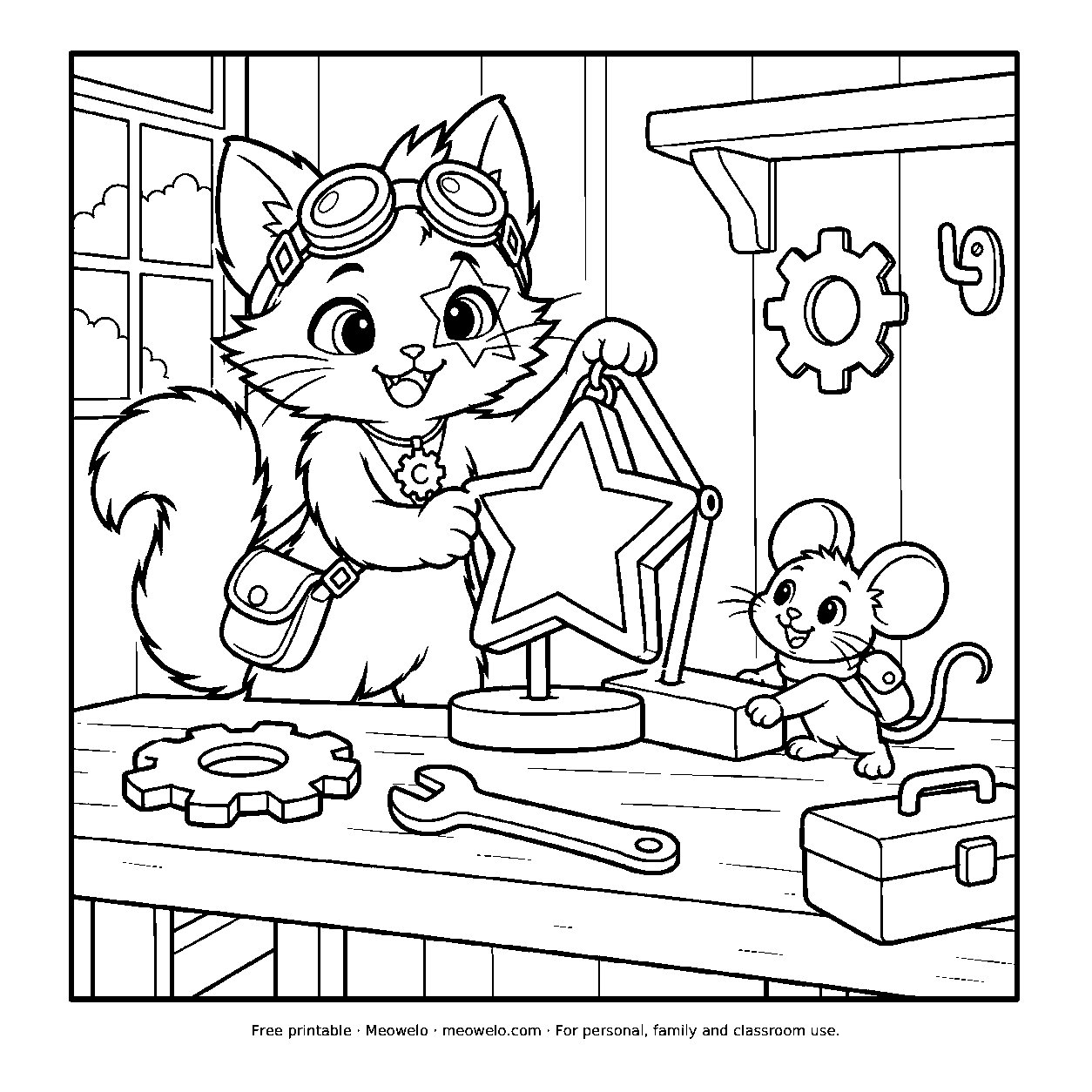
Rinwa and the Crooked Stars
Pico's little wooden block helps Rinwa try a new place for a crooked star lantern.
Print it freeSnow in different light
Snow takes on the color of the light around it. Older children enjoy choosing one of these and coloring the whole page to match:
| Light | Shadows on the snow | The rest of the page |
|---|---|---|
| Sunny day | Pale sky blue | Bright blue sky, a touch of pale yellow on the lit snow |
| Cloudy day | Soft light gray | Gray-blue sky, muted colors everywhere |
| Sunset | Lilac or purple | Pink and peach on the lit snow, an orange sky |
| Night | Deep blue | A dark sky, yellow windows, snow left white in the moonlight |
Which tool for which job
| Job | Best tool | Why |
|---|---|---|
| Soft shadows on snow | Colored pencils, pressed lightly | Easy to keep pale and build up slowly |
| Big skies and backgrounds | Crayons or broad markers | Quick, strong color that makes white glow |
| Hidden snowflakes | White crayon, then watercolor | Wax resists the paint |
| Snowflakes on a dark sky | White gel pen or paint pen | Opaque white shows on top of dark color |
| Snow on colored paper | White colored pencil or crayon | On blue or gray paper, white finally shows |
Tools for snowy pages
| Pick | Best for | Good to know | Buy |
|---|---|---|---|
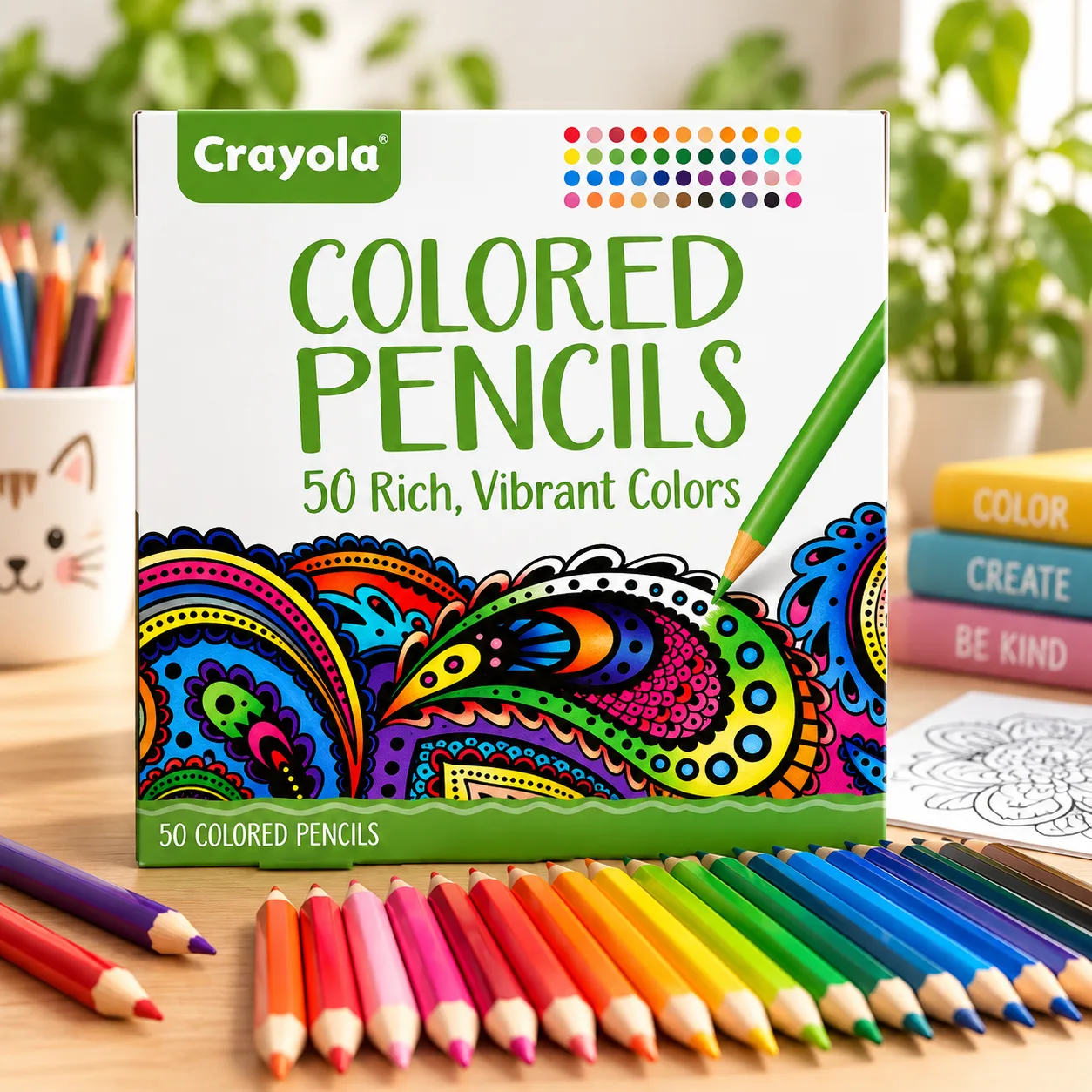 Pale blues, lilacs and grays for shadowsCrayola Colored Pencils, 50 Count |
Good detail control | Needs a sharpener | $13.99 on Amazon.com Price as of DetailsProduct prices and availability are accurate as of the date/time indicated and are subject to change. Any price and availability information displayed on Amazon.com at the time of purchase will apply to the purchase of this product. |
 Watercolor for white-crayon snowflakesCrayola Washable Watercolor Paint Set for Kids |
Washable formula for easier clean-up | Needs thicker paper: too wet for thin book pages | $8.49 on Amazon.com Price as of DetailsProduct prices and availability are accurate as of the date/time indicated and are subject to change. Any price and availability information displayed on Amazon.com at the time of purchase will apply to the purchase of this product. |
Amazon shows the current price and delivery. Tap any name for our full write-up, including what it’s not good for.
Common mistakes
- Coloring the snow gray all over: it looks dirty. Keep most of it white; shadow only one side.
- Pressing hard with white crayon on white paper: it barely shows. Save white crayon for resist or colored paper.
- A gray outline all around a white animal: it looks like a sticker. Shadow one side and the underneath instead.
- A pale background: white needs a darker neighbor. Make the sky or the trees a little stronger.
- Dark color too close too soon: it smudges into the white. Color the dark parts carefully, edge first. For large skies, the tips in how to fill big areas keep strokes even.
For younger and older colorers
Ages 6 to 8: one rule is enough: leave the snow white and color a blue sky. A pale blue shadow along the bottom of each snowman ball is a lovely next step, and white crayon resist feels like a magic trick at this age. Ages 9 to 12: try choosing a light (sunny, sunset or night) and coloring the whole page to match, coloring around tiny snowflakes, or white fur with fine flick strokes. Many older children enjoy the challenge of a page that is "mostly white" and still looks finished.
If your child decides the snow is pink, the snowman is green and the sky is gold, that's a perfectly good page too. These are ideas to try, never rules a picture has to follow.
Questions parents ask
How do you color snow on white paper?
What color do you use for snow shadows?
Does white crayon work on white paper?
How do you color a white animal like a polar bear or a white cat?
The one thing to remember
You don't color white: you color what's around it. Keep the paper, shadow one side in a cool, pale color and give the white a darker neighbor, and snow, snowmen and white fur will look bright and finished on any page.


Conversation
Join the conversation
Tips, questions and stories from other grown-ups. A person reads every comment before it goes live.
No comments yet. What has worked at your house? Your story might be exactly what another parent needs tonight.