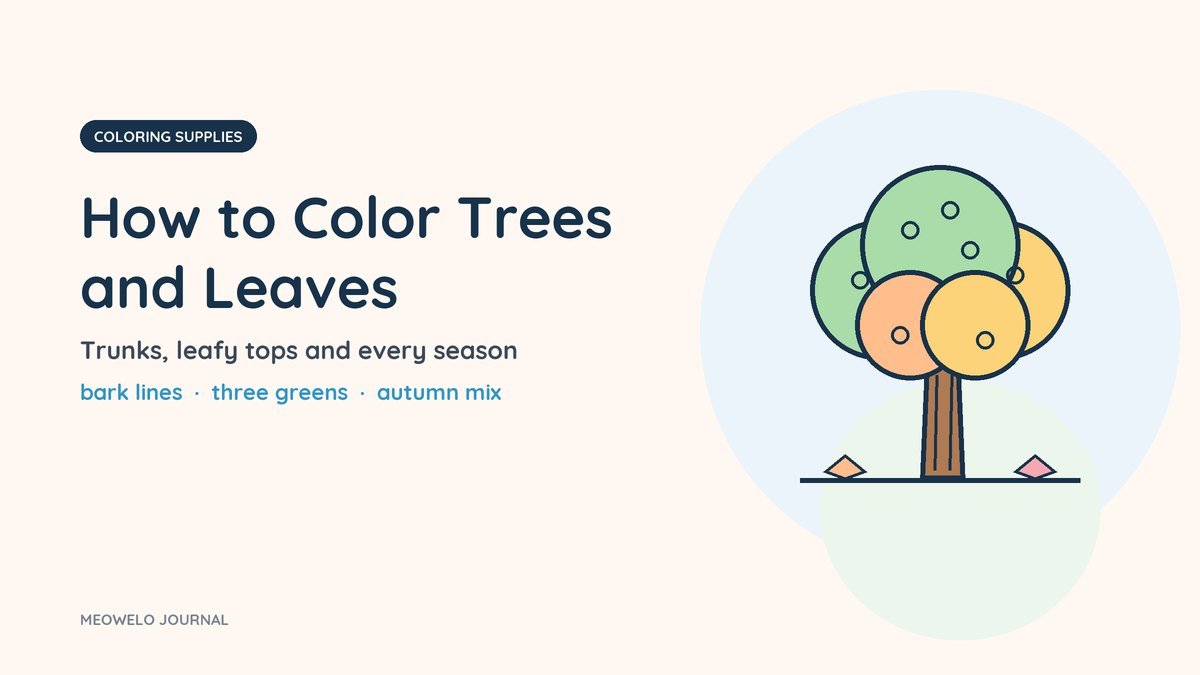

To color a tree, give the trunk long up-and-down strokes in two browns, color the leafy top in two or three greens instead of one flat color, and leave small gaps where the light comes through. For single leaves, color from the middle vein outward and darken one half slightly. For autumn, mix yellows, oranges and reds in the same tree. Any colors work, because the child chooses every color; these steps simply make a tree look alive.
Below: trunks and branches, leafy tops, single leaves, a tree in each season, and the mistakes that turn a tree into a green lollipop.
Affiliate disclosure. Some links below go to Amazon, and Meowelo may earn a commission if you buy through them, at no extra cost to you. As an Amazon Associate I earn from qualifying purchases. Amazon does not sponsor or endorse Meowelo. We list supplies that suit these books, and say what each one is not good for too. Full disclosure.
Why trees end up looking flat
Most children color a tree the way they color a ball: one brown, one green, pressed hard and evenly. Real trees are never one color. The side facing the sun is lighter, the underside of the leaves is darker, and the bark has lines running up the trunk. Two small habits change everything: stroke direction and more than one shade.
Trunks and branches
- Light base first. Color the whole trunk in a light brown, tan or gray, with strokes going up and down, not side to side.
- Bark lines. With a darker brown, add long, slightly wavy lines up the trunk. Leave gaps between them.
- One shaded side. Darken the side away from the light, and the place where branches leave the trunk.
- Roots and branches follow the same direction as they grow: strokes run along each branch, out toward its tip.
Birch trees are a nice change: leave the trunk white and add short dark dashes across it. The same long-line trick that makes wood look like wood is in how to color fur, wood, water and stone.
The leafy top: not one flat green
- Pick two or three greens: a light yellow-green, a middle green and a dark green.
- Light green on top, where the sun hits, in small circles or short scribbles rather than straight lines.
- Middle green across the rest.
- Dark green underneath and in a few hollows inside the leaves, so the top looks round and full.
- Leave a few gaps white or sky-blue, where light comes through the branches.
Small circles are the secret: they look like clusters of leaves without drawing a single leaf. For large leafy areas that won't streak, see how to fill big areas when coloring.
Single leaves, close up
Many coloring pages have big leaves on the ground or on a branch. They look best with a little care:
- Color from the middle vein outward, following the direction the side veins run.
- Darken one half of the leaf a little: it looks folded along the vein.
- Keep the vein lighter, or leave it white.
- Autumn leaves: start yellow in the middle and blend into orange or red at the edges, or add a small brown spot or two.
Blending one color into the next takes practice with crayons; the techniques are in how to blend with crayons.
The same tree in every season
| Season | Leaves | Trunk and ground |
|---|---|---|
| Spring | Light yellow-greens, with pink or white blossoms left as small white shapes | Fresh green grass, a few flowers |
| Summer | Full, deep greens, dark underneath | A dark shadow on the ground under the tree |
| Autumn | Yellow, orange, red and a little brown, mixed in one tree | Fallen leaves in the same colors around the roots |
| Winter | Mostly bare branches; evergreens stay dark green | White left white as snow, with blue-gray shadows |
A four-seasons sheet makes a nice weekend project: fold a page into four, draw the same simple tree in each part and color one for each season. Children notice for themselves how the same shape changes with a few different colors.
Evergreens and pine trees
Pines and firs have needles, not leaves. Color them in a dark green with short, sharp strokes pointing down and outward along each branch, and leave thin lines of white between the layers. In winter, keep the tops of each layer white for snow and color the undersides a little darker.
Which tool for which part
| Part | Best tool | Why |
|---|---|---|
| Big leafy tops | Crayons or broad markers | Cover big areas quickly |
| Bark lines and veins | Sharp colored pencils | Thin lines exactly where you want them |
| Autumn blends | Crayons or colored pencils, layered lightly | Colors can mix where they meet |
| Snow on branches | Nothing: leave the paper white | The brightest white there is |
Tools for trees and leaves
| Pick | Best for | Good to know | Buy |
|---|---|---|---|
 Many greens and autumn colorsCrayola Crayons, 64 Count |
Plenty of in-between shades | Not washable | Currently unavailable on Amazon.com As of DetailsProduct prices and availability are accurate as of the date/time indicated and are subject to change. Any price and availability information displayed on Amazon.com at the time of purchase will apply to the purchase of this product. |
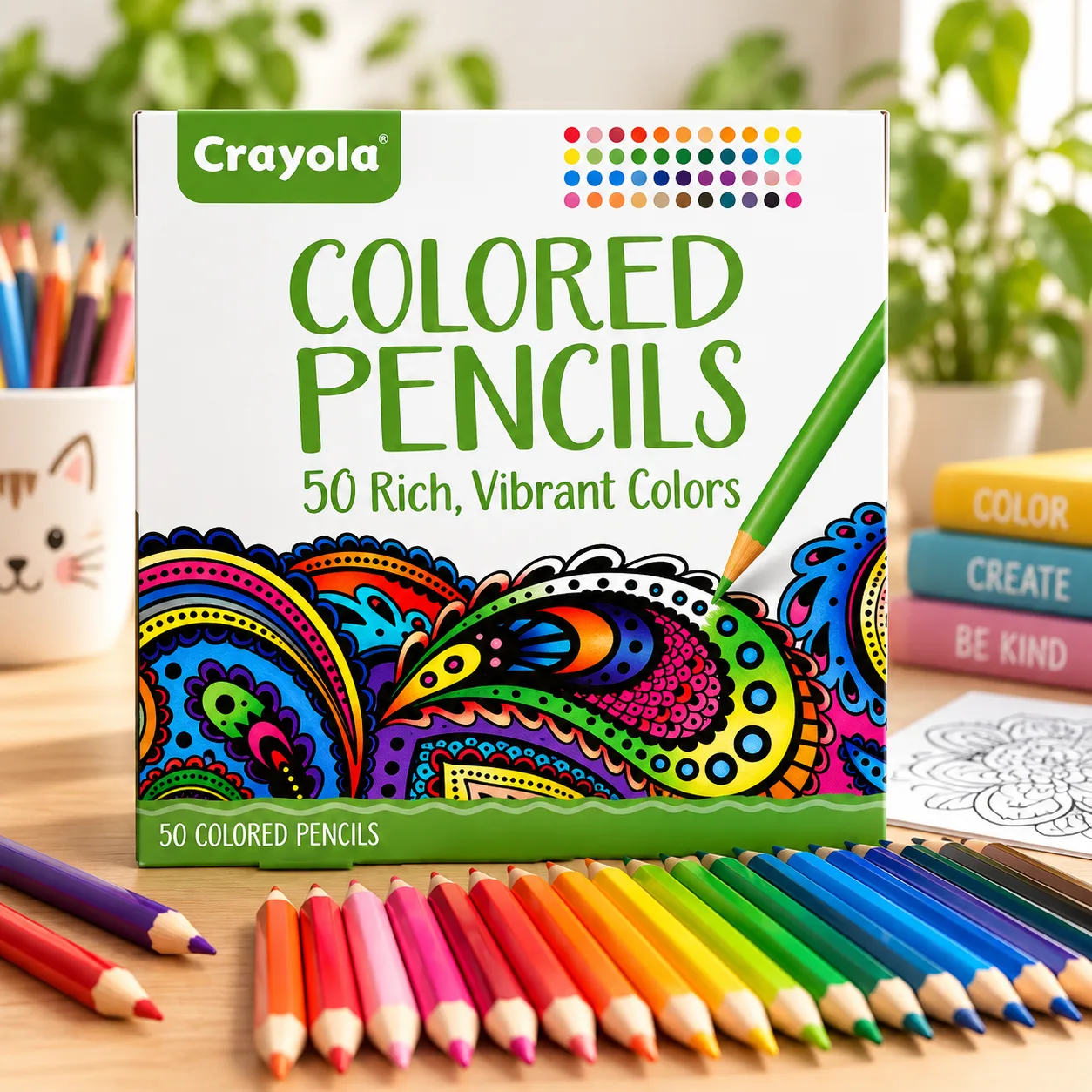 Sharp pencils for bark and veinsCrayola Colored Pencils, 50 Count |
Good detail control | Needs a sharpener | $13.99 on Amazon.com Price as of DetailsProduct prices and availability are accurate as of the date/time indicated and are subject to change. Any price and availability information displayed on Amazon.com at the time of purchase will apply to the purchase of this product. |
Amazon shows the current price and delivery. Tap any name for our full write-up, including what it’s not good for.
Common mistakes
- One flat green: the tree looks like a lollipop. Use two or three greens.
- Side-to-side strokes on the trunk: bark runs up and down.
- Pressing hard first: dark green can't be lightened again. Start light, darken underneath at the end.
- No gaps in the leaves: a few holes of sky make a tree look real.
- Every autumn leaf the same orange: mix yellow, orange and red.
For younger and older colorers
Ages 6 to 8: two greens and up-and-down strokes on the trunk are plenty. Crayons work well for big trees. Ages 9 to 12: try a shadow on the ground on the side away from the light, a third green inside the leaves, and blended autumn leaves with colored pencils. Older children often enjoy going outside to look at one real tree before coloring it.
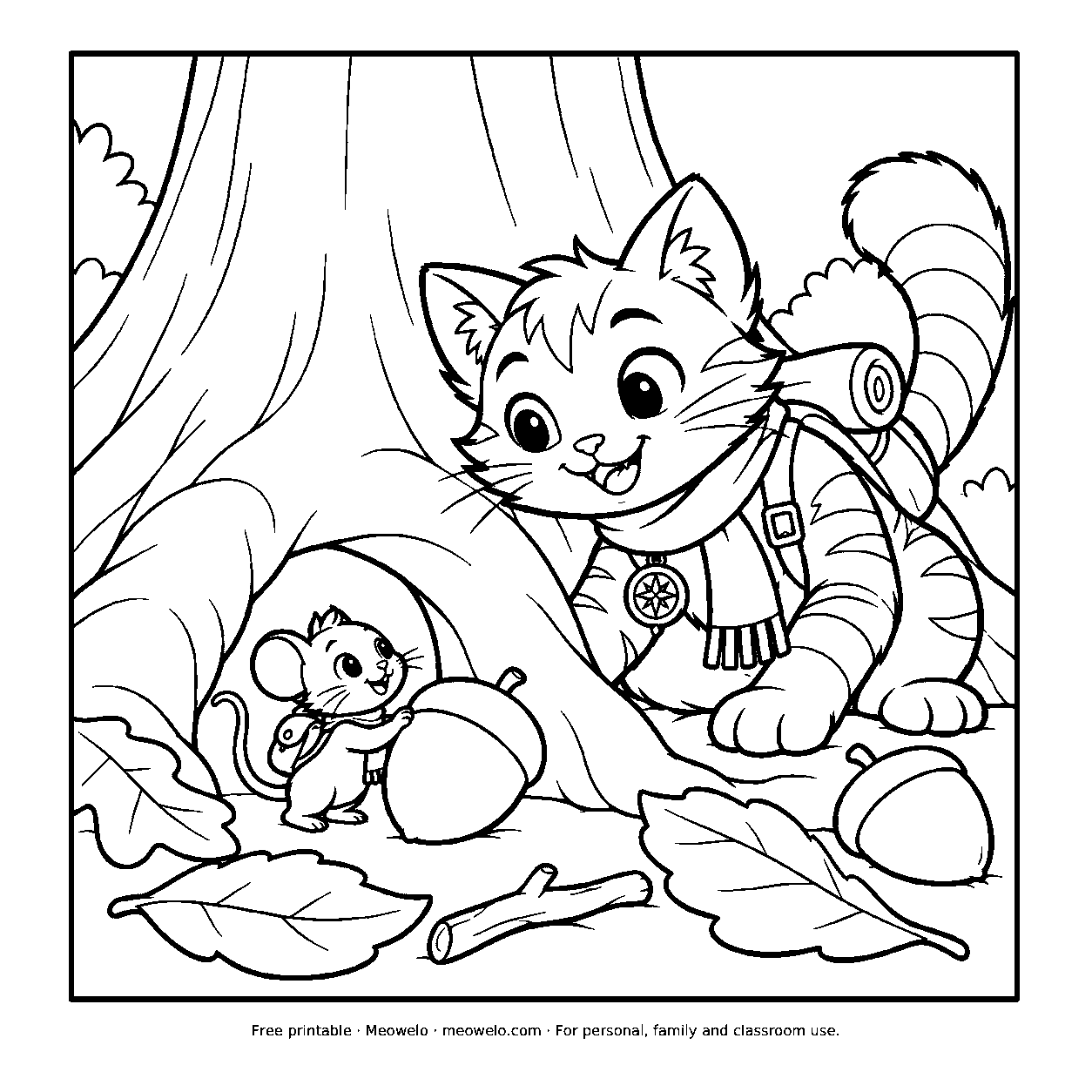
Pico and the First Tree
Pico discovers the little doorway between a great tree's roots.
Print it freeQuestions parents ask
How do you color a tree trunk?
How do you make leaves look real when coloring?
What colors do you use for autumn leaves?
How do you color a tree in winter?
The one thing to remember
A tree is never one color. Strokes that run the way the tree grows, two or three shades of every color, and a few gaps of sky make any tree, in any season, look alive.


Conversation
Join the conversation
Tips, questions and stories from other grown-ups. A person reads every comment before it goes live.
No comments yet. What has worked at your house? Your story might be exactly what another parent needs tonight.