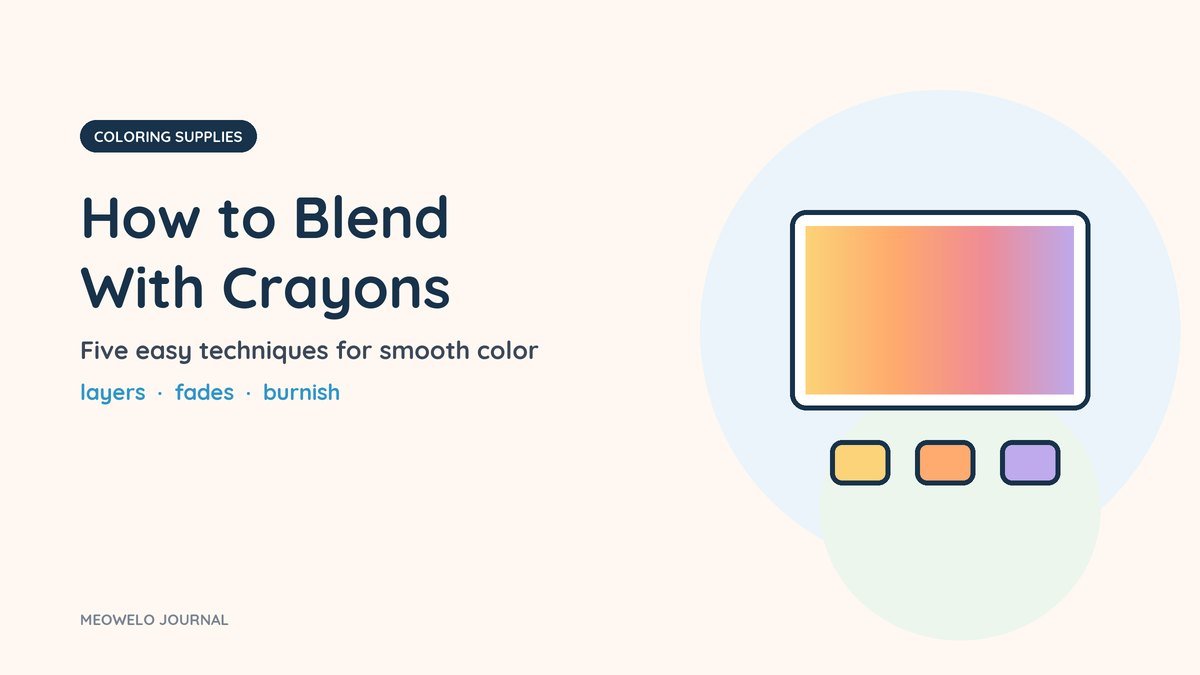
To blend with crayons, color the first color lightly, then layer the second color lightly over the area where they meet, and build both up gradually; finish by going over the blend with a white or very light crayon to smooth it. Light pressure is the key: crayon wax fills the paper's surface quickly, so heavy first layers leave no room for the next color. Two or three light layers blend; one heavy layer doesn't.
Below: five techniques children aged 6 to 12 can pick up in minutes, which crayons blend best, and what to do when the wax stops taking more color.
Affiliate disclosure. Some links below go to Amazon, and Meowelo may earn a commission if you buy through them, at no extra cost to you. As an Amazon Associate I earn from qualifying purchases. Amazon does not sponsor or endorse Meowelo. We list supplies that suit these books, and say what each one is not good for too. Full disclosure.
Why crayons can be hard to blend
Crayons are made of wax and pigment. Each stroke leaves a thin layer of wax in the tiny bumps of the paper. Light strokes leave gaps for the next color to fill, so colors mix; heavy strokes fill the bumps completely and leave a slippery surface that new color slides over. That's why the first rule of crayon blending is to start light.
Five crayon blending techniques
1. Light to heavy (one color)
Color one area with a single crayon, starting very light at one end and pressing gradually harder toward the other. It's the simplest blend of all: a pale-to-deep sky, or a shadow under a tree.
2. The two-color fade
- Color the top of the area lightly in the first color (say, yellow).
- Color the bottom lightly in the second color (orange).
- Where they meet, layer both lightly, back and forth, until there's no line between them.
- Add a second light layer of each to deepen the colors, keeping the overlap soft.
Try it on sunsets (yellow, orange, pink), skies (light blue to blue) and water (green to blue).
3. Shading with a neighbor color
For shadows, don't reach for black, which can look muddy. Use the next darker color on the color wheel: blue on the shady side of a green leaf, red-brown under an orange tail, purple in the folds of a blue hoodie. Color the base lightly first, then add the darker neighbor where the shadow falls.
4. Burnishing with white
Once the colors are in place, go over the whole blended area firmly with a white or very pale crayon. The pressure pushes the colors together and smooths the paper's texture, giving a soft, polished finish. It's the last step, because nothing much goes on top afterwards.
5. Mixing with the side of the crayon
Peel a broken crayon and use its side: one color in long strokes, a second color over it in strokes going the other way. The colors mix optically, which is great for big skies, fields and fur. Our guide to filling big areas explains the side-of-the-crayon technique in more detail.
Color pairs that blend beautifully
| Blend | Try it on |
|---|---|
| Yellow → orange → red | Sunsets, fire, autumn leaves |
| Light blue → blue → purple | Evening and night skies |
| Yellow-green → green → blue-green | Meadows, ponds, trees |
| Tan → brown → red-brown | Fur, wood, tree trunks |
| Pink → purple | Flowers, dawn clouds |
Colors next to each other on the color wheel blend most smoothly. Opposite colors (like red and green) tend to turn brownish where they overlap, which is useful for shadows but not for smooth fades. Our article on color theory for kids explains the wheel.
Which crayons blend best
- Bigger boxes help: a box with in-between shades (yellow-orange, blue-green) makes smooth fades easier, because the "middle" color already exists.
- Softer wax blends more easily than very hard, waxy crayons.
- Wax blocks lay down broad, soft layers that blend well across big areas.
- Paper matters: paper with a little texture holds more layers than very smooth, glossy paper.
These are the picks from our Creative Supplies shelves that suit blending best, each with an honest note on who it suits:
Crayons for blending and shading
| Pick | Best for | Good to know | Buy |
|---|---|---|---|
 Lots of in-between shadesCrayola Crayons, 64 Count |
Plenty of in-between shades | Not washable | Currently unavailable on Amazon.com As of DetailsProduct prices and availability are accurate as of the date/time indicated and are subject to change. Any price and availability information displayed on Amazon.com at the time of purchase will apply to the purchase of this product. |
|
Soft wax blocks for broad blendsStockmar Wax Block Crayons, 8 Colors
|
Fills a big sky or meadow in a few calm strokes | Costs more than a box of regular crayons | $20.80 on Amazon.com Price as of DetailsProduct prices and availability are accurate as of the date/time indicated and are subject to change. Any price and availability information displayed on Amazon.com at the time of purchase will apply to the purchase of this product. |
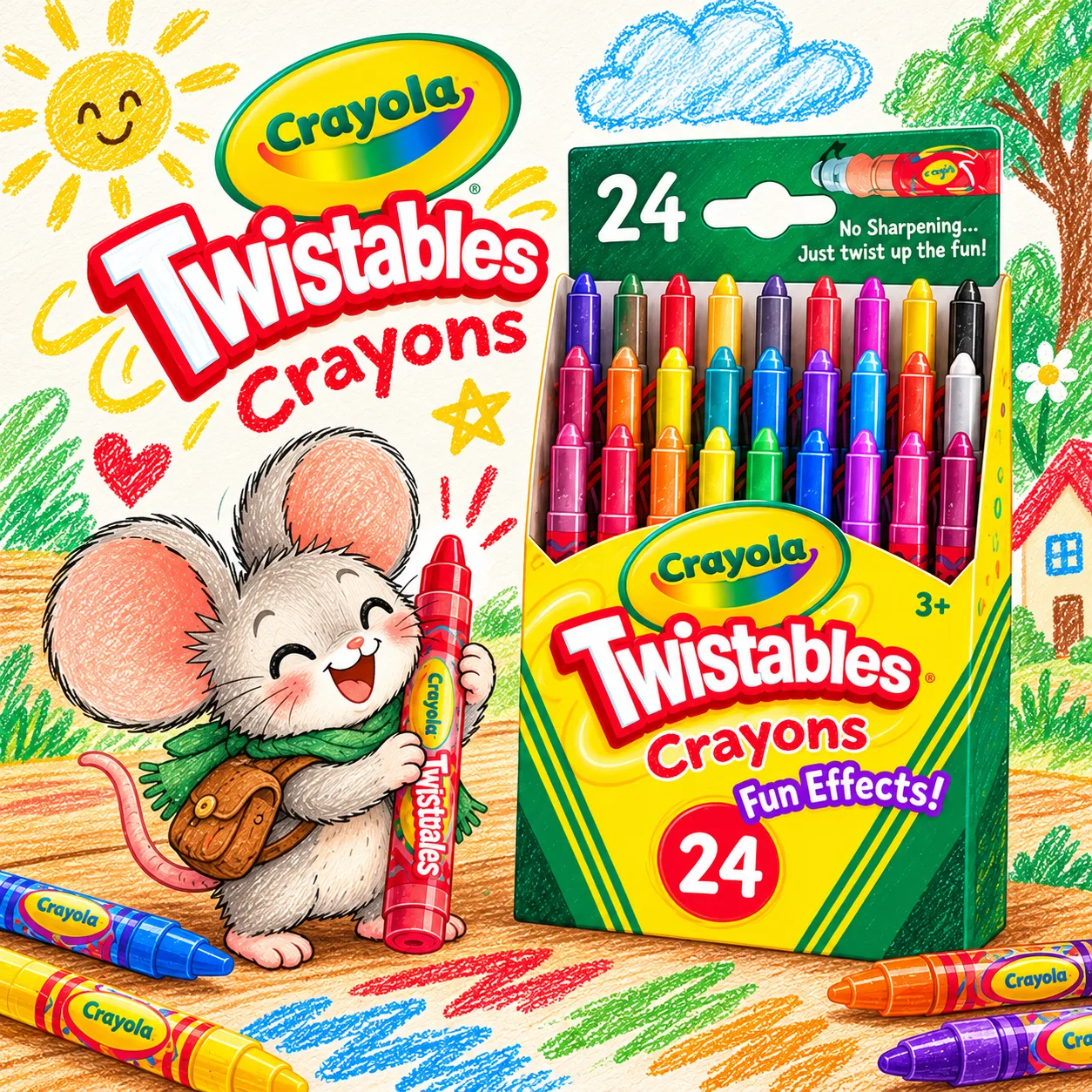 Sturdy twist-ups for heavy pressersCrayola Twistables Crayons for Kids, 24 Count |
Very hard to snap, even for heavy pressers | Color is slightly softer than classic wax | $8.77 on Amazon.com Price as of DetailsProduct prices and availability are accurate as of the date/time indicated and are subject to change. Any price and availability information displayed on Amazon.com at the time of purchase will apply to the purchase of this product. |
Amazon shows the current price and delivery. Tap any name for our full write-up, including what it’s not good for.
When the wax won't take more color
- Stop adding layers. Two or three is usually the limit; more just slides around.
- Burnish and call it finished: a white layer on top smooths what's there.
- Next time, start lighter. It's the most useful tip for every crayon technique.
- Scraping is fine for older children: scratching a line through the wax with a fingernail or a craft stick reveals the paper and makes highlights, like sunlight on water.
Instead of
You pressed too hard, now it won't blend.
Try
That part is really bold. Want to try a lighter start on the sky next time and see what happens?
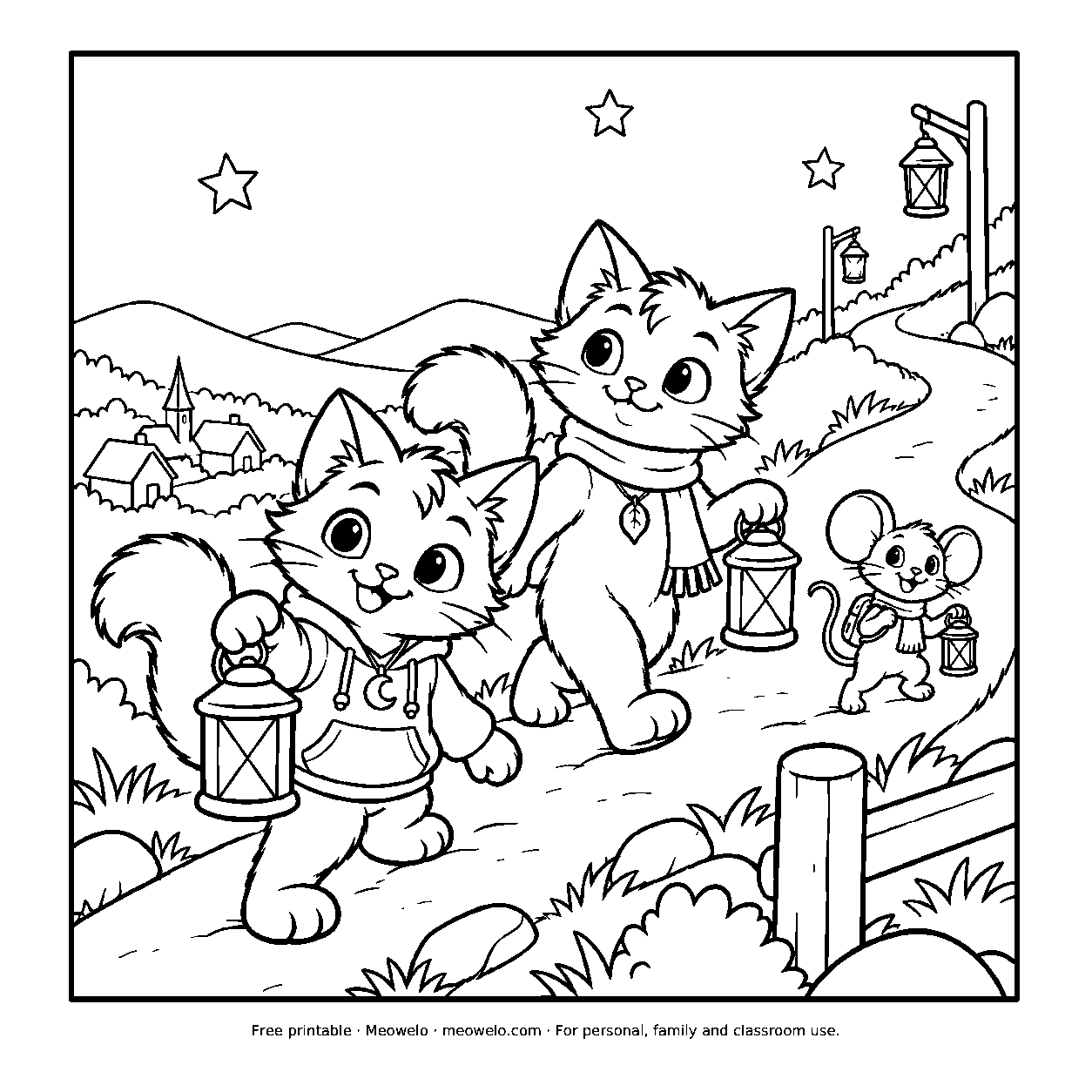
One Lantern at a Time
A lantern walk turns a hill into a trail of warm little lights.
Print it freeQuestions parents ask
Can you blend crayons?
How do you blend crayons without a blender tool?
Why won't my crayons blend?
What colors blend well with crayons?
How do kids shade with crayons?
The one thing to remember
Start light, overlap gently, finish with white. That's crayon blending in three steps, and it turns a box of ordinary crayons into sunsets, shadows and soft fur. Show it once, then let your child decide where the colors meet.

Conversation
Join the conversation
Tips, questions and stories from other grown-ups. A person reads every comment before it goes live.
No comments yet. What has worked at your house? Your story might be exactly what another parent needs tonight.