The three-color challenge is simple: pick only three colors and color an entire page with them, mixing, layering and leaving white as you like. Limiting the colors turns coloring into a little puzzle, and children discover how much a few colors can do: light and dark, mixes, patterns and moods. It works with crayons, pencils or markers, for one child or a whole table.
Below: the rules, five ways to choose the three colors, variations for different ages, and what children notice.
The rules
- Choose a coloring page.
- Choose exactly three colors. Put every other color away.
- Color the whole page using only those three, pressing lightly or hard and layering them on top of each other.
- Leaving white paper is always allowed.
Five ways to choose the three
| Way | How | What it teaches |
|---|---|---|
| Lucky dip | Pick three without looking | Making unexpected colors work |
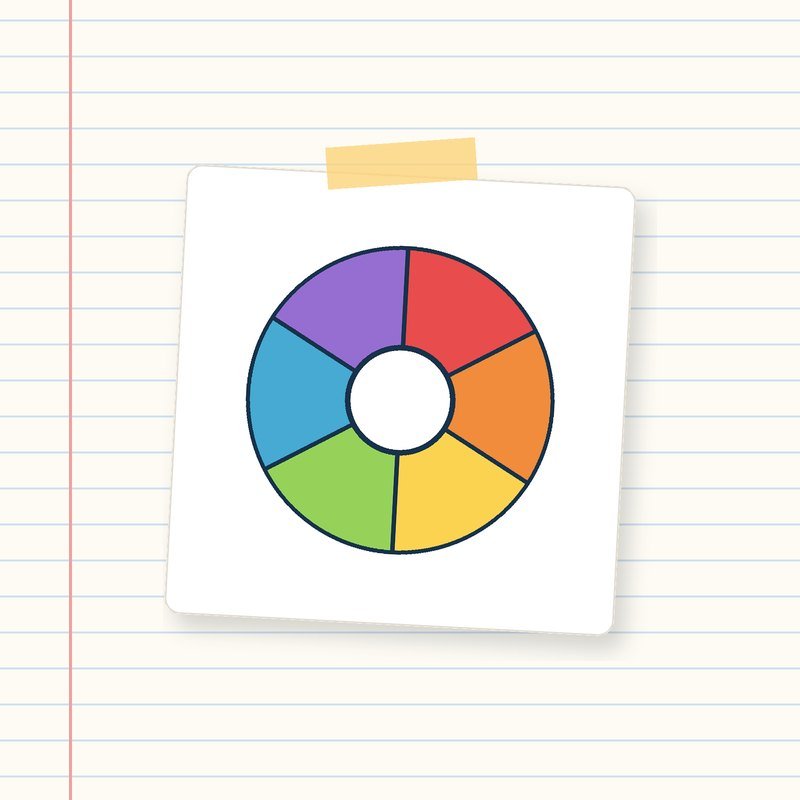
| Neighbors | Three colors next to each other on the color wheel | Gentle, calm pictures |
| Primaries | Red, yellow and blue | Mixing new colors by layering |
| Mood | Three for "sunny", "stormy" or "sleepy" | Color and atmosphere |
| Swap | Someone else chooses for you | Seeing through another's eyes |
The color wheel ideas behind "neighbors" and "primaries" are explained in color theory for kids.
Variations by age
- 6–7: three colors, no rules about mixing. The challenge is putting the other colors away.
- 8–9: make at least one new color by layering two of the three.
- 10–12: use each color in three strengths (light, middle, dark) so the page has nine "colors".
Play it together
Print the same page for everyone at the table. Each person chooses their three colors in secret, colors, and then all the pages are laid side by side. The same picture becomes a sunny morning, a stormy evening and a purple planet. It's a lovely way to show that there's no single right way to color a page.
Instead of
You can't color the sky orange.
Try
Ooh, orange sky. What kind of day is it in your picture?
What children discover
- Pressure makes one color into many.
- Layering two colors makes a third.
- White paper is a color too.
- A few colors can look more striking than a whole box.
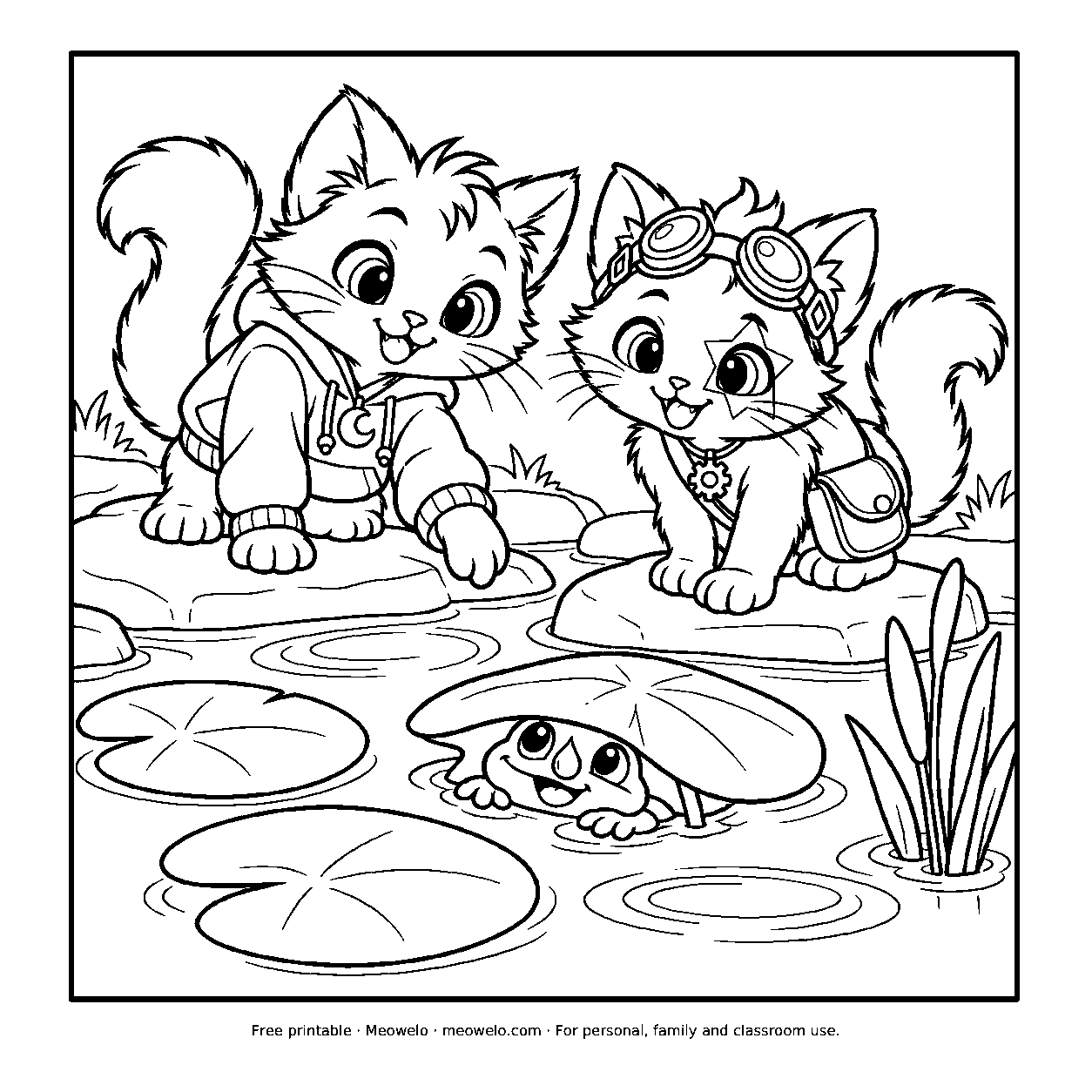
The Secret Moon Pond
Ripples reveal the tiny visitor hiding beneath a lily pad.
Print it free
The Meowelo Companion
The free Meowelo Companion shows one Meowelo picture colored four different ways, and none of them is the right one. Plus 10 printable gifts for subscribers.
Get the free guideReady-made three-color sets to try
| Set | Colors | Feels like |
|---|---|---|
| Seaside | Blue, sand, coral | A summer day |
| Forest | Dark green, light green, brown | A quiet walk |
| Night | Navy, purple, yellow | Lanterns and stars |
| Candy | Pink, mint, lemon | A party |
| Autumn | Orange, red, golden yellow | Falling leaves |
| Storm | Gray, dark blue, white (the paper) | Wind and rain |
Write each set on a card and draw one from a bowl: it adds a little surprise, and children often end up loving a set they'd never have picked.
A worked example
Take a free Meowelo scene with a lantern path, and the Night set: navy, purple and yellow. The sky goes navy at the top, fading into purple near the hills by layering the two. The lanterns are yellow, with a little purple pressed lightly at the edge so they look round. The path is purple, lighter where the lantern light falls (press softly) and darker at the sides (press harder). The friends' faces can stay the white of the paper, which makes them glow against the dark. Three colors, and the page has night, light and shadow.
That's the real lesson of the challenge: pressure and layering are colors too. Children who learn it use their full box better afterwards. To practice the layering part on its own, see blending with crayons.
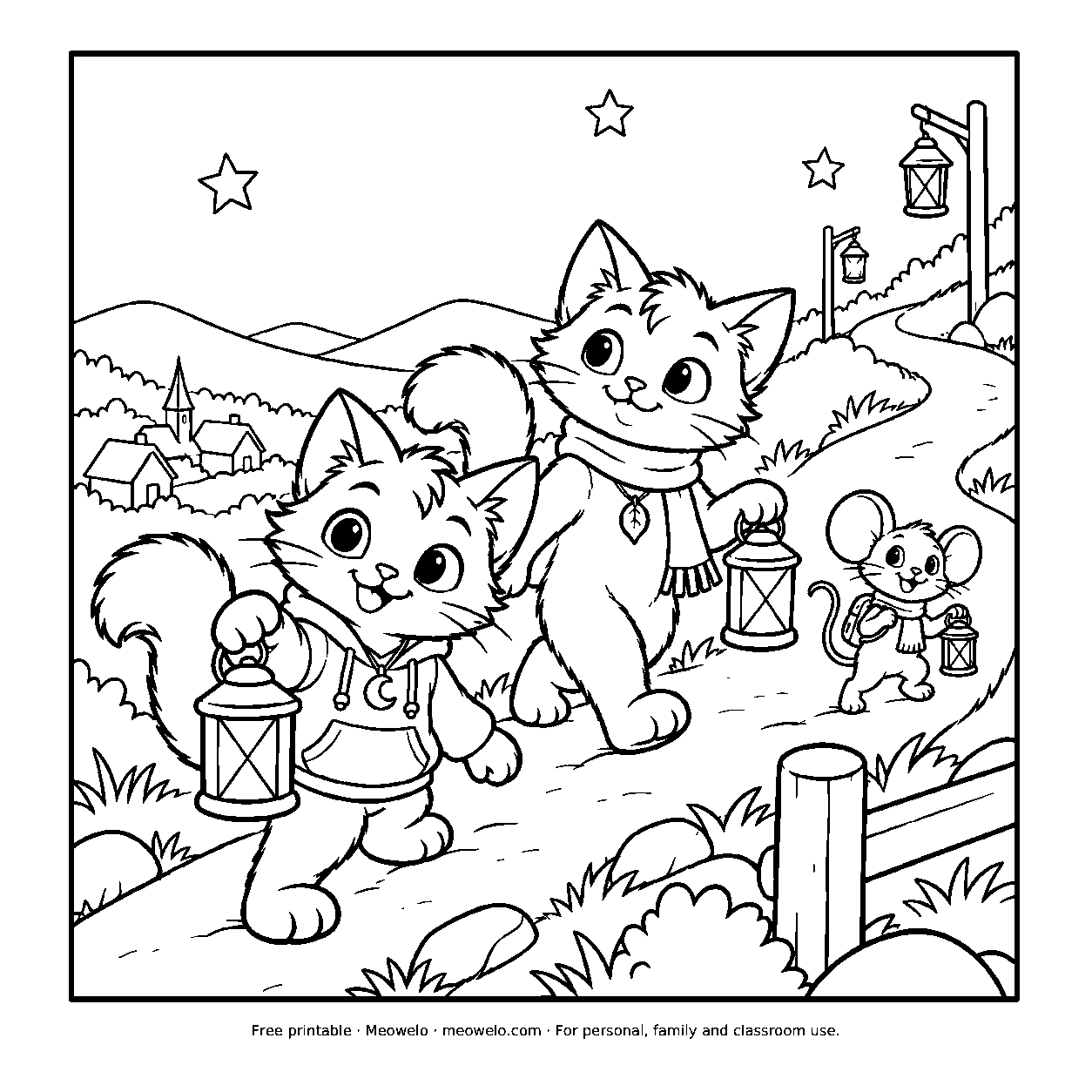
One Lantern at a Time
A lantern walk turns a hill into a trail of warm little lights.
Print it freeRunning it with a group
The challenge works beautifully for a birthday party, a classroom or a rainy afternoon with cousins. Put sets of three crayons in small envelopes, let each child draw an envelope, and give everyone the same page. Set a timer for fifteen minutes, then lay all the pages out side by side for a "gallery walk". Ask each child to name their picture: "The Purple Planet", "Stormy Morning", "Candy Village".
Because nobody had a full box, nobody's page is "better colored" than anyone else's, and children who usually compare themselves relax. It's also a simple way to show a group that the same picture can be told many ways. For more party ideas, see birthday party coloring ideas.
Afterwards, ask everyone which picture surprised them most and why. Children often pick a page whose colors they'd never have chosen themselves, which is the best lesson of the game: there are many good ways to color the same picture. Keep the pages together in a folder labeled with each child's three colors, and try the same envelopes again in a few months to see what changes.
Questions parents ask
What is the three-color challenge?
What three colors should kids use?
What age is the three-color challenge for?
Can you mix colors with crayons?
The one thing to remember
Fewer colors, more ideas. Put the box away, choose three, and see what a whole page can become.

Conversation
Join the conversation
Tips, questions and stories from other grown-ups. A person reads every comment before it goes live.
No comments yet. What has worked at your house? Your story might be exactly what another parent needs tonight.