To fill a big area evenly without pressing hard, use the widest part of the tool, color in small overlapping circles or strokes all going the same way, and build the color in two or three light layers instead of one heavy one. With crayons, peel a broken one and color with its side. With colored pencils, hold the pencil further back and tilt it. With markers, work in small sections and keep moving so the ink doesn't streak. Light pressure plus layers gives smoother color, and hands that don't get tired.
Big areas (skies, meadows, walls, water) are where children often press too hard, tear the paper, get frustrated or give up. Below: why it happens, the techniques for each tool, and a few games that make big areas fun.
Affiliate disclosure. Some links below go to Amazon, and Meowelo may earn a commission if you buy through them, at no extra cost to you. As an Amazon Associate I earn from qualifying purchases. Amazon does not sponsor or endorse Meowelo. We list supplies that suit these books, and say what each one is not good for too. Full disclosure.
Why big areas are hard
- Pressing harder seems faster. Children press hard to get strong color quickly, which tires the hand, snaps crayons and tears thin paper.
- Scribbling leaves gaps and stripes. Quick back-and-forth lines in different directions look patchy, which can disappoint a child who wanted a smooth sky.
- The tool is too small. A sharp pencil tip covers a tiny strip at a time. Filling a whole sky with it feels endless.
- It's the boring part. The character is exciting; the background isn't. Energy runs out before the page does.
Five techniques that work with any tool
- Small overlapping circles. Tiny circles that overlap fill a space evenly, with no stripes. It's slower at first but gives the smoothest result.
- Strokes in one direction. All strokes going the same way (for a sky, side to side; for grass, up and down) look calm and even.
- Light layers. Color the whole area lightly, then go over it again. Each layer fills the gaps of the one before, and the color gets richer without extra pressure.
- Work from the edge inward. Color a careful border just inside the line first, then fill the middle with big, relaxed strokes.
- Turn the page. Rotating the paper so the hand always moves comfortably makes long strokes easier and more even.
With crayons
- Use the side. Peel the paper off a broken crayon and lay it flat. One stroke covers a wide band, perfect for skies and fields, with almost no pressure.
- Chunky crayons and wax blocks cover big areas fastest and are hard to snap.
- Two colors are smoother than one. A light layer of one color under a light layer of a neighboring color (yellow under orange, light blue under blue) fills the paper's tiny dents.
- Heavy pressers: twist-up crayons survive pressure better. See why kids snap crayons for more.
With colored pencils
- Hold further back and tilt. Holding the pencil about halfway up and tilting it lets the side of the lead do the work, with lighter, wider strokes.
- A slightly blunt tip covers faster than a sharp one. Save the sharp point for details.
- Layer, then press a little more on the final layer only, if your child wants a deeper color.
- Softer pencils give stronger color with less pressure. More in colored pencils for kids.
With markers
- Broad tips for big areas, fine tips for edges.
- Small sections, keep moving. Color one patch at a time, overlapping each stroke slightly while the ink is still wet, so it dries evenly without streaky stripes.
- Don't go over the same spot again and again. It soaks the paper, which can pill or tear, and bleed through.
- Heavier paper handles big marker areas much better (see how to print coloring pages).
The right tool for the size of the area
| Area | Easiest tool | Technique |
|---|---|---|
| Huge (sky, meadow, wall) | Side of a crayon, wax block, broad marker | Long strokes in one direction, light layers |
| Medium (clothes, a house, a pond) | Crayon tip, blunt colored pencil | Small circles, edge first |
| Small (faces, patterns) | Sharp colored pencil, fine-tip marker | Short careful strokes |
Most children end up mixing tools on one page, and that's a technique too. Our comparison of crayons, colored pencils and markers explains what each does best.
These are the picks from our Creative Supplies shelves that make big areas easiest, each with an honest note on who it suits:
Tools that fill big areas gently
| Pick | Best for | Good to know | Buy |
|---|---|---|---|
 Wax blocks for skies and meadowsStockmar Wax Block Crayons, 8 Colors |
Fills a big sky or meadow in a few calm strokes | Costs more than a box of regular crayons | $20.79 on Amazon.com Price as of DetailsProduct prices and availability are accurate as of the date/time indicated and are subject to change. Any price and availability information displayed on Amazon.com at the time of purchase will apply to the purchase of this product. |
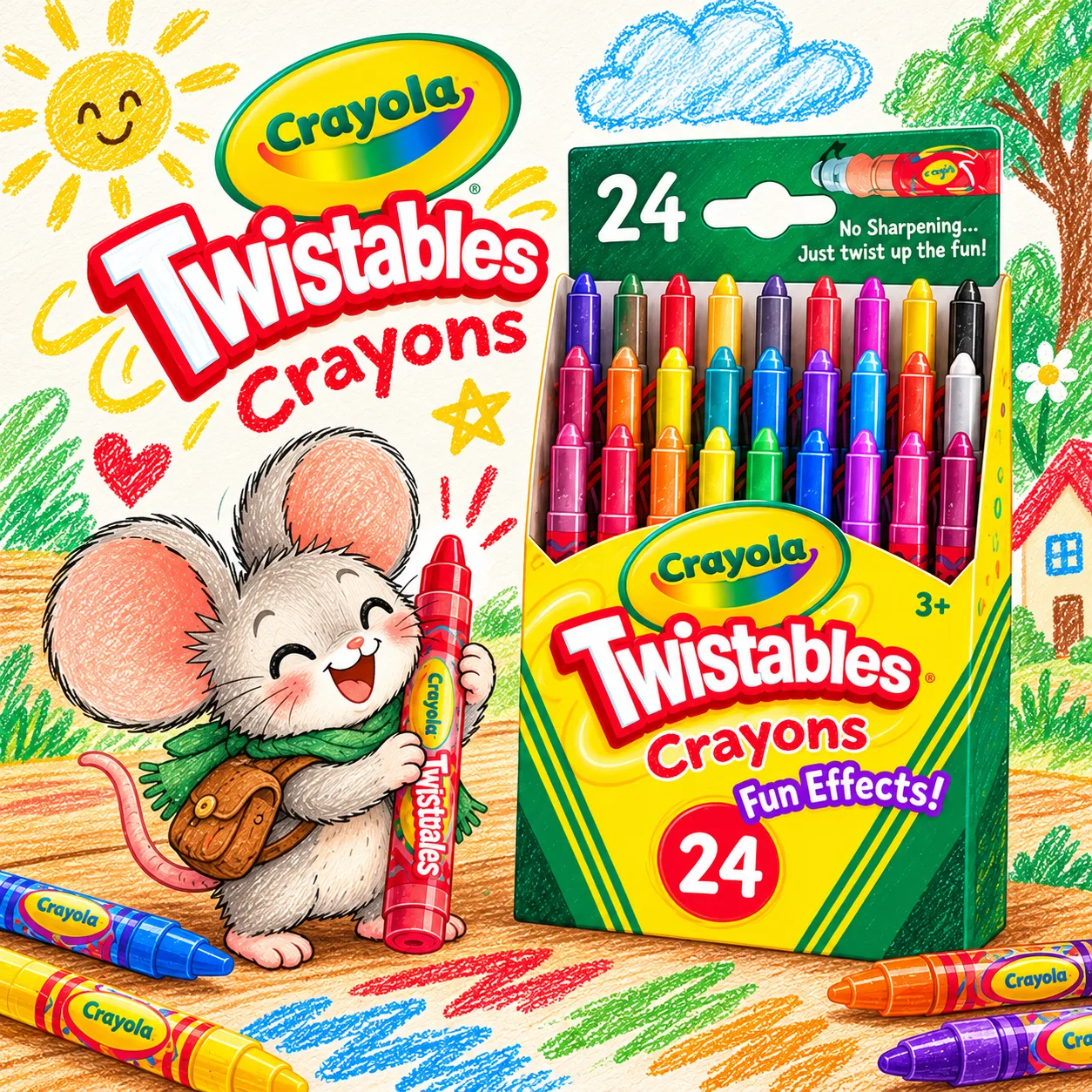 Twist-up crayons for heavy pressersCrayola Twistables Crayons for Kids, 24 Count |
Very hard to snap, even for heavy pressers | Color is slightly softer than classic wax | $8.77 on Amazon.com Price as of DetailsProduct prices and availability are accurate as of the date/time indicated and are subject to change. Any price and availability information displayed on Amazon.com at the time of purchase will apply to the purchase of this product. |
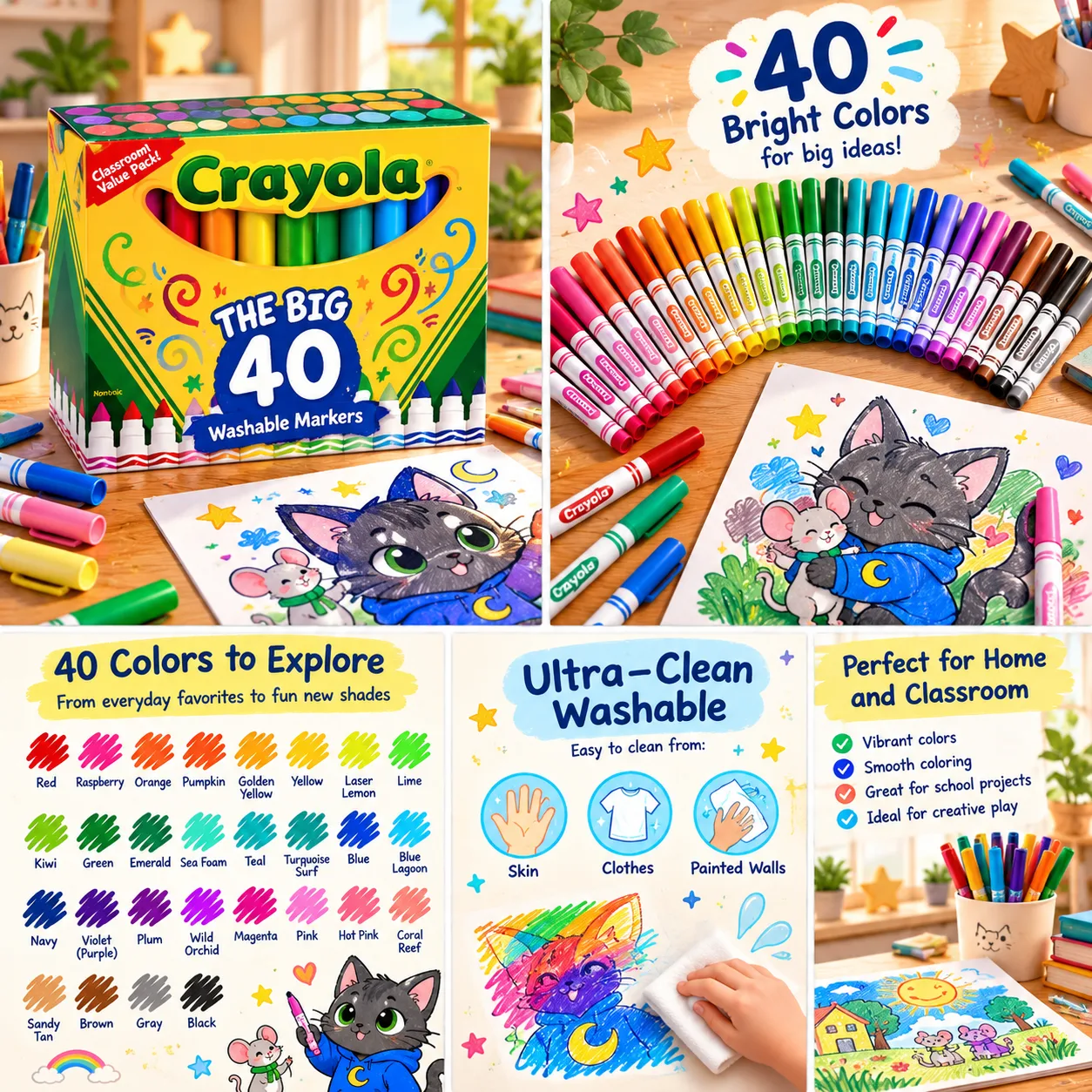 Broad washable markers for bold areasCrayola Ultra Clean Washable Markers, Broad Line, 40 Count |
Among the most washable kids' markers from skin and most fabrics | Broad tips aren't for tiny details | $18.99 on Amazon.com Price as of DetailsProduct prices and availability are accurate as of the date/time indicated and are subject to change. Any price and availability information displayed on Amazon.com at the time of purchase will apply to the purchase of this product. |
Amazon shows the current price and delivery. Tap any name for our full write-up, including what it’s not good for.
Make big areas fun
- Texture hunt. Put a leaf, a coin or a piece of mesh under the page and color the big area with the side of a crayon. The texture appears like magic.
- Sky in three colors. Color the sky in three bands that blend: light at the bottom, darker at the top. Sunsets and night skies look wonderful.
- Pattern it. Instead of filling a wall, fill it with stripes, dots or bricks. Big areas don't have to be one color.
- Leave it white. White space is a choice. A picture with a colored character and an empty sky can look clean and bright.
Instead of
Press harder so it's not so pale.
Try
Want to try a second layer on top? It gets darker without pressing.
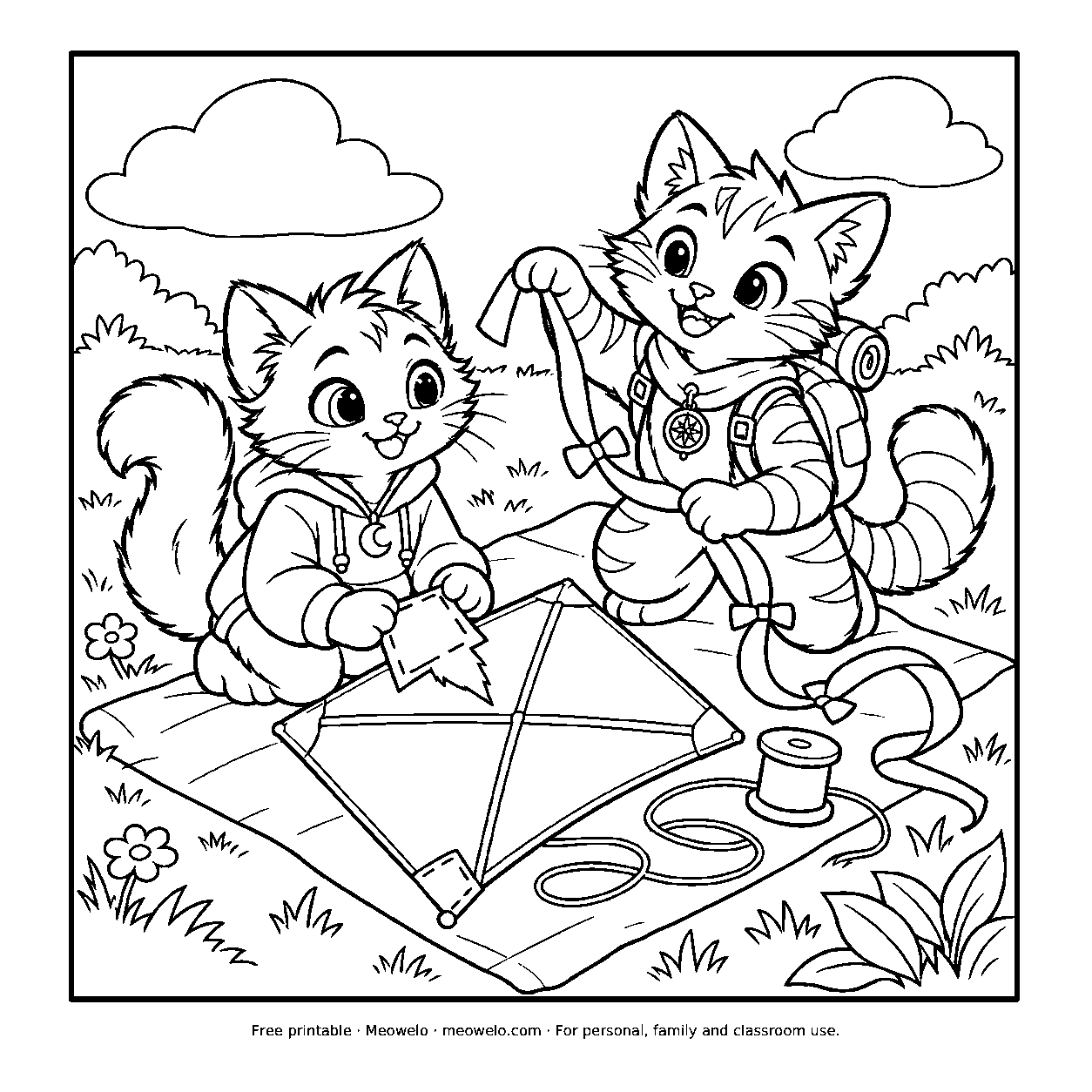
The Rainbow Kite
Lunai and Riyu turn a tangled kite tail into a meadow ribbon dance.
Print it freeQuestions parents ask
How do you color big areas without streaks?
Why does my child press so hard when coloring?
What is the best tool for coloring large areas?
How do I stop markers streaking?
Does every area of a coloring page need to be filled in?
The one thing to remember
Big areas get easier with wider tools, lighter hands and more layers, not more pressure. Show your child one technique, let them try it on a big sky, and let them decide how full that sky should be.
Conversation
Join the conversation
Tips, questions and stories from other grown-ups. A person reads every comment before it goes live.
No comments yet. What has worked at your house? Your story might be exactly what another parent needs tonight.