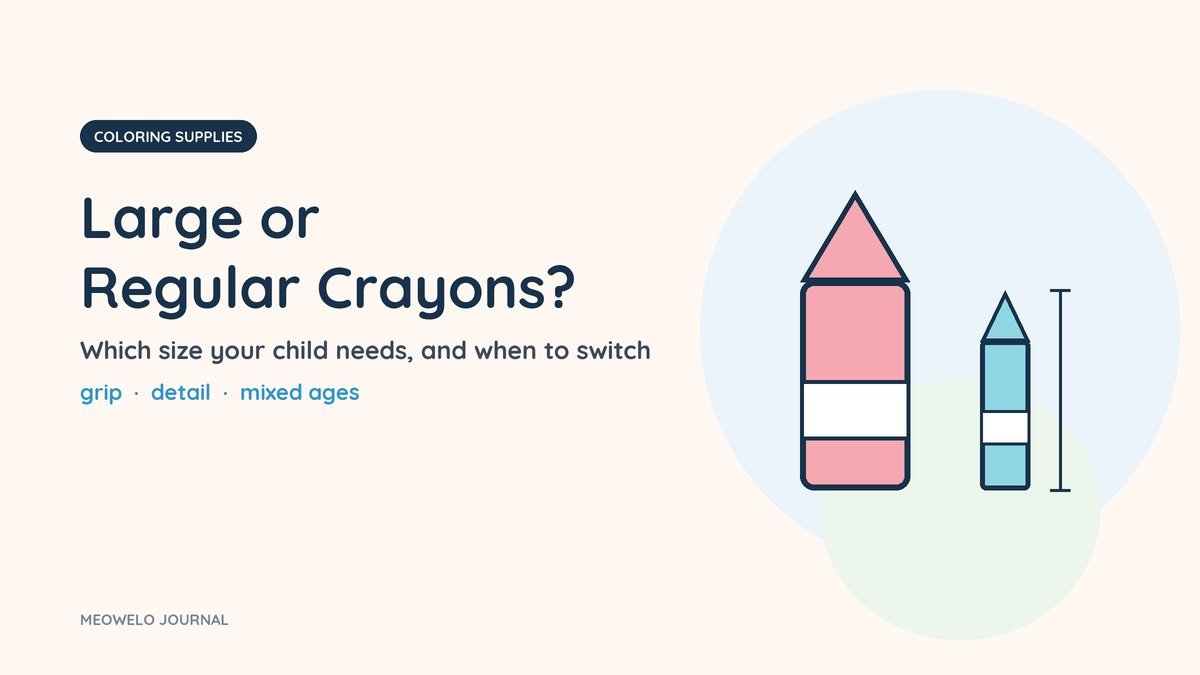
Large crayons suit younger children and anyone who presses hard: they're easy to grip and much harder to snap. Regular crayons suit children of about 5 or 6 and up who want to color smaller spaces and details. Most children in the 6–12 range are happiest with regular crayons, but large ones are worth keeping for a younger sibling, for big bold scribbles, or for a child who still breaks every crayon.
Below: the differences side by side, signs it's time to switch, and why mixed-age families often keep both.
Affiliate disclosure. Some links below go to Amazon, and Meowelo may earn a commission if you buy through them, at no extra cost to you. As an Amazon Associate I earn from qualifying purchases. Amazon does not sponsor or endorse Meowelo. We list supplies that suit these books, and say what each one is not good for too. Full disclosure.
Side by side
| Large crayons | Regular crayons | |
|---|---|---|
| Grip | Easy for small fists | Easier for a fingertip hold |
| Snapping | Much harder to snap | Snap under very heavy pressure |
| Detail | Too thick for small spaces | Good for most coloring-page details |
| Colors | Usually 8 or 16 | 24, 48, 64 and more |
| Best for | Younger children, heavy pressers | Ages about 5–6 and up |
Large or regular
| Pick | Best for | Good to know | Buy |
|---|---|---|---|
 Chunky, hard to snapCrayola Large Crayons, Lift-Lid Box, 16 Count |
Twice the colors of the 8-count | Thicker than a standard crayon, so less precise | $6.84 on Amazon.com Price as of DetailsProduct prices and availability are accurate as of the date/time indicated and are subject to change. Any price and availability information displayed on Amazon.com at the time of purchase will apply to the purchase of this product. |
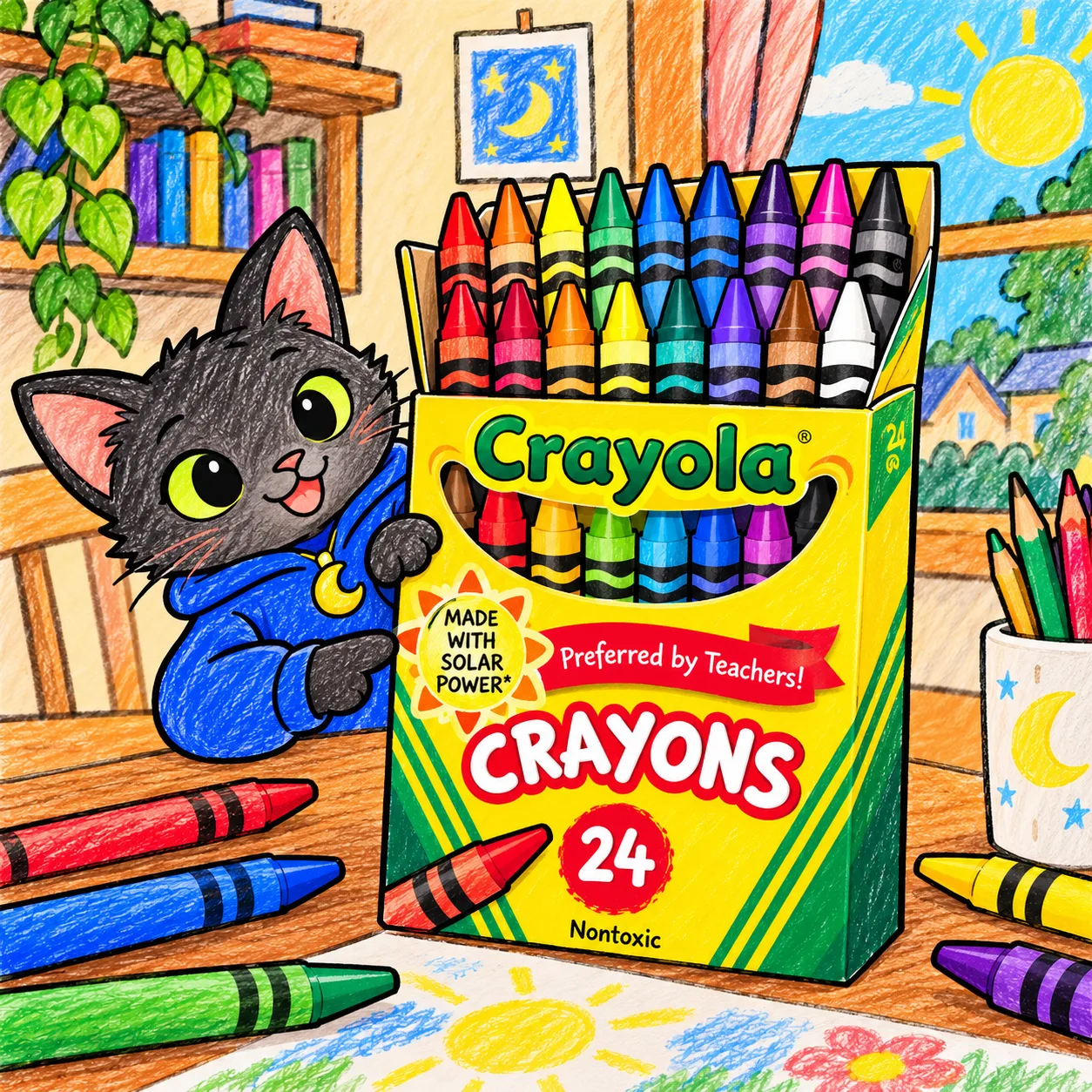 The classic box for detailCrayola Crayons, 24 Count (Pack of 2) |
Bright, even color that shows up well on bold outlines | Standard wax crayons snap under very heavy pressure | $3.19 on Amazon.comSave 52% Price as of DetailsProduct prices and availability are accurate as of the date/time indicated and are subject to change. Any price and availability information displayed on Amazon.com at the time of purchase will apply to the purchase of this product. |
Amazon shows the current price and delivery. Tap any name for our full write-up, including what it’s not good for.
Signs it's time to switch to regular
- Your child gets frustrated that the color "goes over the lines" in small spaces.
- They hold the crayon with their fingertips rather than a fist.
- They ask for more colors.
If holding any crayon seems uncomfortable, a pencil grip or a short, broken crayon can help. For how tools typically change with age, see coloring from 6 to 12.
Why mixed-age families keep both
A 9-year-old and a 3-year-old at the same table need different tools. Large crayons for the little one, regular for the older one, and nobody's box gets raided. Our guide to coloring with siblings has more ideas.
If regular crayons keep snapping
Snapping usually means heavy pressure, not carelessness. Peeling the paper and coloring with the side, or keeping a few broken pieces for shading, turns the problem into a technique. More in why kids snap crayons and our best crayons for kids guide.
A simple crayon kit for a mixed-age family
| For | Keep |
|---|---|
| The youngest | A small box of large crayons in their own tub |
| Ages about 6–9 | A regular box of 24, plus a few peeled pieces for shading |
| Ages about 9–12 | A bigger regular box, or colored pencils alongside |
Separate tubs avoid the "that's mine" moments, and nobody's sharp new crayons end up snapped.
Don't throw broken crayons away
Broken crayons are great for coloring with the side (wide, soft strokes for skies and grass) and for crayon rubbings over leaves and coins. Peel the paper, keep the pieces in a separate pot, and they become a tool of their own.
Other crayon shapes worth knowing
| Shape | Good for | Less good for |
|---|---|---|
| Triangular crayons | Guiding the fingers; they don't roll off the table | Smooth shading with the side |
| Twist-up crayons | Heavy pressers; no peeling or snapping | Covering big areas quickly |
| Wax blocks | Wide, soft strokes for skies and backgrounds | Small details |
| Washable crayons | Homes with walls and sofas at risk | Very bright, rich color |
Our best crayons for kids guide compares these in more detail.
Signs to stay with large crayons a bit longer
- Regular crayons snap almost every time your child colors.
- They hold any crayon in a full fist and press very hard.
- They get tired or cross after a few minutes of coloring.
There's no rush. Many children switch naturally when they want to color smaller things, and keeping a few large crayons around for big, bold pictures is useful at any age.
Test before you buy
If you're unsure, try both on a free printed page: give your child one large and one regular crayon in the same color and ask them to color a big shape and a small one. Watch which one they reach for, and which one they put down in frustration. Five minutes tells you more than any age label.
Crayon care that saves money
- Keep the wrapper on regular crayons until you want to color with the side: it holds them together.
- Store them flat in their box, not loose in a bag where they rub and snap.
- Keep them out of hot cars and sunny windowsills: warm wax bends and smears.
- Sort broken pieces into a "shading pot" instead of throwing them away.
A box treated this way lasts much longer, and when the broken pot fills up, children love using the stubs for crayon rubbings over leaves, coins and textured surfaces.
Whichever size your child uses, the box matters as much as the crayons: a sturdy lift-lid box or a tin keeps crayons from rolling away and snapping. For young children, a wide, shallow tray makes it easier to see and choose colors than a deep box where everything ends up at the bottom. Small changes like these make coloring easier to start and quicker to tidy away.
Questions parents ask
What age are large crayons for?
Are large crayons better for kids?
Why do regular crayons break so easily?
Should I buy large or regular crayons for a 6-year-old?
The one thing to remember
Large for little hands and heavy pressure, regular for detail. When in doubt, keep a few of each.
Conversation
Join the conversation
Tips, questions and stories from other grown-ups. A person reads every comment before it goes live.
No comments yet. What has worked at your house? Your story might be exactly what another parent needs tonight.