From 6 to 12, children typically move from big shapes and bold color toward detail, shading, patterns and their own ideas. Six- and seven-year-olds enjoy bold outlines and quick results; eight- to ten-year-olds start blending and noticing detail; ten- to twelve-year-olds often want more challenge, more realism or more personal creativity. Every child is different, so treat these as rough stages, not targets.
Below: the three rough stages, the pages and supplies that suit each, and how to keep older children coloring.
Affiliate disclosure. Some links below go to Amazon, and Meowelo may earn a commission if you buy through them, at no extra cost to you. As an Amazon Associate I earn from qualifying purchases. Amazon does not sponsor or endorse Meowelo. We list supplies that suit these books, and say what each one is not good for too. Full disclosure.
The three rough stages
| About 6–7 | About 8–10 | About 10–12 | |
|---|---|---|---|
| Pages | Bold outlines, big shapes | More detail, scenes | Fine detail, patterns, their own drawings |
| Focus | 10–20 minutes | 20–40 minutes | Long projects over days |
| Skills | Coloring up to lines | Blending, light and dark | Shading, textures, highlights |
| Tools | Crayons, broad markers | Colored pencils, fine markers | Quality pencils, watercolor, metallics |
About 6–7: bold and quick
Bold outlines and big shapes, with a finished page in one sitting. Classic crayons and broad washable markers. Celebrate the finishing, not neatness. See best crayons for kids.
About 8–10: detail and blending
Children start noticing details and wanting smoother color. Colored pencils come into their own. Try blending, filling big areas and textures.
About 10–12: challenge and ownership
Older children may say coloring is "for little kids". Offer challenge and ownership instead: highlights, pattern doodles, making their own pages, or a first watercolor set.
A rough tool path
| Pick | Best for | Good to know | Buy |
|---|---|---|---|
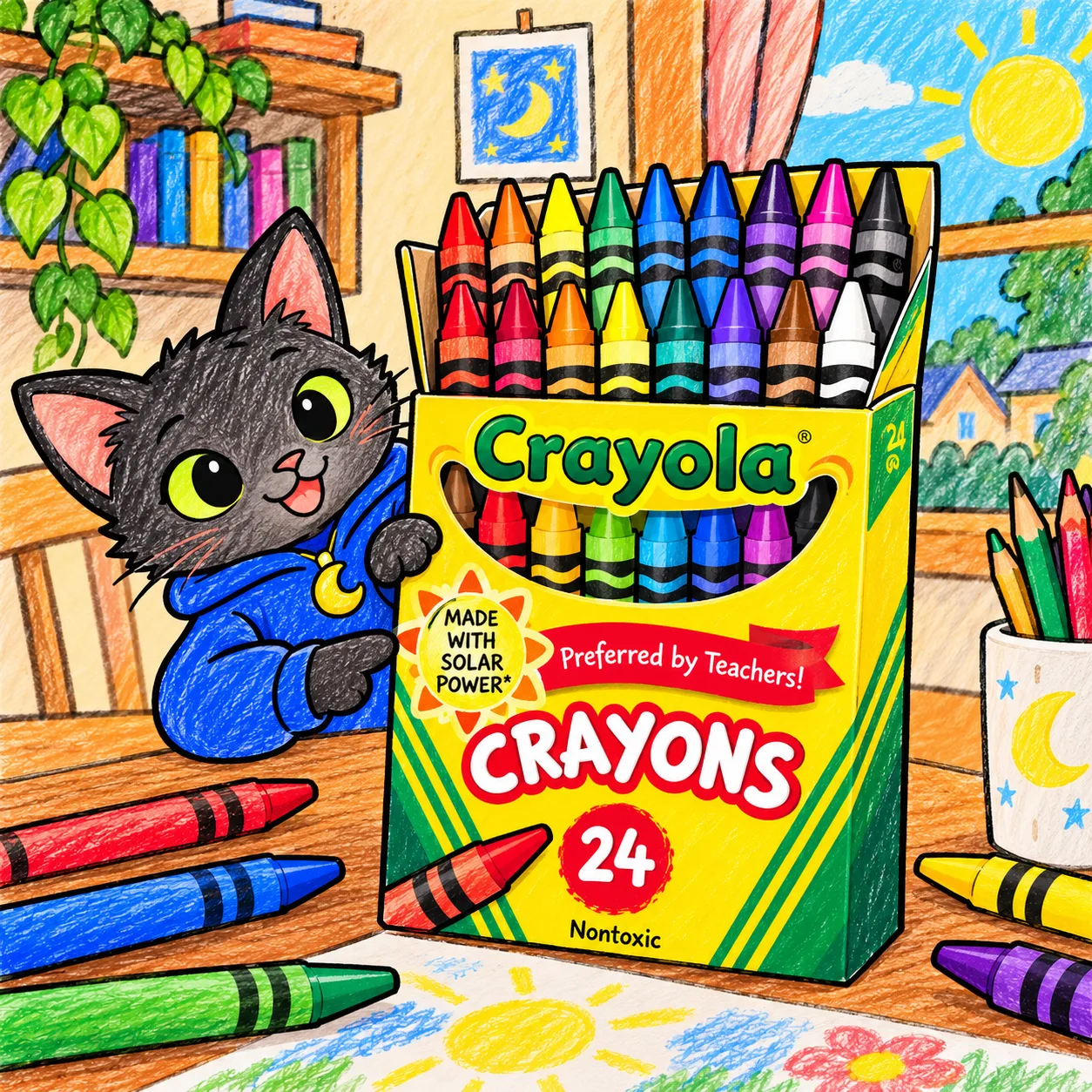 About 6–7: classic crayonsCrayola Crayons, 24 Count (Pack of 2) |
Bright, even color that shows up well on bold outlines | Standard wax crayons snap under very heavy pressure | $3.99 on Amazon.comSave 40% Price as of DetailsProduct prices and availability are accurate as of the date/time indicated and are subject to change. Any price and availability information displayed on Amazon.com at the time of purchase will apply to the purchase of this product. |
 About 8–10: colored pencilsCrayola Colored Pencils, 36 Count |
36 shades, including useful in-betweens | Needs a sharpener eventually | $6.57 on Amazon.com Price as of DetailsProduct prices and availability are accurate as of the date/time indicated and are subject to change. Any price and availability information displayed on Amazon.com at the time of purchase will apply to the purchase of this product. |
 About 10–12: a first watercolor setCrayola Washable Watercolor Paint Set for Kids |
Washable formula for easier clean-up | Needs thicker paper: too wet for thin book pages | $8.49 on Amazon.com Price as of DetailsProduct prices and availability are accurate as of the date/time indicated and are subject to change. Any price and availability information displayed on Amazon.com at the time of purchase will apply to the purchase of this product. |
Amazon shows the current price and delivery. Tap any name for our full write-up, including what it’s not good for.
Keeping older children coloring
- Change the name: "design", "illustration" or "comic" rather than "coloring".
- Give real tools: a good pencil set feels grown-up.
- Color alongside them: adults coloring too makes it normal.
- Let them teach a sibling a technique.
Our guide to choosing a coloring book covers detail levels in more depth.
Signs a child is ready for more challenge
- They finish pages quickly and say they're "easy".
- They start adding their own details, patterns or backgrounds.
- They ask how to make something look "real".
- They want better tools, or ask to borrow yours.
Signs to slow down
- They stop starting pages because they look too hard.
- They get frustrated by small spaces.
- They say they "can't draw" (see what to say).
Going back to simpler pages for a while is completely fine. Enjoyment keeps children coloring; difficulty is just a dial to turn up and down.
What changes, beyond the pages
| About 6–7 | About 8–10 | About 10–12 | |
|---|---|---|---|
| What they care about | Finishing, bright colors | Looking "right", details | Style, realism, their own ideas |
| How they react to mistakes | Quickly forget them | Can get frustrated | May give up or start over |
| Who they color with | A grown-up nearby | Friends and siblings | Often alone, with music |
| Best kind of praise | Notice their choices | Notice the effort and the technique | Ask about their intentions |
The "looking right" stage around 8 to 10 is when many children start saying they can't draw. It's a sign their eye is getting sharper, and our guide to "I can't draw" has words that help.
One page, three ages
Give the same free Meowelo scene to a 6-year-old, a 9-year-old and an 11-year-old and you'll usually see three different pictures. The youngest fills the big shapes in bright, flat color and is done in fifteen minutes. The middle one picks out the lanterns and the small leaves and tries to blend the sky. The oldest may ignore the "real" colors altogether and turn it into a night scene, or add a pattern border and their own background. None of these is better; each is right for that stage.
That's why a single family stack of pages works so well across ages: the page stays the same, and the challenge grows with the child.
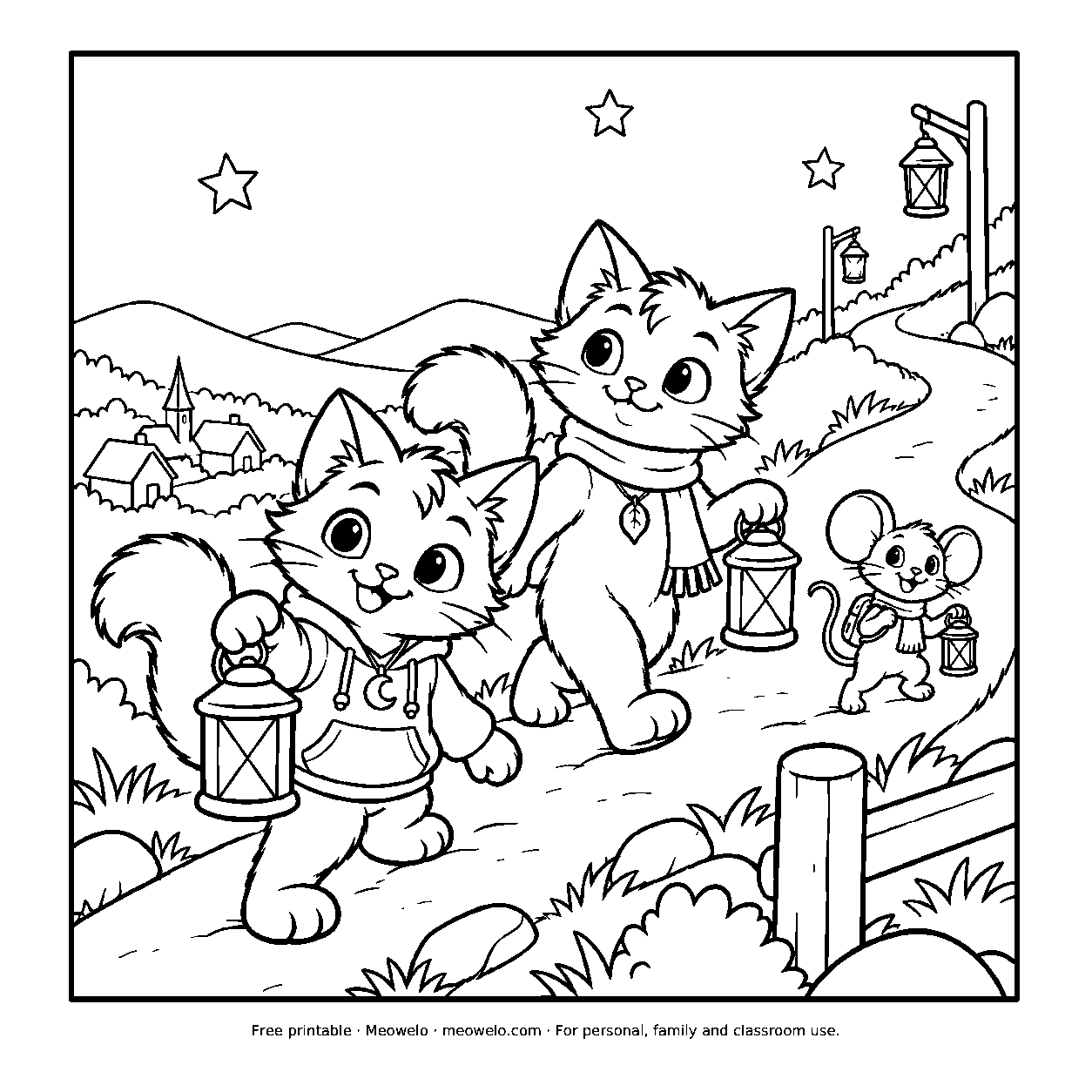
One Lantern at a Time
A lantern walk turns a hill into a trail of warm little lights.
Print it freeKeep the door open at every age
- Keep supplies within reach, not in a cupboard: children color more when they don't have to ask.
- Swap in something new every few months: a fine-tip set, a metallic treat, a new kind of page.
- Color together sometimes, at every age. Older children often enjoy it most when it's side by side, not supervised.
Questions parents ask
- My 11-year-old says coloring is babyish. What now? Call it design or illustration, offer real tools, and suggest a project with a purpose: a card, a poster, wrapping paper.
- My 6-year-old won't finish pages. That's normal; choose pages with fewer, bigger shapes.
- Should I correct "wrong" colors? No. Color choice is one of the few areas where children are fully in charge.
Whatever your child's age, the most helpful thing is the same: supplies within reach, a page that matches where they are, and a grown-up who's curious rather than critical. The details change between 6 and 12, but children of every age keep coloring when it feels like their own space to make choices, try things out and finish something they're proud of.
Questions parents ask
What age do kids stop coloring?
What coloring pages suit a 6-year-old?
What art supplies suit a 10-year-old?
How do I keep my 11-year-old interested in coloring?
The one thing to remember
Coloring grows with children. Match the page and the tools to where your child is now, and keep adding a little challenge.


Conversation
Join the conversation
Tips, questions and stories from other grown-ups. A person reads every comment before it goes live.
No comments yet. What has worked at your house? Your story might be exactly what another parent needs tonight.