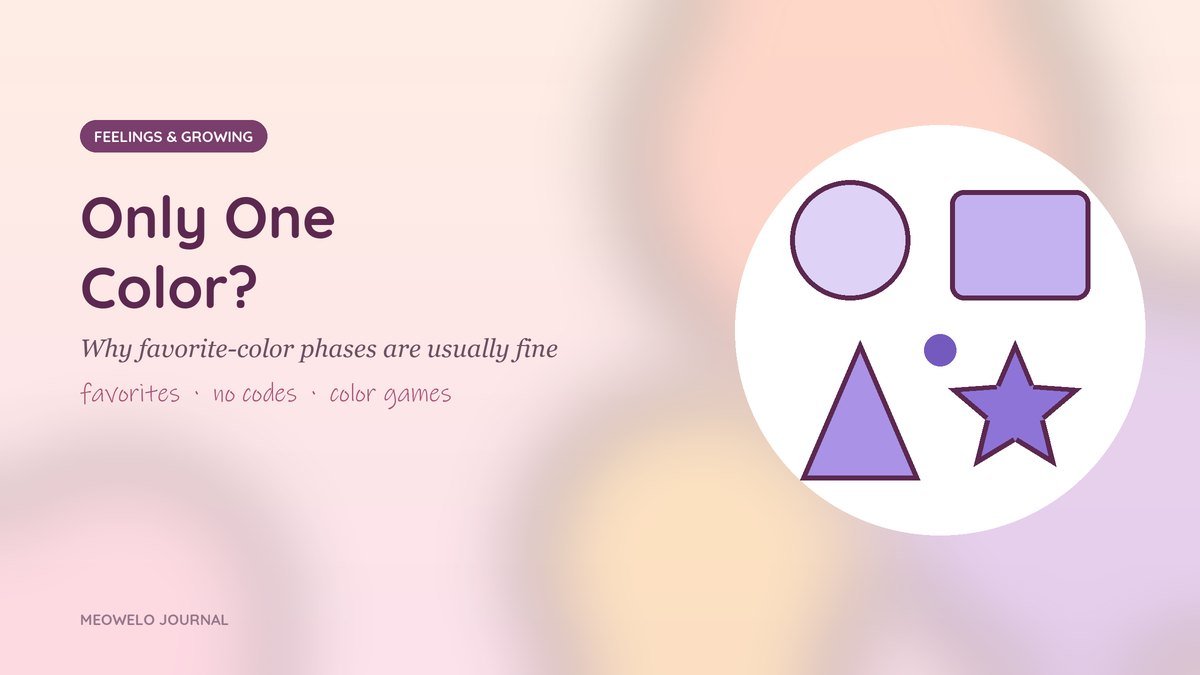
Usually not. Most children who color everything in one color simply have a favorite, are going through a phase, or find one color easy to reach for. We don't read hidden feelings into color choices: a child who uses lots of black may just like how bold it looks. If you'd like them to try more colors, playful games work far better than corrections.
Below: common reasons for one-color phases, why color isn't a code, and gentle games to widen the box.
Common, ordinary reasons
| Reason | What it looks like |
|---|---|
| A favorite | Everything is purple, because purple is the best |
| Boldness | Black or dark colors because they show up strongly |
| Convenience | The one sharp pencil, or the crayon on top |
| Focus | Interested in the shapes, not the colors |
| Identity | "Blue is my color," like a team shirt |
Why we don't decode colors
It's tempting to wonder whether dark colors mean sadness. A color choice on its own isn't a reliable sign of anything. If you're ever worried about your child's mood, look at the whole picture (sleep, eating, friends, how they talk about things) and talk to their teacher or doctor. Our guide to coloring with a worried child has gentle ideas for those days. Our guide to color choices explains why every color is the right color on a Meowelo page.
Playful ways to widen the box
- The three-color challenge: their favorite plus two new ones.
- Shades of one: how many purples can you make by pressing lightly and hard?
- Color swap: you choose a color for one shape, they choose one for yours.
- Lucky dip: pick a crayon without looking for the next shape.
- Look outside: what colors is a tree really? (see color theory for kids).
Instead of
Not purple again! Use some other colors.
Try
That's a very purple dragon. How many different purples can you find in the box?
When to let it be
If they're happy and coloring, there's nothing to fix. Favorites change, and many adults still have a color they always reach for.
A favorite color can be a door, not a wall
A child who loves blue can explore an enormous amount within blue: sky blue, sea blue, night blue, light and dark, cool and warm. Offering a few more shades of their favorite often widens their palette more naturally than pushing other colors. Our skin-tone pencils guide shows how layering a few close shades makes a color richer, and the same works for any favorite.
What to praise instead
Instead of commenting on the color, notice something specific: "You pressed really hard on the dragon's wings, they look strong" or "I love how the purple gets darker at the edges." Specific notice helps more than "Nice colors!" (see how to praise kids' art).
Color phases children often go through
| Phase | Often looks like |
|---|---|
| The favorite | One color for everything, for weeks |
| The rainbow | Every shape a different color, in order |
| The realist | "Grass must be green": real colors only |
| The rebel | Deliberately unexpected colors |
| The designer | A chosen palette, often two or three colors |
All of these are normal, and most children move through several. None tells you anything worrying on its own.
When a phase is about comfort
Sometimes a child sticks to one color because it feels safe: there's no decision to make. That's fine. If you'd like to gently stretch it, offer a choice of two ("purple or blue for the sky?") rather than an open box. Two options feel manageable; forty can feel like a test.

The Meowelo Companion
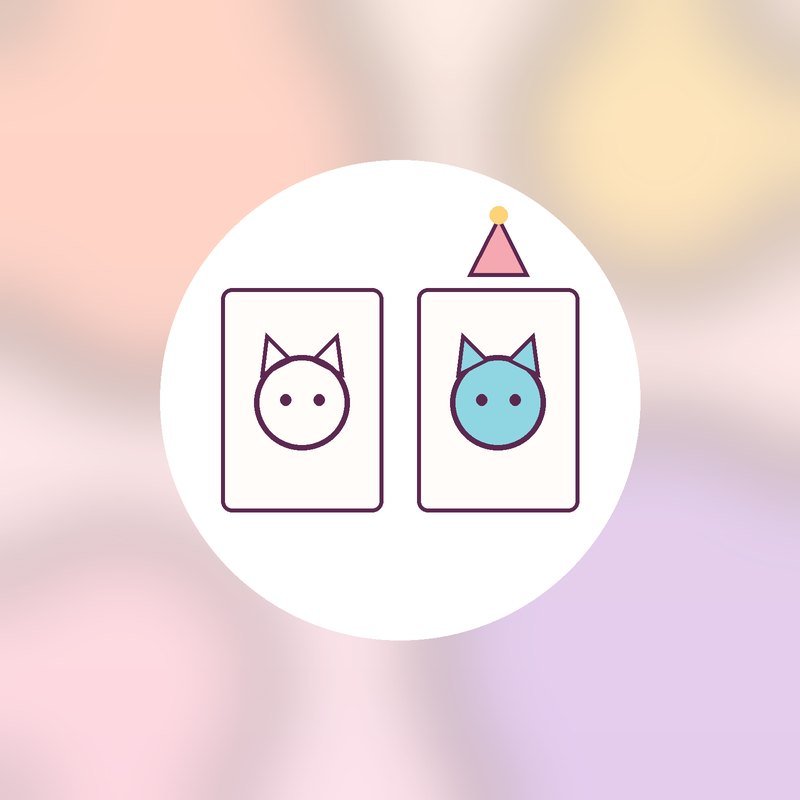
The free Meowelo Companion has a page colored four different ways, and none of them is the right one. Plus 10 printable gifts for subscribers.
Get the free guideThree five-minute color games
- Color detective: walk round the room and find five things in their favorite color, then five in a color they never use. Color one of each.
- Mystery crayon: close your eyes, pick a crayon, and that's the color for the next shape. Laugh at whatever happens.
- Swap shapes: you color one shape on their page in a color they choose for you, they color one on yours in a color you choose for them.
Keep each game short and optional. The goal isn't to stop the favorite color, it's to show that other colors can be fun too. If your child would rather stay with their color, let the game end there; you can try again another week.
Children who love one color often enjoy learning how many versions of it exist: light and dark, warm and cool. Pressing lightly, then harder, then layering two shades is a quiet lesson in the same skills artists use every day.
Favorites change, often without any nudging at all. A child who colored everything purple at six may be all about green at eight, or may love a carefully chosen palette at ten. Enjoy each phase while it lasts, keep a few pages from it, and you'll have a lovely record of how their taste grew.
Questions parents ask
Is it normal for a child to only use one color?
Does coloring with black mean a child is sad?
How can I encourage my child to use more colors?
Should I stop my child using their favorite color?
The one thing to remember
A favorite color is just a favorite. Enjoy the purple phase, and play the occasional color game if you'd like to widen the box.
Conversation
Join the conversation
Tips, questions and stories from other grown-ups. A person reads every comment before it goes live.
No comments yet. What has worked at your house? Your story might be exactly what another parent needs tonight.