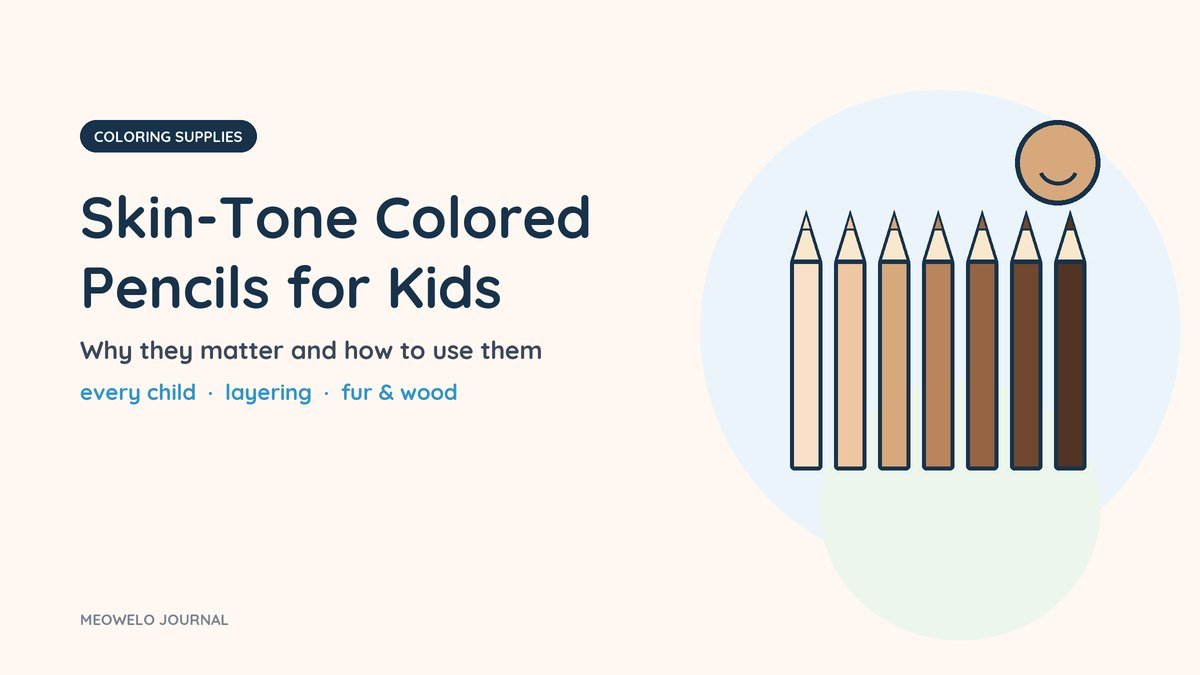
Skin-tone colored pencils are sets of browns, tans, creams, peaches and deep umbers chosen so children can color people the way people really look, including themselves and their families. A standard set often has one peach labeled for skin, which leaves most children without a color that matches them. Adding a skin-tone set alongside a regular one fixes that, and the same warm shades turn out to be useful for fur, wood, sand and bread too.
Below: why it matters, how to choose, how to layer the colors for faces and hands, and a few ways to use the set beyond people.
Affiliate disclosure. Some links below go to Amazon, and Meowelo may earn a commission if you buy through them, at no extra cost to you. As an Amazon Associate I earn from qualifying purchases. Amazon does not sponsor or endorse Meowelo. We list supplies that suit these books, and say what each one is not good for too. Full disclosure.
Why it matters
When children draw people, they often want to draw themselves, their friends and their families. If the box only has one peach pencil, many of them simply can't find their own color, and some quietly decide they're "coloring it wrong". A range of skin tones says, without a word, that every child's color is a normal color to reach for.
It also helps children notice: skin isn't one flat color. There's a lighter shade where light falls and a deeper one at the edges, and seeing that is the same skill as noticing the details in any picture.
How to choose a skin-tone set
- Range: look for very light creams through to very deep browns, with warm (golden, reddish) and cool (pinkish, olive) shades in between.
- Named colors: sets where each pencil has a name help children talk about and choose colors.
- Soft leads: softer pencils layer more easily, which matters most for skin.
- A companion set: a skin-tone set covers people, fur and wood, but not skies or grass, so keep a standard set too.
How to layer skin tones for faces and hands
- Choose a base: pick the closest light-to-mid shade and color the whole face or hand lightly.
- Add a mid tone: with a slightly deeper shade, color gently around the edges: along the jaw, under the nose, between fingers.
- Add warmth: a touch of a warm pink or red-brown on the cheeks and nose tip.
- Keep the light: leave the forehead, nose bridge and cheekbones in the lighter base.
- Blend: go over everything lightly with the base color to soften the edges.
Two or three shades layered this way look more natural than any single pencil. The same steps work for every skin tone, from the palest to the deepest. For more on layering and fades, see how to blend with crayons, which works the same way with pencils.
Instead of
Skin is this color.
Try
Which of these looks most like your hand? Shall we hold them up and see?
Matching game: find your color
A simple activity children of 6 to 12 enjoy: hold each pencil next to the back of a hand and find the closest match. Then do the same for a grown-up, a friend, a sibling. Most people find they need two pencils, a lighter and a deeper one. It's a gentle way to see that everyone's color is a mix, and that the "right" color is whichever one the child chooses.
Beyond people: fur, wood, sand and bread
A skin-tone set is one of the most useful pencil sets in the box for animals and scenes:
| Use | Try |
|---|---|
| Fur | Tans and golden browns for cats, foxes, dogs; layer two shades with short strokes |
| Wood | Mid and deep browns for fences, tables and tree trunks |
| Sand and paths | Creams and light tans, with a few darker speckles |
| Bread and baking | Golden tans with a darker crust edge |
Our guide to coloring fur, wood, water and stone shows the strokes that go with these colors.
These are the pencil picks from our Creative Supplies shelves for this, with an honest note on who each suits:
A skin-tone set and an everyday set to go with it
| Pick | Best for | Good to know | Buy |
|---|---|---|---|
 Skin tones, fur and woodCrayola Colors of the World Colored Pencils, 24 Count |
Real people can look like real people | Not a full palette on its own: no blues or greens | $5.16 on Amazon.comSave 14% Price as of DetailsProduct prices and availability are accurate as of the date/time indicated and are subject to change. Any price and availability information displayed on Amazon.com at the time of purchase will apply to the purchase of this product. |
|
The everyday set that covers everything elseCrayola Colored Pencils, 36 Count
|
36 shades, including useful in-betweens | Needs a sharpener eventually | $6.57 on Amazon.com Price as of DetailsProduct prices and availability are accurate as of the date/time indicated and are subject to change. Any price and availability information displayed on Amazon.com at the time of purchase will apply to the purchase of this product. |
Amazon shows the current price and delivery. Tap any name for our full write-up, including what it’s not good for.
A note for grown-ups
Children choose colors for all sorts of reasons. A child may color a person green, purple or gold, and that's fine. The point of a skin-tone set isn't to make anyone use realistic colors; it's to make sure that every child who wants to color someone as they really are can find the colors to do it.
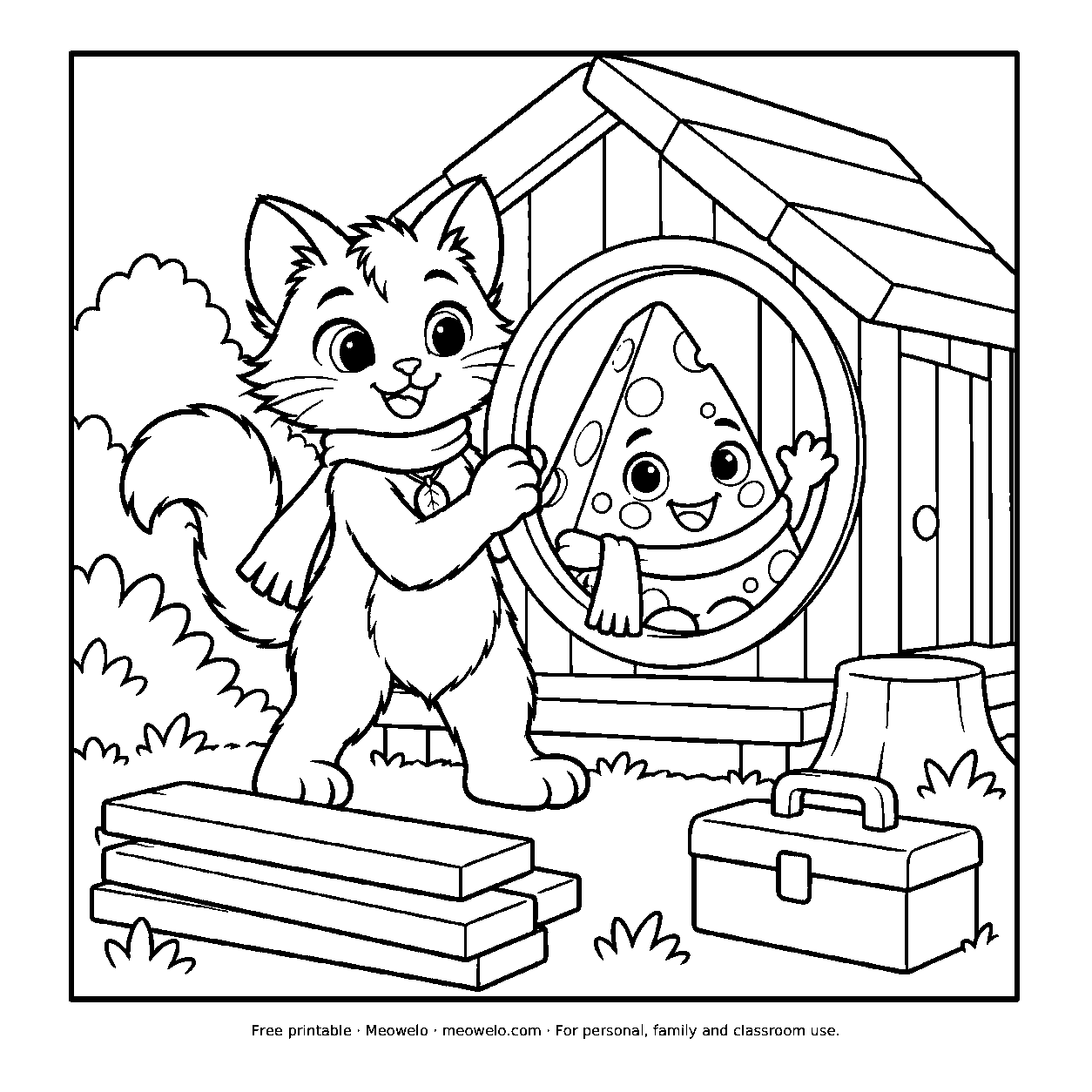
Myro and Cheddo Build a Home
A round window turns house-building into a small game for Myro and Cheddo.
Print it freeQuestions parents ask
What are skin-tone colored pencils?
Why do kids need skin-tone colored pencils?
How do you color skin with colored pencils?
Can skin-tone pencils be used for other things?
Should I tell my child which color to use for skin?
The one thing to remember
A box of colors should have a color for every child. A skin-tone set next to the everyday pencils makes sure it does, and gives you the best browns in the house for fur, wood and bread at the same time.

Conversation
Join the conversation
Tips, questions and stories from other grown-ups. A person reads every comment before it goes live.
No comments yet. What has worked at your house? Your story might be exactly what another parent needs tonight.