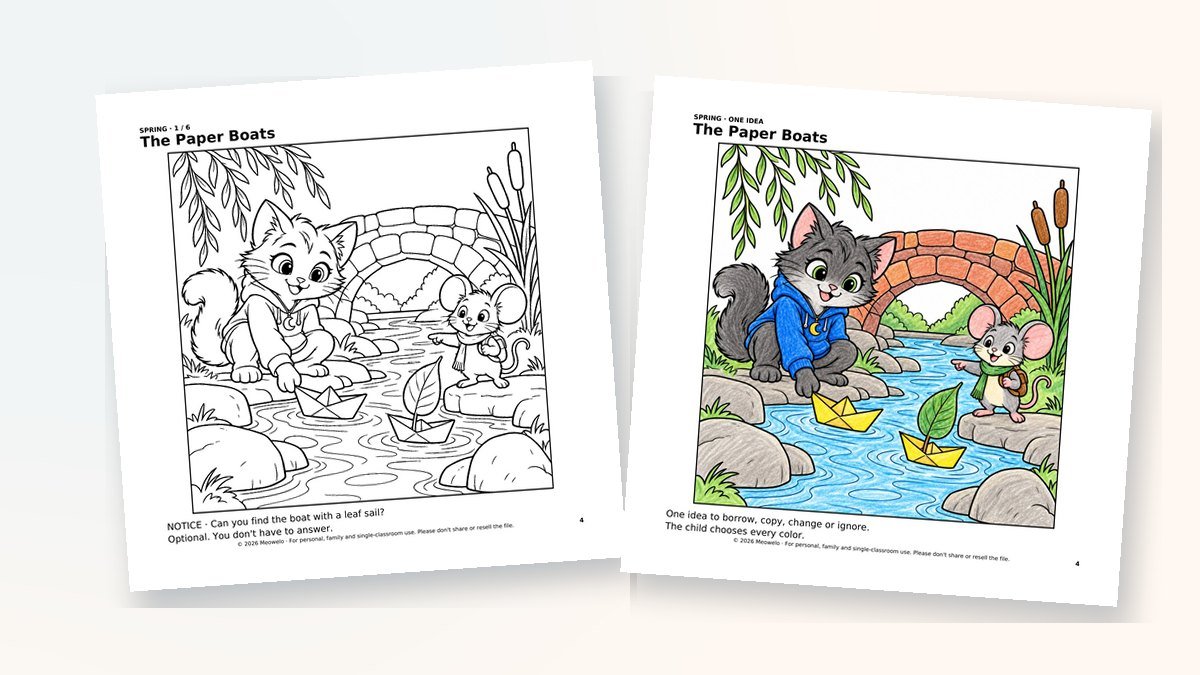

The best coloring book for a child aged 6 to 12 matches three things: their hands, their supplies and their interests. Hands decide how thick the lines and how big the shapes should be. Supplies decide the paper: markers need thicker, single-sided pages, while crayons and colored pencils need a little texture. Interests decide whether they come back to page two. Get those three right and almost any book works; get one wrong and even a beautiful book ends up half-colored in a drawer.
This guide turns that into a quick checklist you can use in a shop, online or with a book in your hands. There’s an age-by-age table, the red flags that make a book harder than it looks, and the supplies that suit each kind of paper. Every supply here is one we recommend on our own Creative Supplies shelves, with an honest note on who it’s not for.
Affiliate disclosure. Some links below go to Amazon, and Meowelo may earn a commission if you buy through them, at no extra cost to you. As an Amazon Associate I earn from qualifying purchases. Amazon does not sponsor or endorse Meowelo. We list supplies that suit these books, and say what each one is not good for too. Full disclosure.
The 60-second checklist
Open the book (or zoom into the sample pages online) and check these six things. They take a minute and tell you more than the cover ever will.
| Check | Look for | Why it matters |
|---|---|---|
| Line thickness | Clear, dark outlines; thicker for younger children | Thin, faint lines are hard to see and hard to stay near |
| Shape size | Areas big enough for the tip of a crayon or pencil | Tiny regions turn coloring into a chore |
| Paper | Smooth but slightly textured; heavier pages for markers | Thin paper tears, pills or lets ink bleed through |
| One side or two | Single-sided pages if your child uses markers | Marker ink on one page can show through the next picture |
| Theme | Something your child already loves: animals, characters, places, stories | Interest is what brings them back to page two |
| Page count | Enough pages to explore, few enough to feel finishable | A giant book can feel endless; a thin one gets finished and celebrated |
Choose by age: what 6-, 8- and 10-year-olds need
Age is only a rough guide. A careful six-year-old may love detail, and a ten-year-old may still prefer big, bold scenes. Use the table as a starting point, then watch what your child actually enjoys.
| Age | Lines and shapes | What keeps them interested | Supplies that suit |
|---|---|---|---|
| 6–7 | Bold outlines, large closed shapes, simple backgrounds | Familiar characters, animals, one clear moment per page | Crayons, broad washable markers |
| 8–9 | Medium detail, a mix of large and medium areas | A story or a set of characters to follow from page to page | Colored pencils, fine-line markers |
| 10–12 | Finer detail and fuller backgrounds, still with closed shapes | Places to explore, patterns to invent, scenes that reward close looking | A wider pencil palette, shading, mixing |
If you’re not sure, choose the simpler book. A child who finishes pages quickly and asks for more is easy to move up; a child who feels defeated by page one often stops altogether.
Check the paper before the pictures
Paper is the thing most coloring books get wrong, and the thing children notice first. Here’s how to match the paper to what your child colors with:
- Crayons need a little texture (“tooth”) to grip. Very glossy paper makes wax skate around.
- Colored pencils like the same slight texture, which lets them layer and shade.
- Markers need thicker paper and, ideally, single-sided pages. Even on good paper, a spare sheet underneath protects the next picture and the table.
Printing pages at home? Ordinary copy paper is about 20 lb (75 gsm). A slightly heavier sheet makes a real difference for markers and keeps pages from curling.
These are the supplies we pair with most coloring books. Each one says who it suits, and who should skip it.
Match the supplies to the book
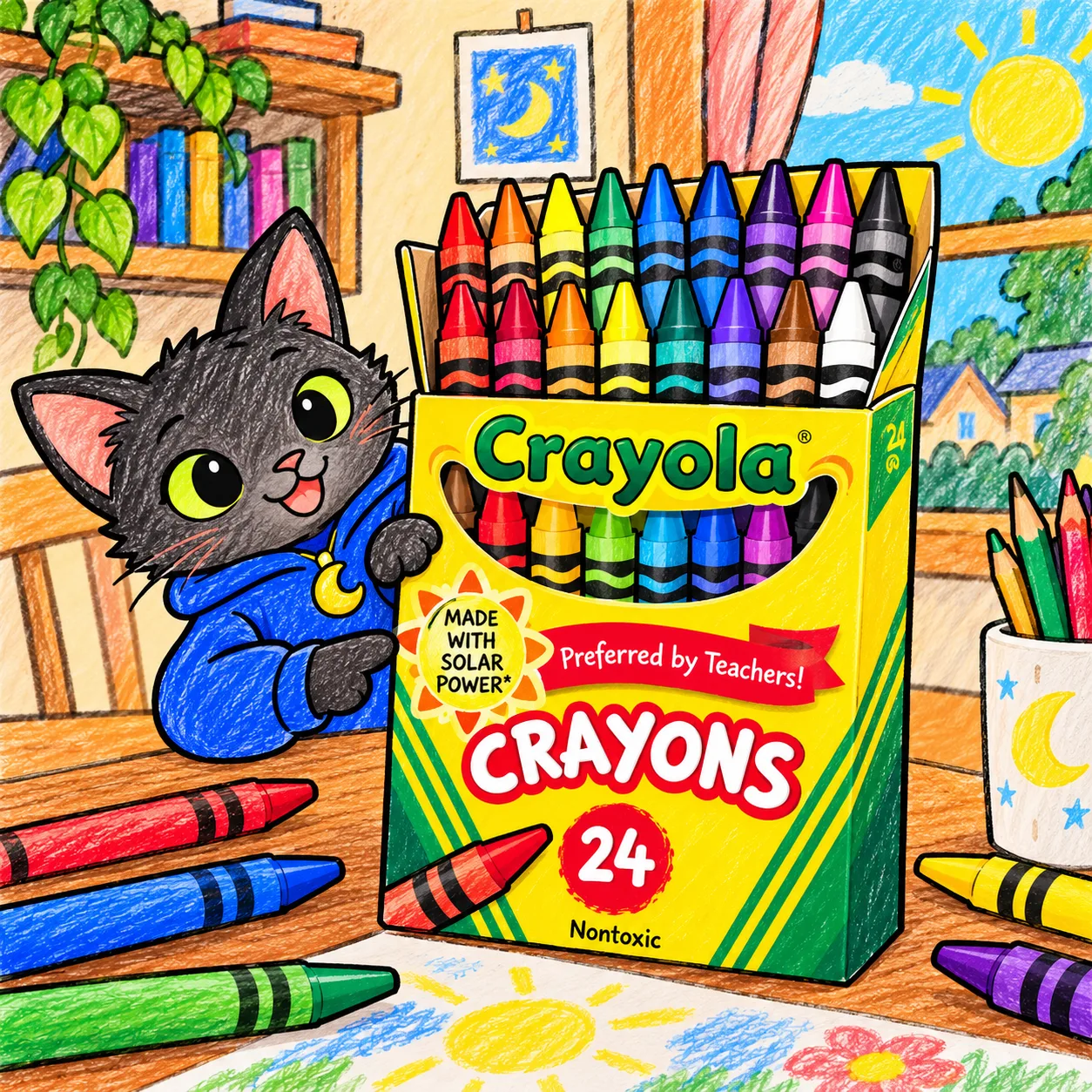
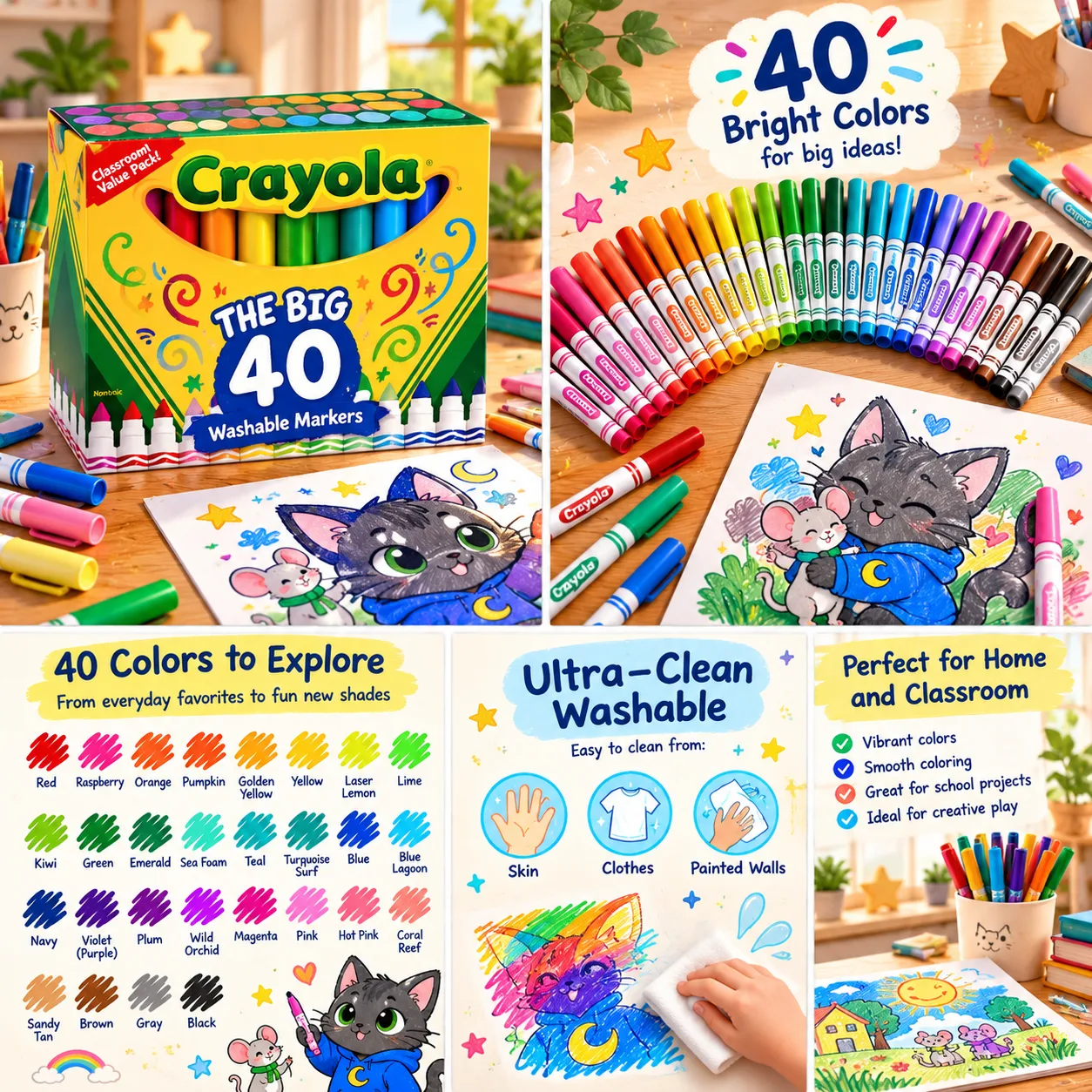

Amazon shows the current price and delivery. Tap any name for our full write-up, including what it’s not good for.
Pick a theme they’ll come back to
Children rarely finish a book because they should. They finish it because they want to see what’s on the next page. A few things make that much more likely:
- Characters they recognize. A child who already knows a cat in a blue hoodie wants to color him again.
- A thread from page to page. A short story, a journey or a set of places turns separate pictures into something to follow.
- Something to notice. A small hidden detail or a question under the picture gives a reason to look closely before the crayons come out.
- Their own choice. Let your child pick between two or three good options. Ownership matters more than the “perfect” book.
Not sure what they like yet? Free printable pages are a low-risk way to find out. Print a few different styles, notice which one they finish, and choose the book from there. Our guide to printables or coloring books covers when each one works best.
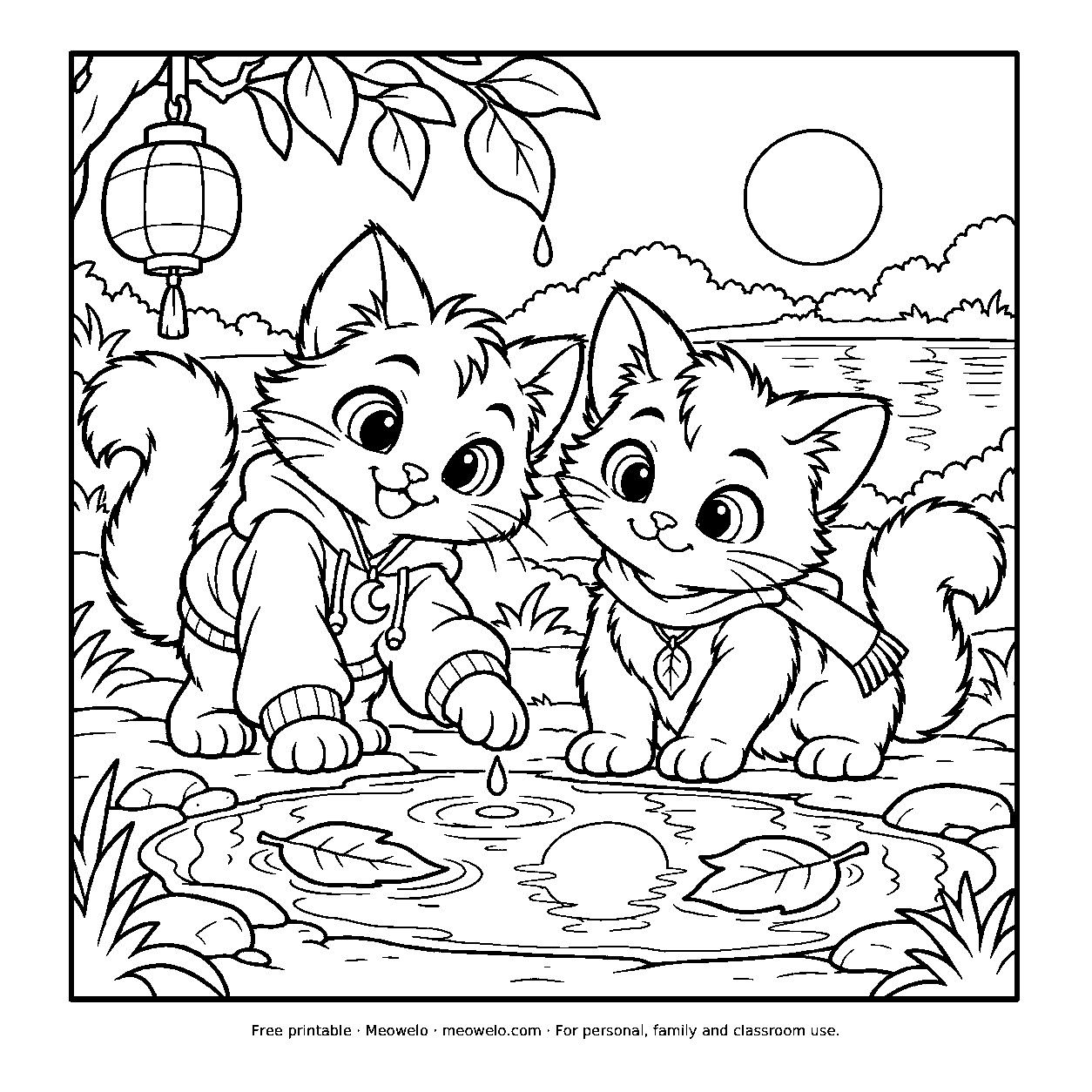
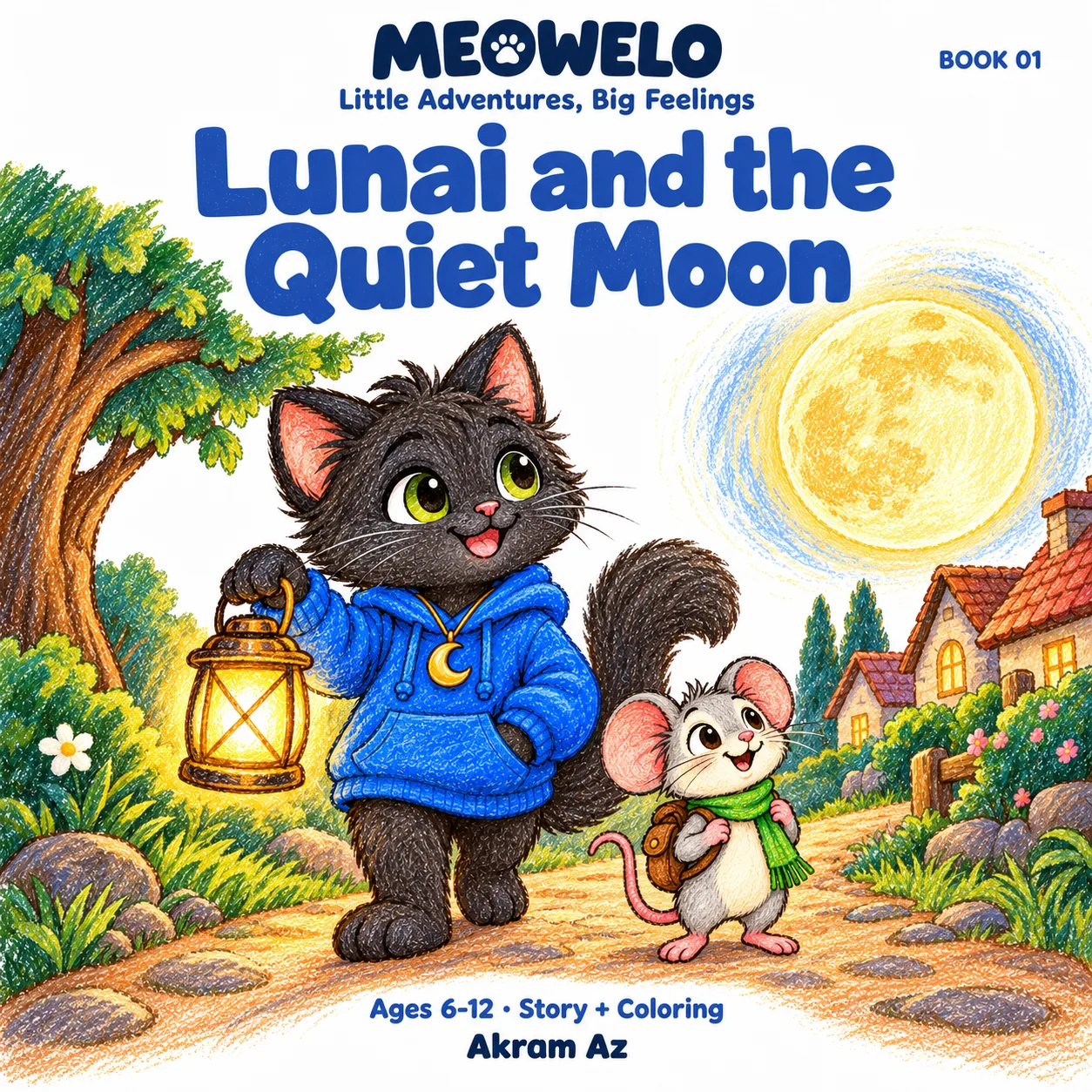
Lunai and the Quiet Moon
Lunai and Myro find a second moon in a puddle beside the lantern path.
Print it freeRed flags: when a book is harder than it looks
Some coloring books look lovely in a listing and are frustrating at the table. Watch for these:
- Tiny, crowded regions everywhere on the page, with no large areas to rest in.
- Gray shading or texture printed into the picture. It muddies colors and leaves nothing to decide.
- Open outlines that don’t close, so there’s no clear shape to fill.
- Pictures running into the spine, where young hands can’t reach to color.
- Double-sided pages in a book you know will meet markers.
- Instructions that tell children which colors to use. Color choice is part of the fun, and there’s no wrong answer. (More on that in why kids choose the colors they do.)
How many pages should a kids’ coloring book have?
There’s no magic number, but there is a sweet spot. For most children aged 6 to 12, a book of roughly 20 to 40 pages feels generous without feeling endless. Very large books can be great value, yet some children never get past the first few pages because the end feels so far away. A shorter book that gets finished, signed and shown to grandparents often brings more joy than a giant one.
Small upgrades that make any book work
- A sharpener that keeps the shavings inside, so colored pencils stay sharp and the table stays clean.
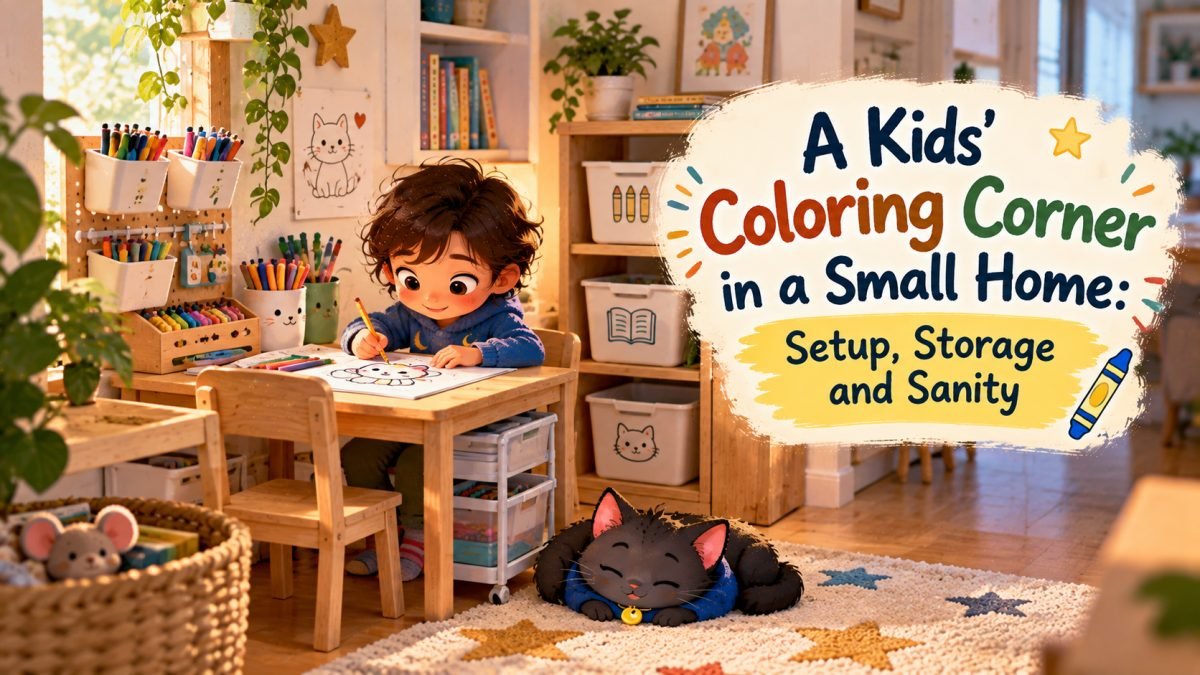
- A home for every color. Supplies that live in one caddy get used; supplies scattered in a drawer don’t. See our ideas for a coloring corner in a small home.
- A spare sheet under every marker page. It costs nothing and saves the next picture.

Bostitch Twist-n-Sharp Kids Pencil Sharpener
A kid-friendly manual sharpener with a shavings container: fewer broken points, less mess on the table.
Learning Resources Create-a-Space Storage Center
A sturdy tabletop storage caddy that keeps crayons, markers and pencils sorted and within reach.
How Meowelo books are made for young colorers
We designed the Meowelo books around this exact checklist, for children aged 6 to 12. Each story moment is a few sentences to read, followed by the same scene drawn as a full page to color, with bold, closed shapes and nothing printed in gray. Every book follows the same simple rhythm: READ a short moment, NOTICE the details, COLOR it your way, and DISCOVER what happens next. Children choose every color.
Want more pages right away? A Year in Meowelo: Four Seasons Coloring Pages is a printable pack of 24 new seasonal scenes with the seven Meowelo friends, ready to print at home.
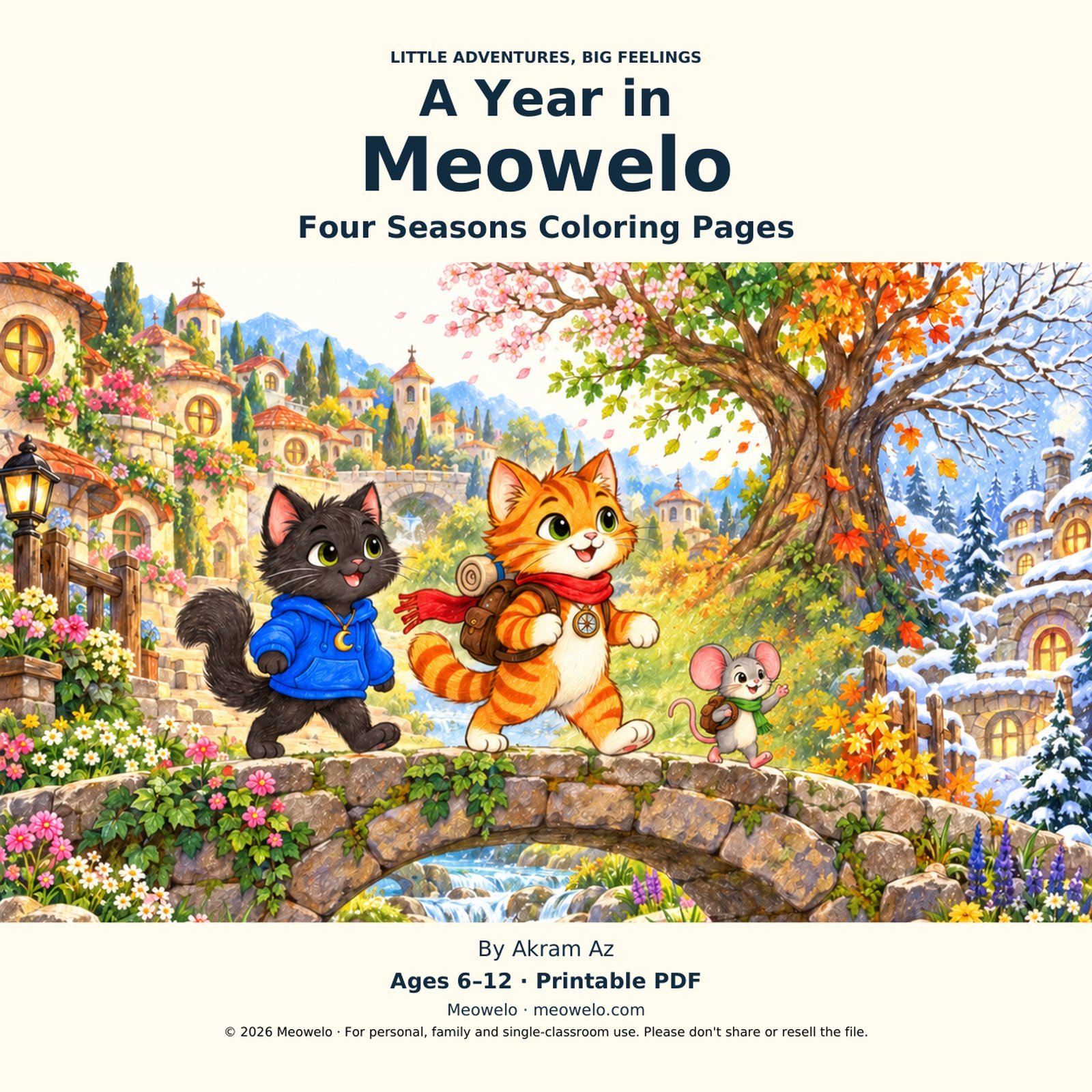
A Year in Meowelo: Four Seasons Coloring Pages
24 new seasonal scenes with seven friends, plus four drawing frames
Questions parents ask
What makes a coloring book beginner-friendly for kids?
What age should kids move to more detailed coloring books?
What paper is best for markers in a coloring book?
Are double-sided coloring books bad?
How many pages should a kids’ coloring book have?
Should kids color inside the lines?
Are crayons or colored pencils better for a first coloring book?
How can I tell if a coloring book is too hard?
The one thing to remember
The right coloring book is the one your child reaches for again. Start simple, match the paper to the supplies, let them choose the theme, and celebrate the pages they finish. The rest is just color.
Conversation
Join the conversation
Tips, questions and stories from other grown-ups. A person reads every comment before it goes live.
No comments yet. What has worked at your house? Your story might be exactly what another parent needs tonight.