
The calmest family routines for children aged 6 to 12 are small, predictable and the same every day: the same order after school, the same warning before screens end, the same short story and coloring before lights out. Predictability does most of the work, because children know what comes next and don't need to argue about it. This guide brings together every Meowelo routine for the moments families find hardest, with a quiet activity for each.
Why small routines work
Most daily friction happens at transitions: home from school, screens off, bath, bed. Children cope with transitions much better when they know what comes next and in what order. A routine doesn't need to be elaborate to help; it needs to be the same. Three steps that happen every evening work better than ten that change with the day.
Quiet activities with a clear end, like reading one story moment or coloring one page, fit naturally between steps. They give the child something to do with their hands while their body slows down, and they end on their own.
After school: a 20-minute reset
Children often come home tired and full of the day, and questions about school land badly in the first few minutes. A simple order helps: snack first, then about twenty minutes of quiet (coloring, a book, lying on a cushion), then talking. After-school quiet time describes the reset and what to say, and what not to ask, in those first minutes.
A small, soft spot the child chooses to go to makes the quiet easier: see how to make a quiet corner at home. It is never a time-out, and works best when it's introduced on a calm day.
Screens: ending them without a battle
The meltdown usually comes from the surprise, not the limit. Agree on the ending before the screen goes on, give two warnings with a visible timer, plan a calm "landing" activity to switch to, and name the feeling while keeping the limit. The seven steps, with phrases that help, are in how to end screen time without a meltdown.
Bedtime: ten minutes that children ask for
A bedtime routine works best when it's short and always the same: one page of story, about five minutes of coloring at a table with soft light and no screens, then lights out, stopping while it's still pleasant. The 10-minute bedtime story-and-color routine walks through it night by night, including what to do when a child wants "just one more page". A weekly family story night makes a nice longer version for the weekend.
"I'm bored!"
Boredom isn't an emergency, and the most useful answer is often not a list of activities but a calm "Hmm, what could you make with that?" plus a few ready options the child can choose from alone. "I'm bored!" What to say to a child aged 6–12 has the words and an idea shelf to set up once.
Rainy days and sick days
On a rainy day, match the activity to your energy: story coloring or an audiobook when you're tired, a blanket-fort read in between, an indoor obstacle course when everyone is bouncing. Rainy day activities for kids 6 to 12 has fifteen ideas sorted that way. A sick day calls for gentler still: coloring on a tray in bed, audiobooks and small projects that can stop at any moment, all in sick day at home.
Trips and waiting
A long car ride goes better with a kit that is light, flat and mess-free: a clipboard, twist-up crayons or pencils and a small stack of pages, with a new activity every twenty to thirty minutes. A travel art kit for kids that actually works lists what to pack and twelve screen-free ideas for the road.
Siblings and grandparents
Coloring is one of the few activities a six-year-old and a ten-year-old can share, as long as each has their own supplies and a page for their age, plus one shared project: coloring with siblings of different ages. Grandparents can join in too, side by side or on a video call with the same page printed in both homes: coloring together with grandparents, near or far.
Room to make a mess
Calm doesn't mean tidy all the time. Messy play helps children explore and build hand strength, and one tray, one smock, one towel and a clean-up routine keep it manageable: why messy play matters. When an art supply ends up on a wall anyway, crayon on the wall, marker on the sofa has the calm fixes.
A simple weekday rhythm
| Moment | Routine | Quiet activity |
|---|---|---|
| After school | Snack, 20 quiet minutes, then talk | Color a page, read, rest |
| Screen time | Ending agreed first, two warnings, a landing activity | A page waiting on the table |
| Evening | Dinner, bath, the same order every night | Pajamas, then the story chair |
| Bedtime | One story page, five minutes of coloring, lights out | One scene, soft light |
Every article in this guide
New routine articles appear here as soon as they are published.
Every article in this guide · 12
- New Year, New Family Routines (That Last Past January): A Simple Plan for Families With Kids 6–12 Most family resolutions fade by February because they are too big, too many and depend on remembering. How to choose one small routine, tie it to something tha…
- "I'm Bored!" What to Say to a Child Aged 6–12, and What to Offer (Without Reaching for a Screen) "I'm bored" usually means "I don't know how to start". What to say instead of fixing it at once, how to set up a few low-effort options in advance, and why a l…
- Coloring Together With Grandparents, Near or Far: Easy Ideas for Visits, Video Calls and the Mail Coloring is one of the easiest things a grandparent and a 6- to 12-year-old can share: no rules to learn, no screen needed, and something to keep afterwards. I…
- Sick Day at Home: Gentle, Low-Energy Activities for Kids 6–12 A day off school with a cold can feel long for everyone. Gentle activities for low-energy hours: coloring in bed, audiobooks, simple story games and small proj…
- After-School Quiet Time: A Simple 20-Minute Reset for Kids 6–12 Many children come home full of the day and short of patience. A simple after-school reset: snack, quiet, then talk, with coloring as an easy, low-pressure mid…
- Coloring With Siblings of Different Ages: How to Make One Table Work for a 6-Year-Old and an 11-Year-Old One wants big shapes and bright markers, the other wants tiny details and silence. How to set up a shared coloring time for children of different ages: separat…
- How to End Screen Time Without a Meltdown: The Calm 7-Step Switch-Off Tablet off, child melts down. It's one of the most common daily battles, and it's not a parenting failure. Here's why it happens and a calm, 7-step way to end …
- Why Messy Play Matters (and How to Survive It) Paint, play dough, water and sand: messy play is how children explore, experiment and build hand skills. Why it's worth it, easy low-mess setups, and the clean…
- A Travel Art Kit for Kids That Actually Works (Plus 12 Screen-Free Car Ride Ideas) What to pack (and what to leave behind) for a mess-free travel art kit, plus twelve screen-free car and plane activities for ages 6 to 12.
- How to Make a Quiet Corner at Home (That Your Child Will Actually Use) Not a time-out spot, not a Pinterest project: a small, cozy place where a child can go to slow down, color or just be. What to put in it, how to introduce it, …
- Rainy Day Activities for Kids 6 to 12: 15 Screen-Free Ideas That Aren't Exhausting Fifteen cozy, low-prep, screen-free rainy day activities for ages 6 to 12, sorted by how much energy you (the grown-up) actually have left.
- The 10-Minute Bedtime Story-and-Color Routine (That Kids Actually Ask For) A short, screen-free wind-down that pairs one page of story with a few quiet minutes of coloring. Step-by-step, with scripts, timings and what to do when it go…
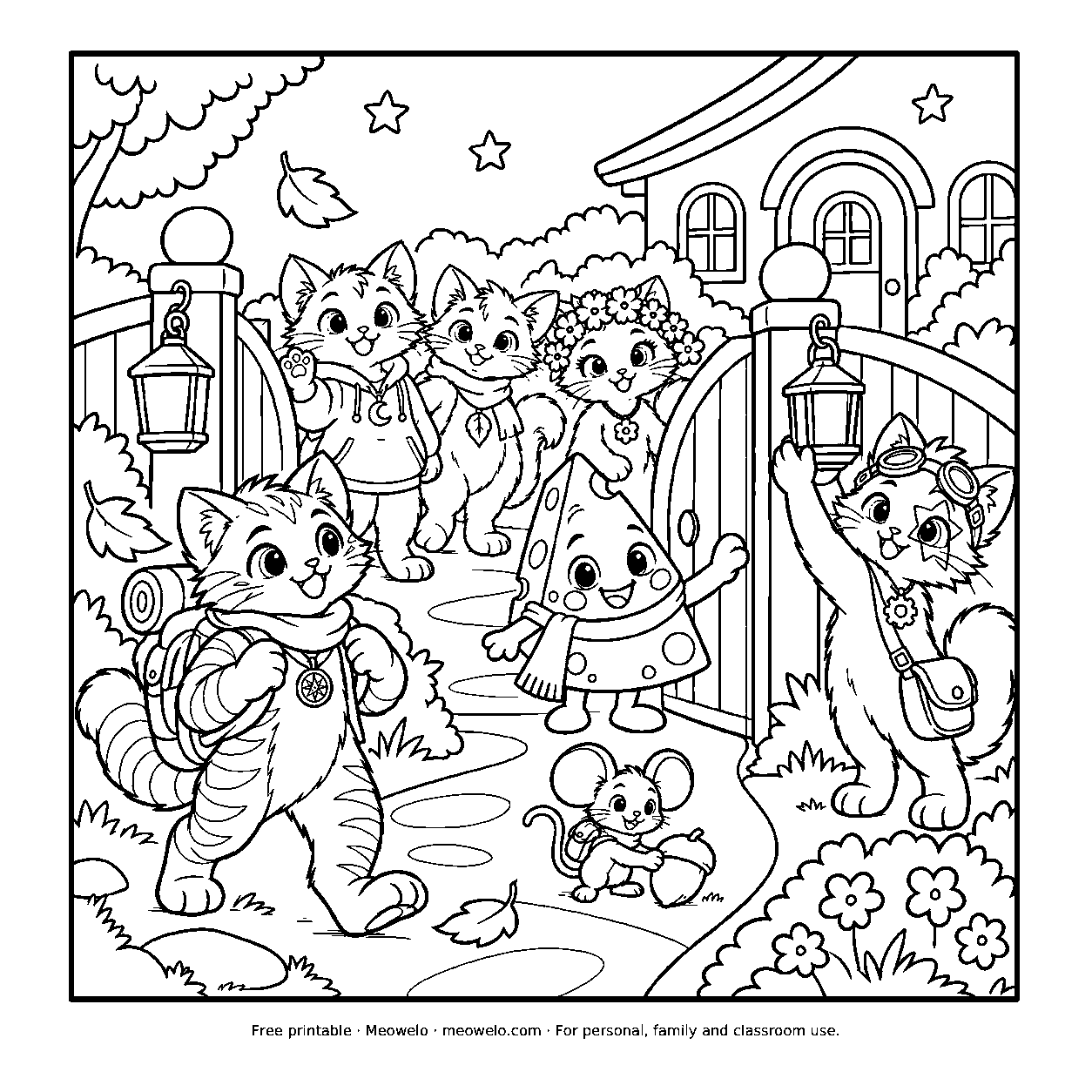
Home Under the Stars
Seven friends arrive home with muddy paws, full pockets and one last acorn.
Print it freeQuestions parents ask
What is a good after-school routine for kids?
How do you end screen time without a meltdown?
How long should a bedtime routine be for a 6- to 12-year-old?
What can kids do on a rainy day without screens?
The one thing to remember
Small, the same and in the same order. A predictable routine with one quiet activity in it does more than any perfect plan that changes every day.



Conversation
Join the conversation
Tips, questions and stories from other grown-ups. A person reads every comment before it goes live.
No comments yet. What has worked at your house? Your story might be exactly what another parent needs tonight.